Two ways to secure a stone
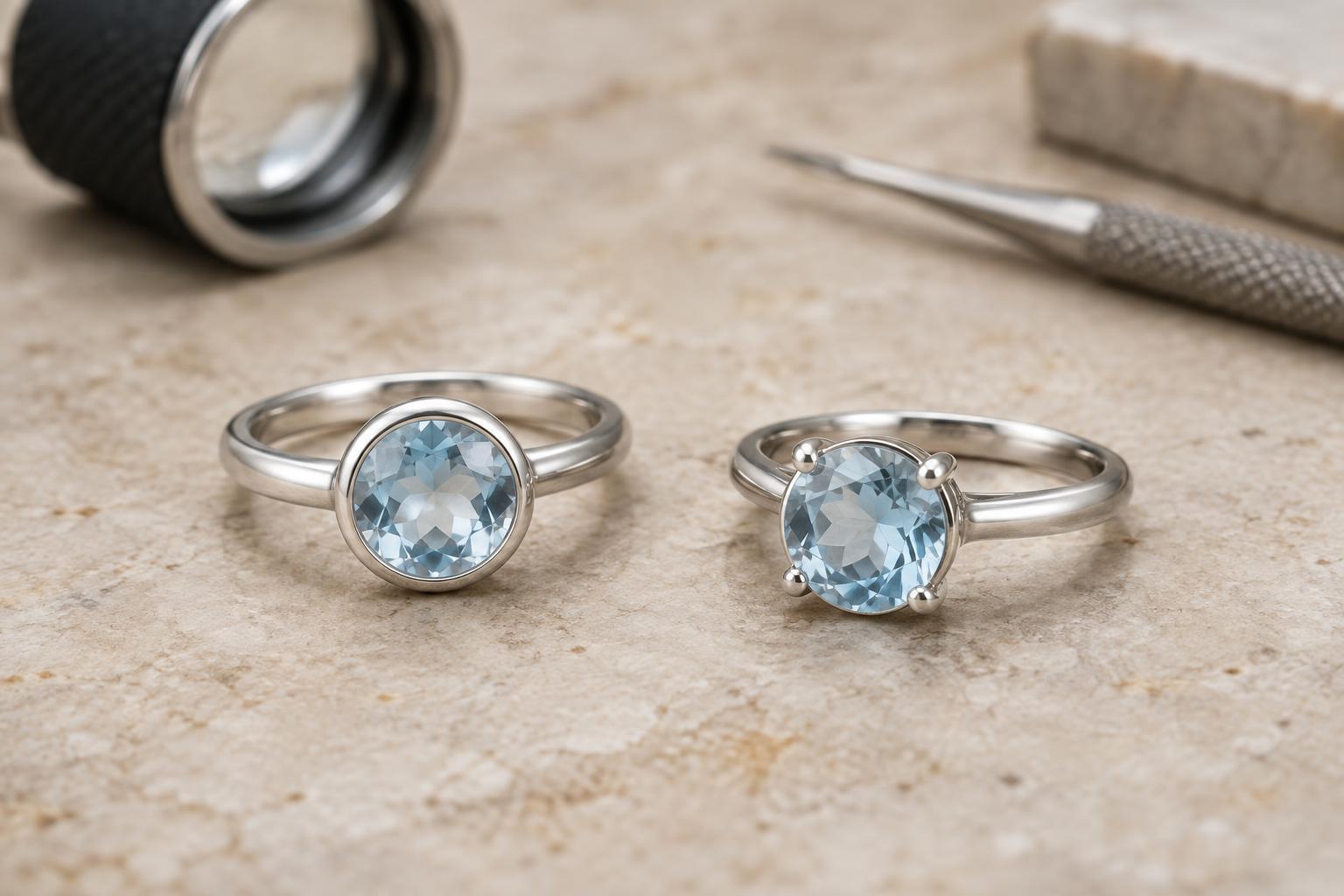
A stone setting does more than display a gem. It must keep the stone seated as a piece of jewellery moves against clothing, skin and everyday objects. Bezel and prong settings solve that problem in visibly different ways: a bezel uses a metal rim around the stone’s edge, while prongs use several narrow pieces of metal that reach over it.
Neither style is automatically the stronger choice. The fit of the seat, the amount and condition of the metal, the stone’s shape and the quality of the workmanship all matter. Understanding where each setting makes contact helps you recognise its construction and notice when something may need attention.
How a bezel holds a stone
In a typical bezel setting, a thin wall of metal follows the stone’s outline. The stone rests on a supporting seat or ledge, and the upper edge of the wall is pressed over its perimeter. Together, the support beneath and the folded rim above keep the stone from lifting out. A full bezel surrounds the entire edge; a partial bezel covers only selected stretches of it.
The rim can help shield a stone’s outer edge from direct knocks, which may be useful for shapes with exposed points or corners. A smooth, well-finished bezel also tends to catch less readily on fabric than a raised setting with projecting tips. Its coverage has a visual effect, too: the metal forms a clear outline around the stone and may conceal some of its side.
A bezel should follow the stone closely without obvious gaps or a visibly uneven rim. Its edge should feel smooth, not sharp or rough. A substantial-looking rim is not, by itself, proof of a sound setting: the stone still needs a properly fitted seat and secure contact where the rim folds over it.
How prongs hold a stone
Prongs are small metal arms, often called claws, that rise from the setting. A jeweller cuts a seat into each prong so the stone can rest at the intended height. The upper part of each arm is then bent over the stone’s edge. The seats support the stone, while the prong tips prevent it from moving upward or sideways.
Prong settings leave more of the stone’s edge and sides visible than a full bezel usually does. They can create an open, airy appearance, particularly when the stone is raised above the band or surrounding metalwork. That openness does not guarantee a particular sparkle: the stone’s cut, cleanliness and lighting also affect how it looks.
Each prong is a separate contact point, so its position and condition matter. Tips should sit against the stone rather than stand away from it, and the stone should appear level in its setting. Different designs use different numbers and shapes of prongs; pointed stones may have protective tips shaped to cover their vulnerable corners.
Choosing between coverage and openness
A bezel may suit someone who prefers a smooth outline or wants more of a stone’s edge enclosed. Prongs may appeal to someone who wants to see more of the stone and the structure holding it. The best choice also depends on the piece as a whole. A low bezel on a ring can feel quite different from a tall bezel on a pendant, just as compact prongs behave differently from high, exposed ones.
Consider where the jewellery will be worn and how often it may meet hard surfaces or catch on sleeves. A bezel can still dent or wear, and its rim can be damaged by a strong impact. Prongs can bend, wear thin or snag if a tip lifts. Neither setting makes a stone immune to chips, scratches or loss.
When examining a finished piece, look beyond the setting’s name. Check whether the stone sits evenly, whether the metal meets it neatly, and whether any edges feel unexpectedly sharp. These visible details are more useful than assuming that one style is always secure and the other is not.
Care and signs of wear
Remove jewellery before activities likely to strike or pull at the setting. Clean it gently using a method suitable for the stone and metal; some materials should not be soaked or exposed to common cleaners. A soft cloth can help remove surface residue, while a soft brush may reach around setting details if the materials tolerate it.
Pay attention to changes rather than repeatedly pressing on the stone to test it. A new rattle, a stone that appears tilted, a lifted prong tip or a bezel rim that has pulled away can indicate a problem. Catching on fabric when a piece did not do so before is another reason to look more closely. If you suspect the stone is loose, stop wearing the piece until a qualified jeweller can inspect it. Small changes to the metal that holds a stone are easier to address before the stone is lost.