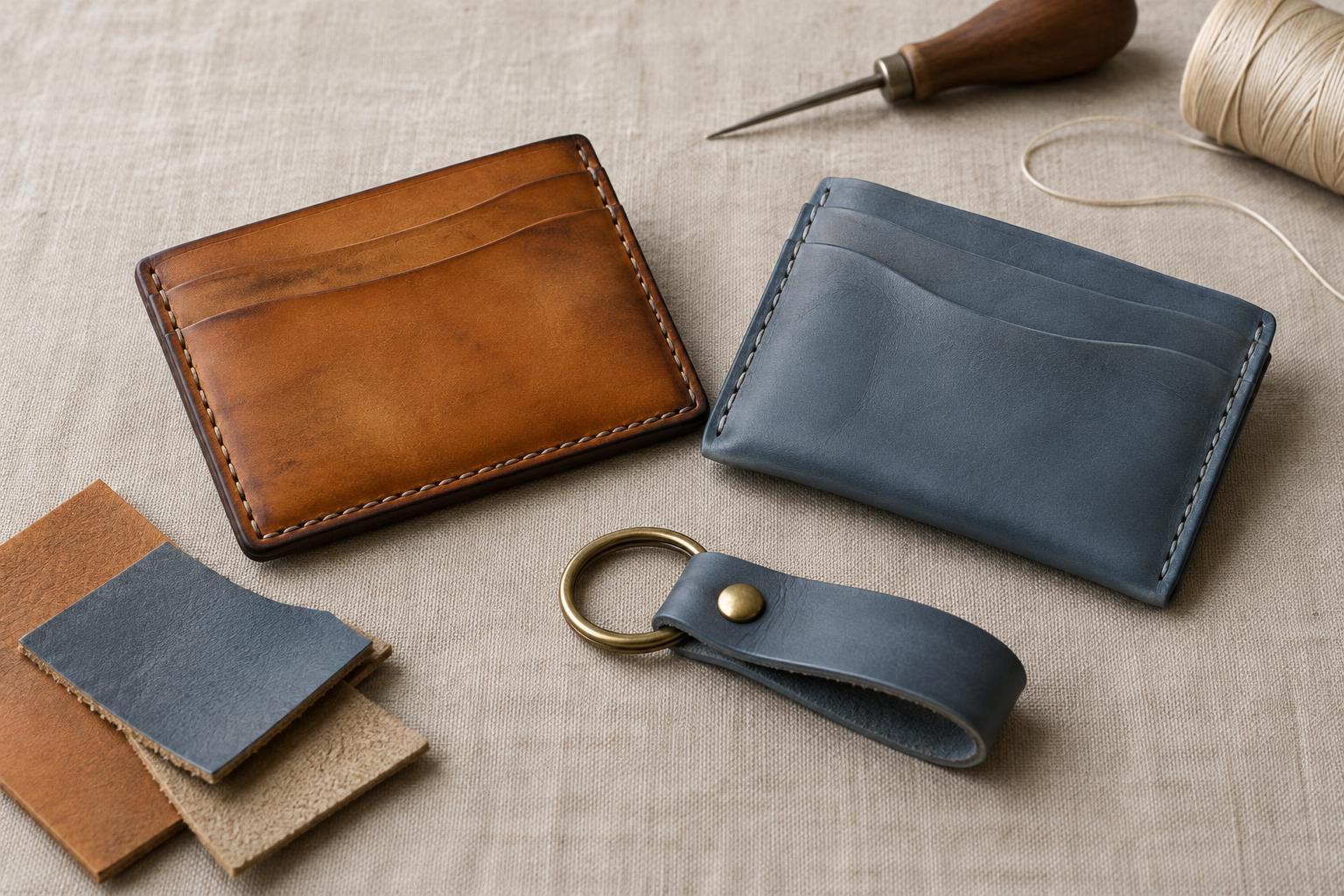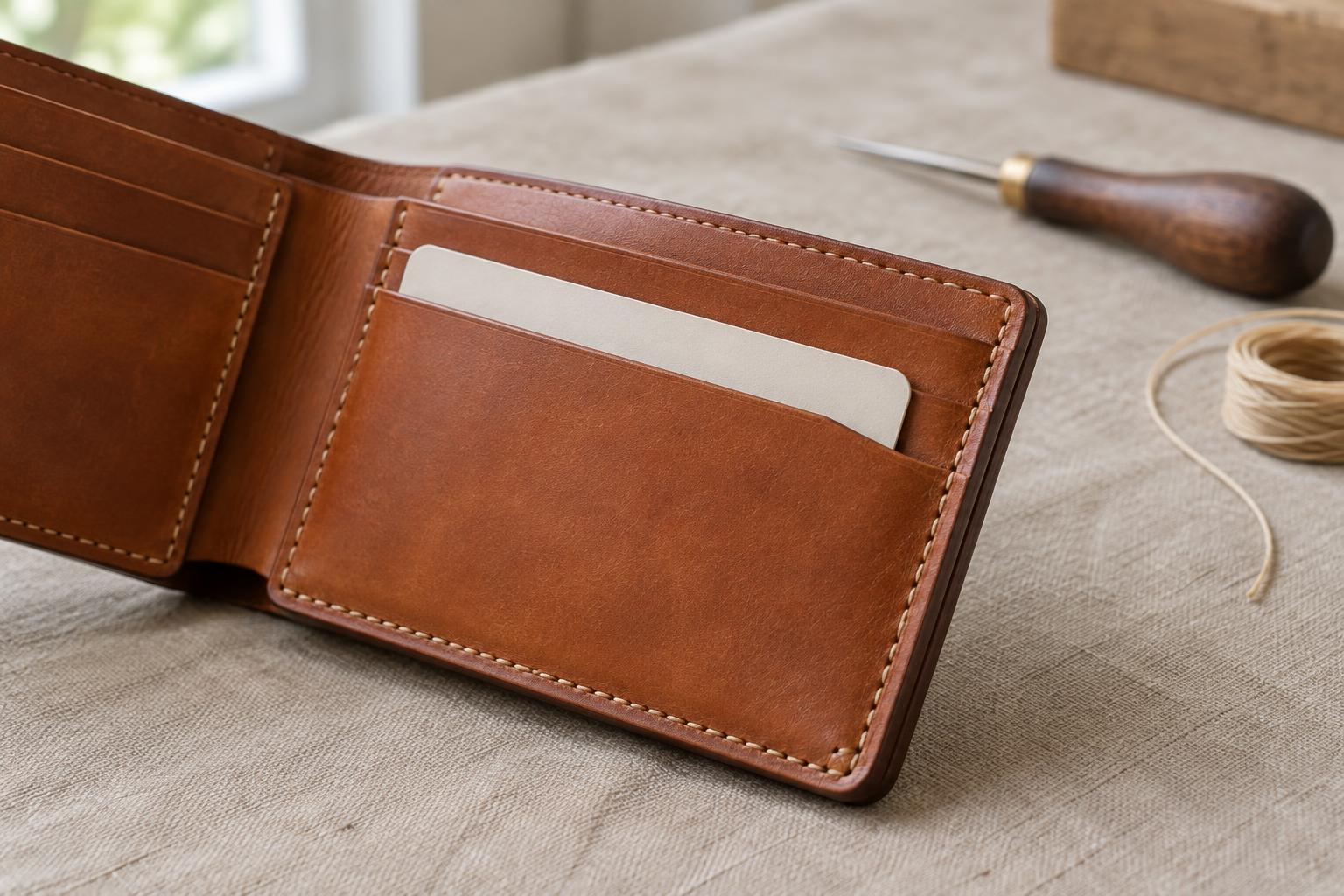
Leather and Small AccessoriesA close look at a wallet can tell you more than a description alone. Learn how to assess card pockets, stitching and finished edges, and how to decide whether the construction suits the way you carry it.
Read article · 4 min↗
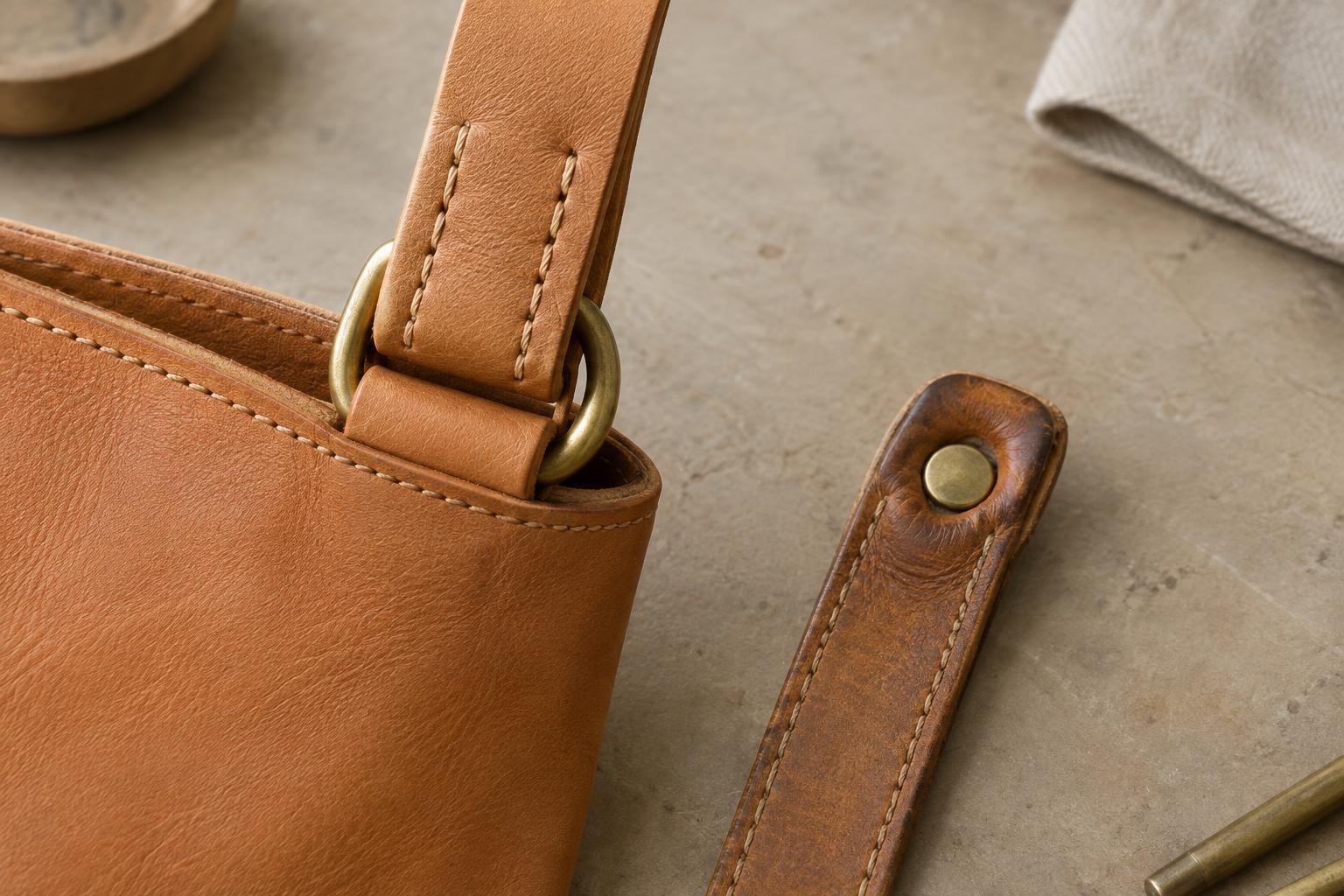
Leather and Small AccessoriesA leather strap may look sturdy along its length but still be vulnerable where it meets a buckle, ring or bag body. Learn how folds, stitching, rivets, hardware fit and everyday care affect these high-stress points.
Read article · 4 min↗
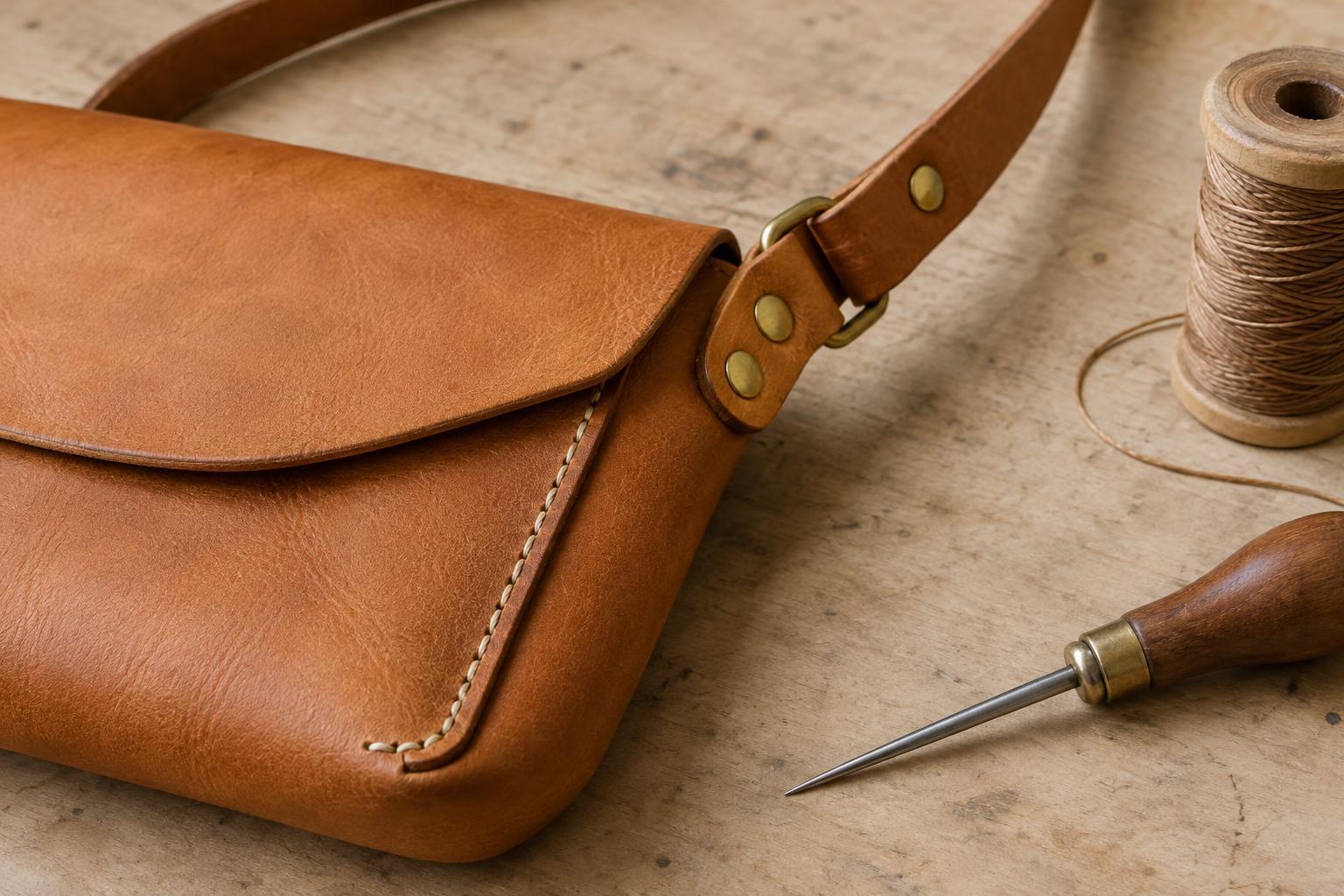
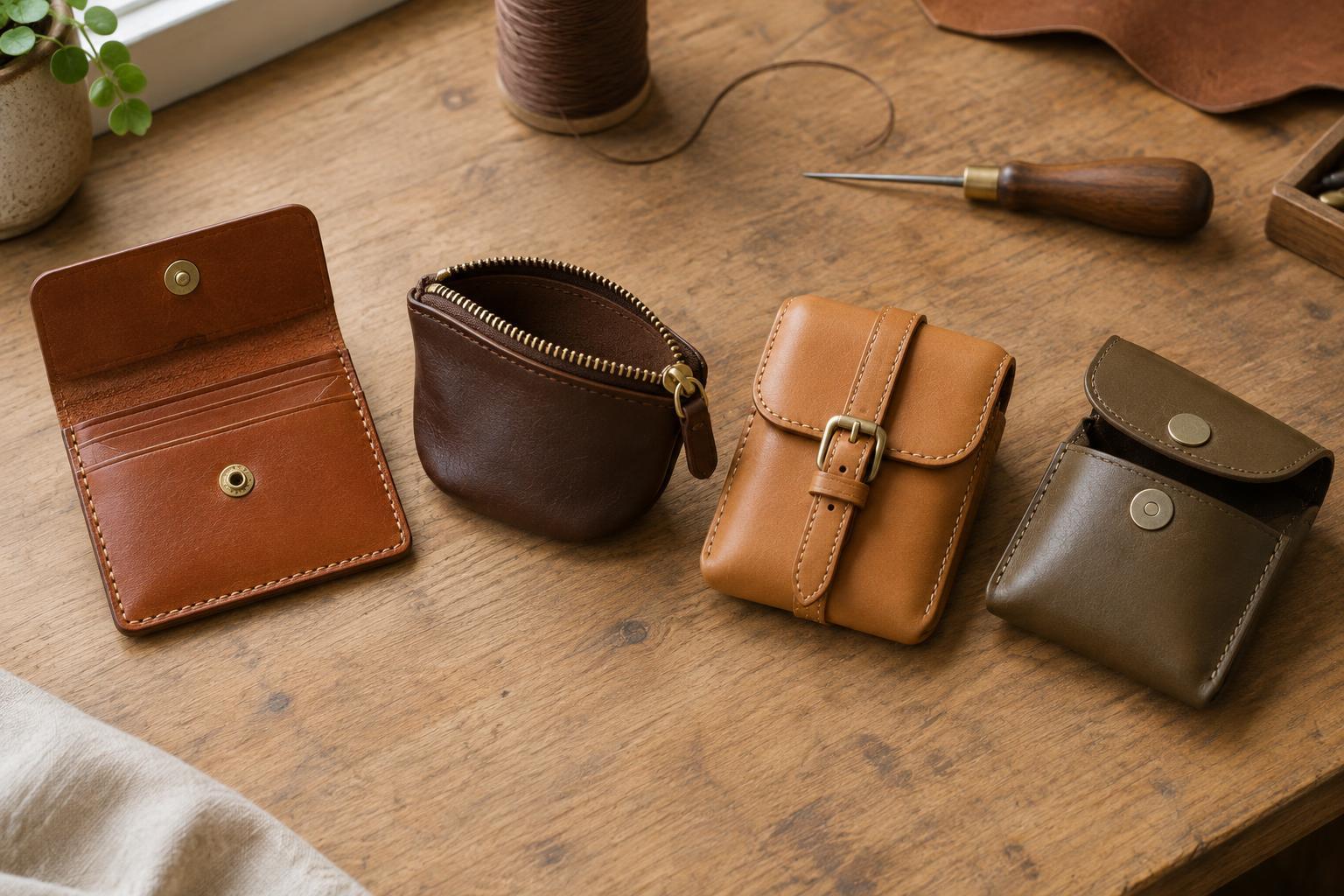
Leather and Small AccessoriesA closure affects how a leather accessory feels in the hand, how securely it carries its contents and how easily it can be repaired. Compare four common options and learn what to inspect before choosing one.
Read article · 4 min↗
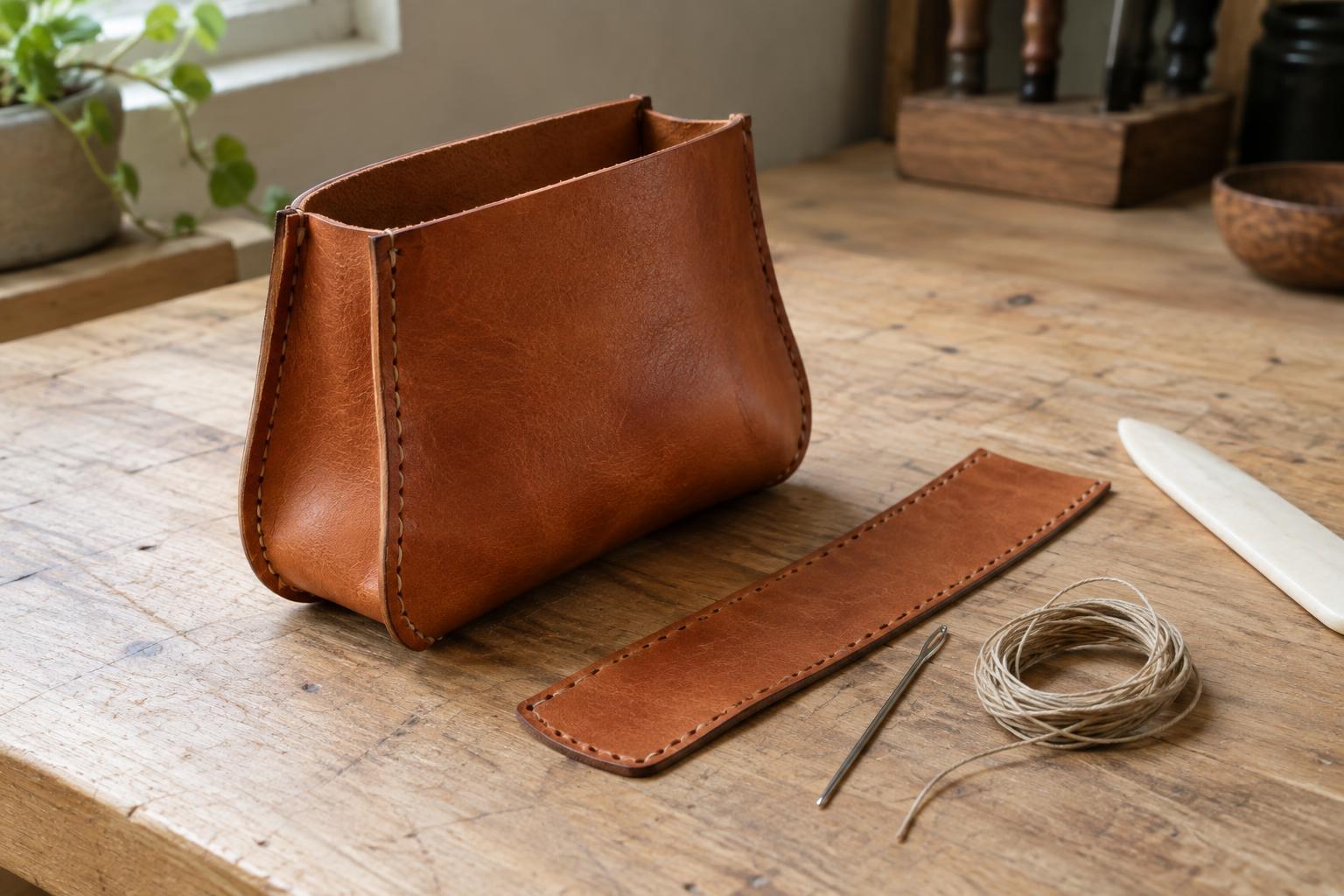
Leather and Small AccessoriesA flat pouch holds little beyond thin objects. Add a gusset, and its side panels let the front and back sit apart. Learn how to plan the shape, prepare the pieces, stitch the curves and check that the finished pouch opens as intended.
Read article · 4 min↗
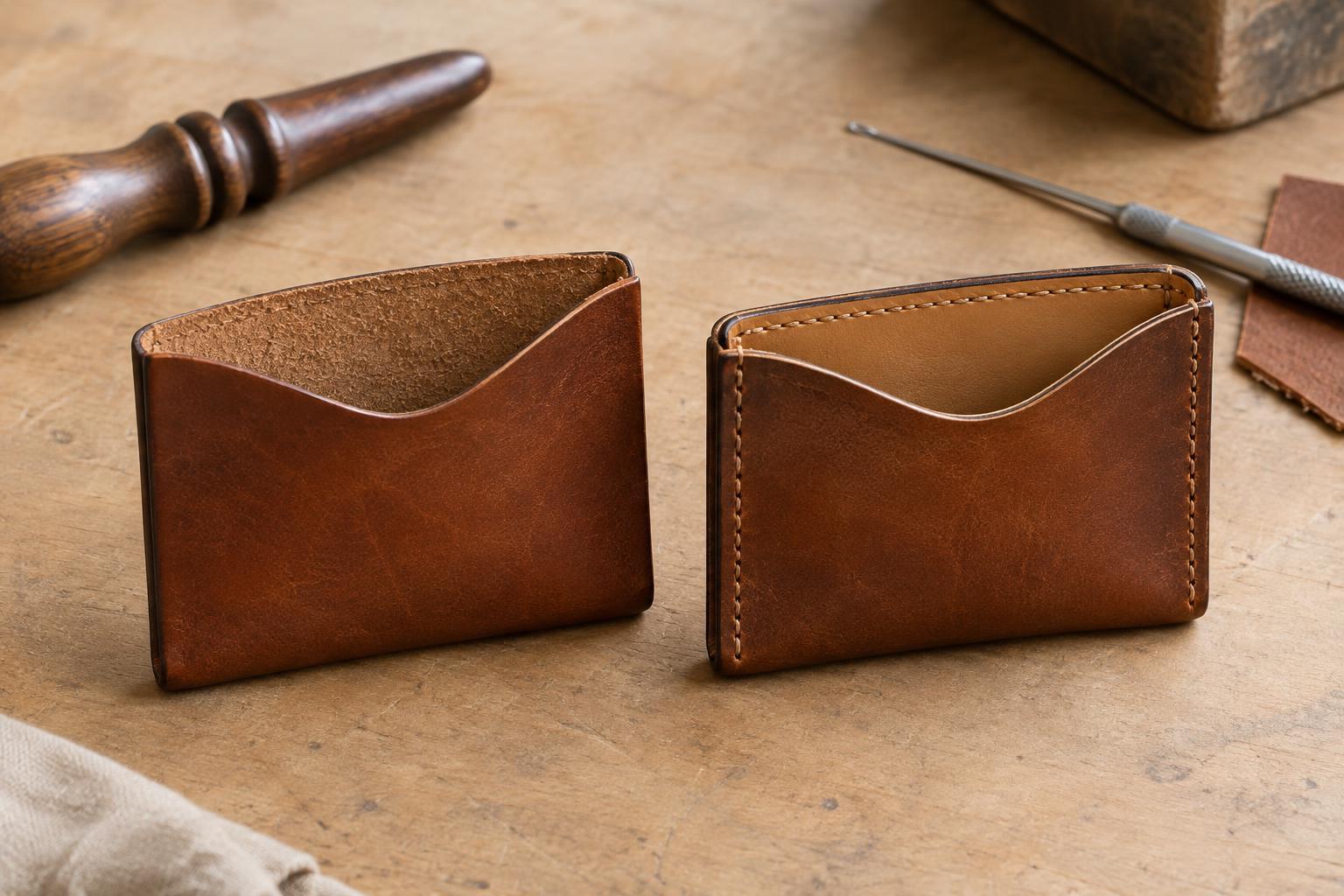
Leather and Small AccessoriesA lining changes more than the look inside a leather wallet, pouch or small bag. Learn how lined and unlined designs differ in edges, stitching, bulk, flexibility and care—and what to check when examining an accessory.
Read article · 4 min↗
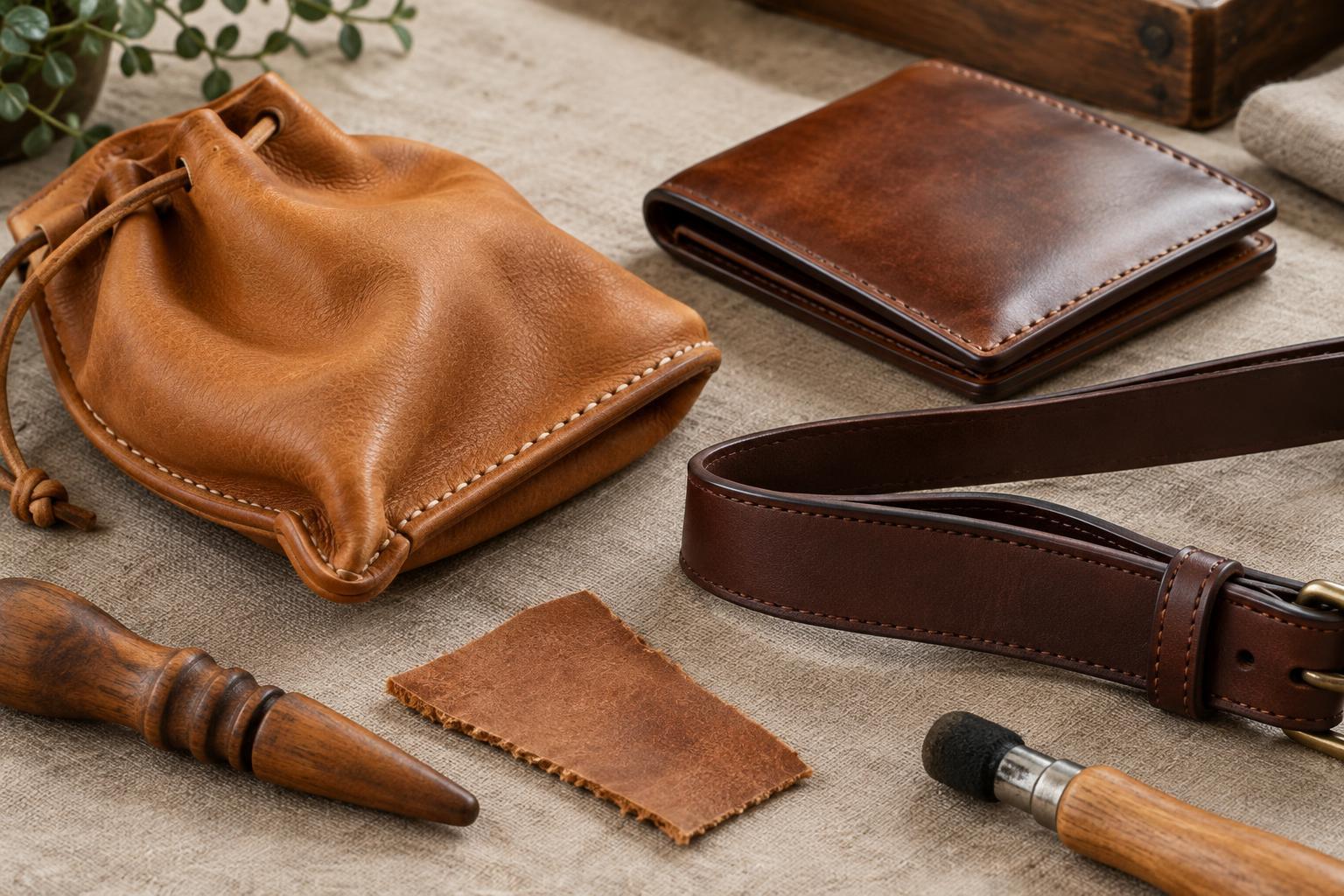
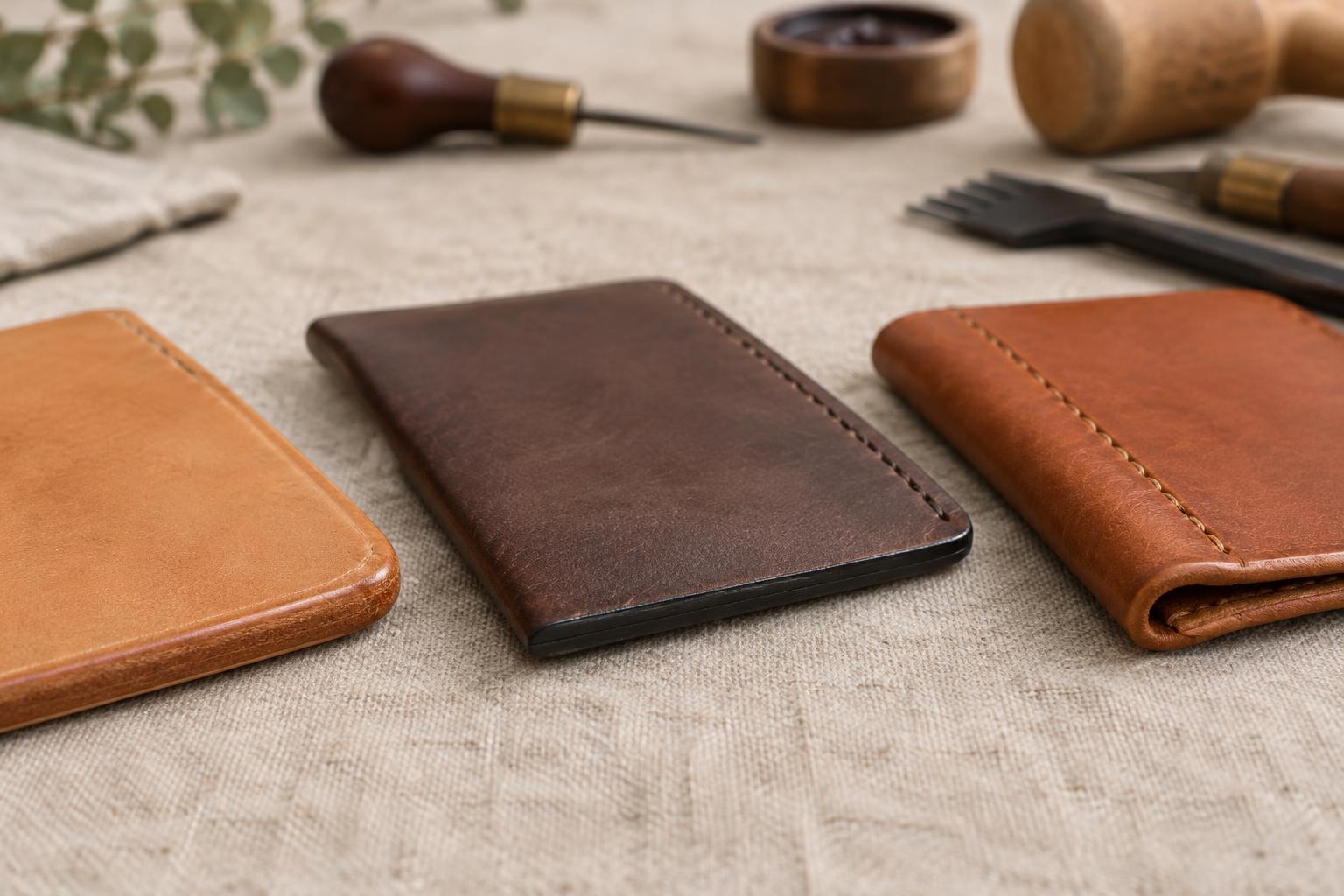
Leather and Small AccessoriesThe edge of a leather accessory can reveal how it was finished, but a smooth appearance alone does not tell the whole story. Learn the visible clues that distinguish burnished, painted and folded edges, where to look for them, and how to care for each finish.
Read article · 4 min↗
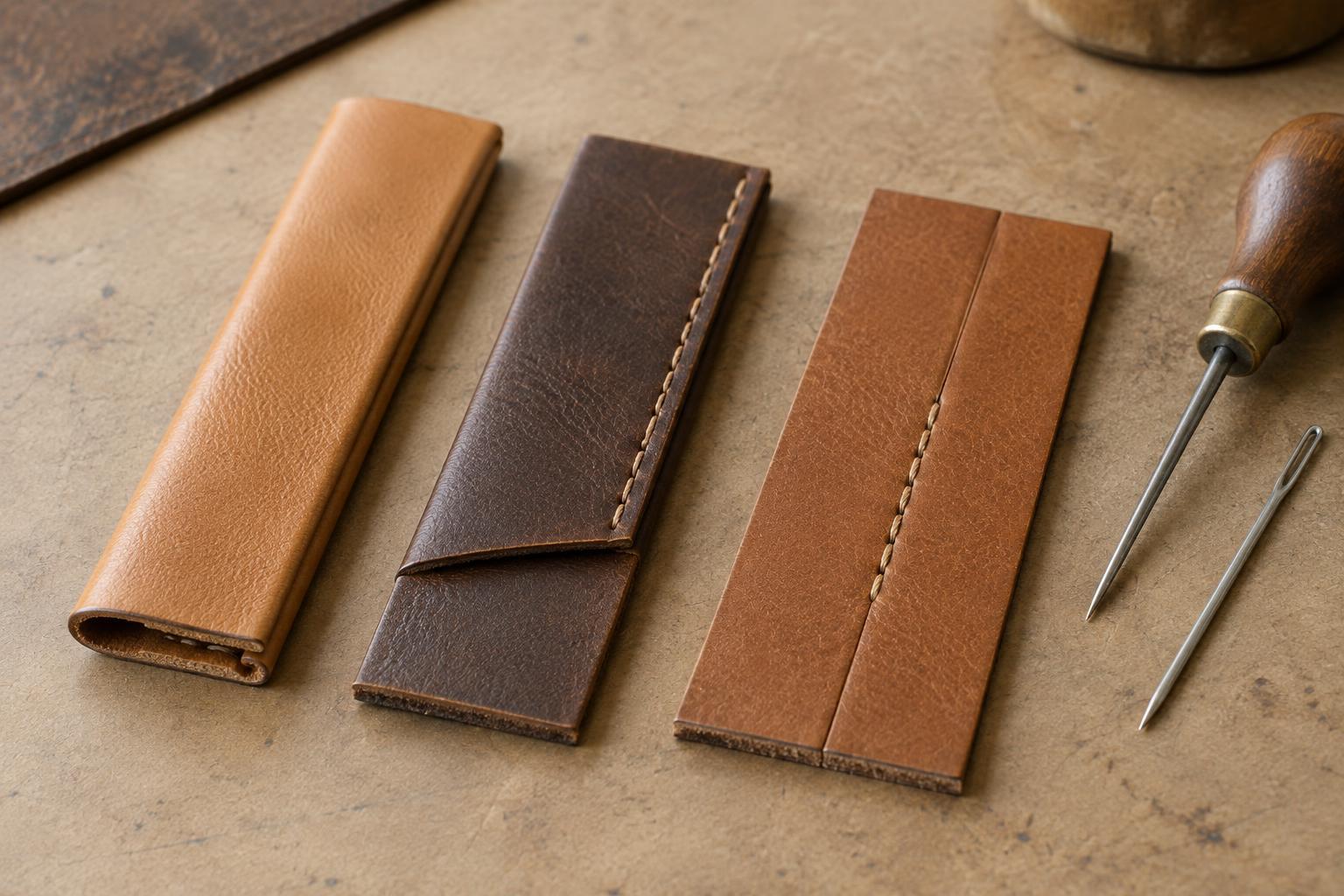
Leather and Small AccessoriesA leather seam does more than hold two pieces together. Its construction affects thickness, flexibility, appearance and repair. Learn how to recognise folded, overlapped and butt-joined edges, and what each can tell you about a small accessory.
Read article · 4 min↗
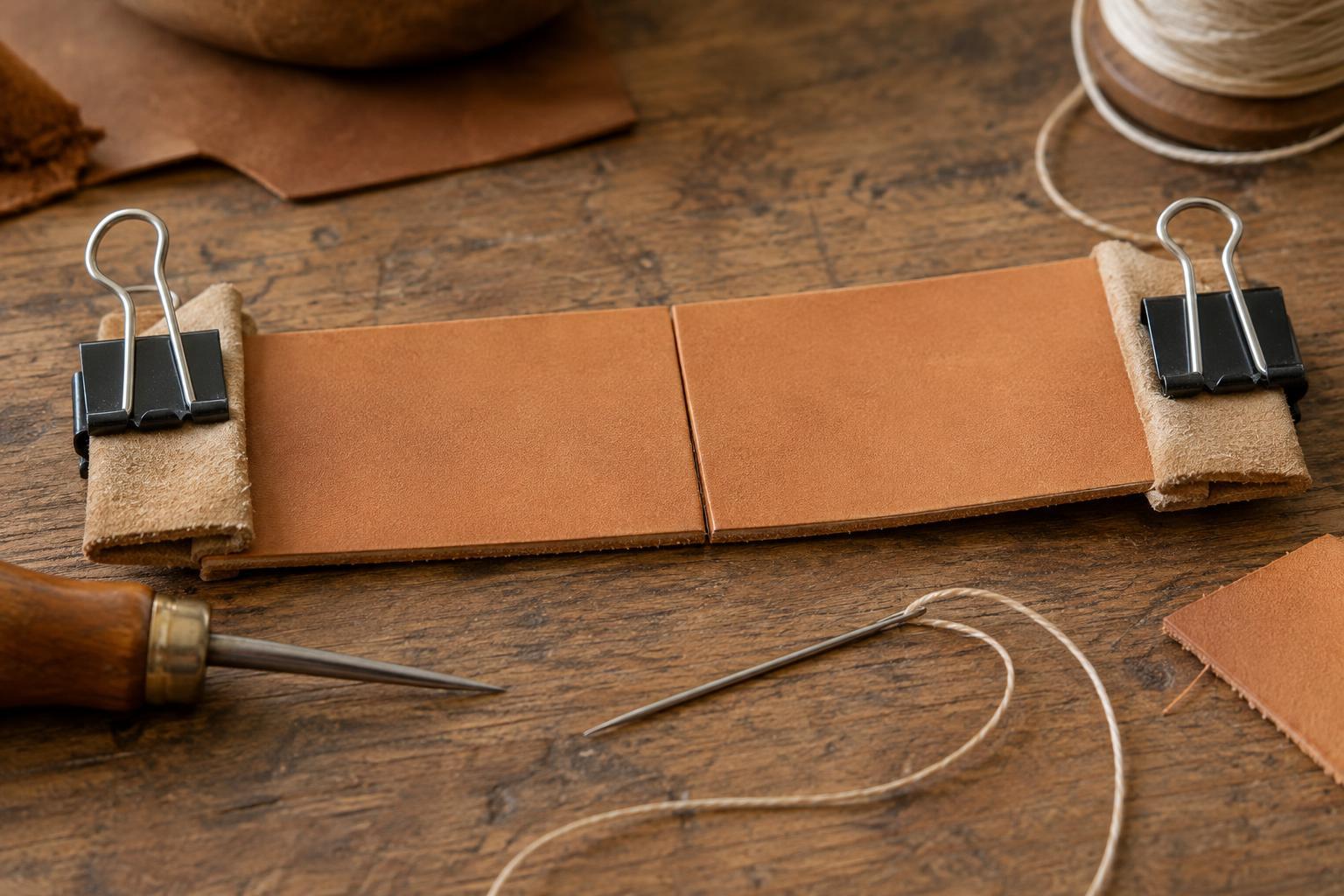
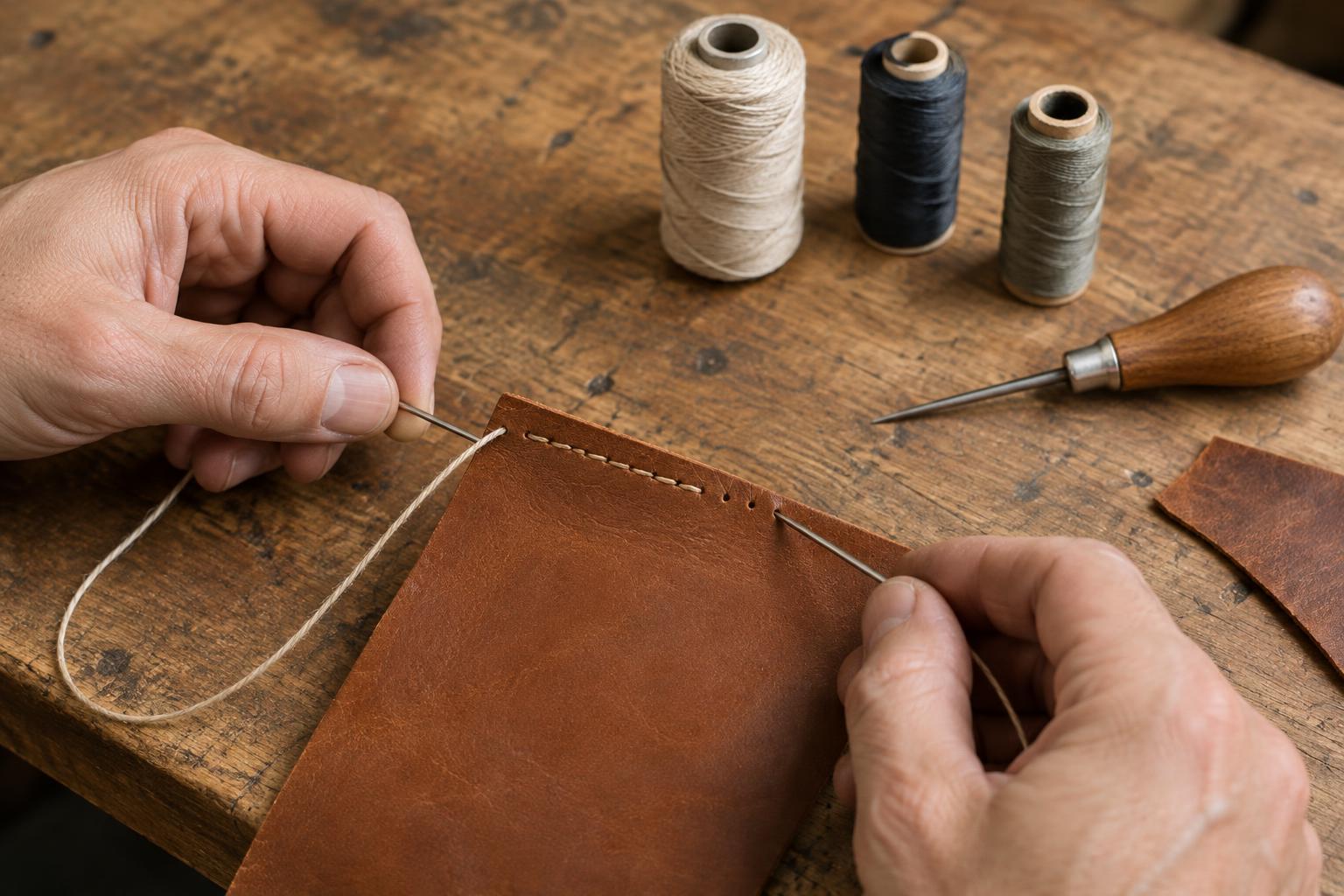
Leather and Small AccessoriesThe right thread should suit the leather, the stitch holes and the way an object will be used. Learn how linen, polyester and nylon differ, how to judge thread thickness, and why a small test seam is worth making before you begin.
Read article · 4 min↗
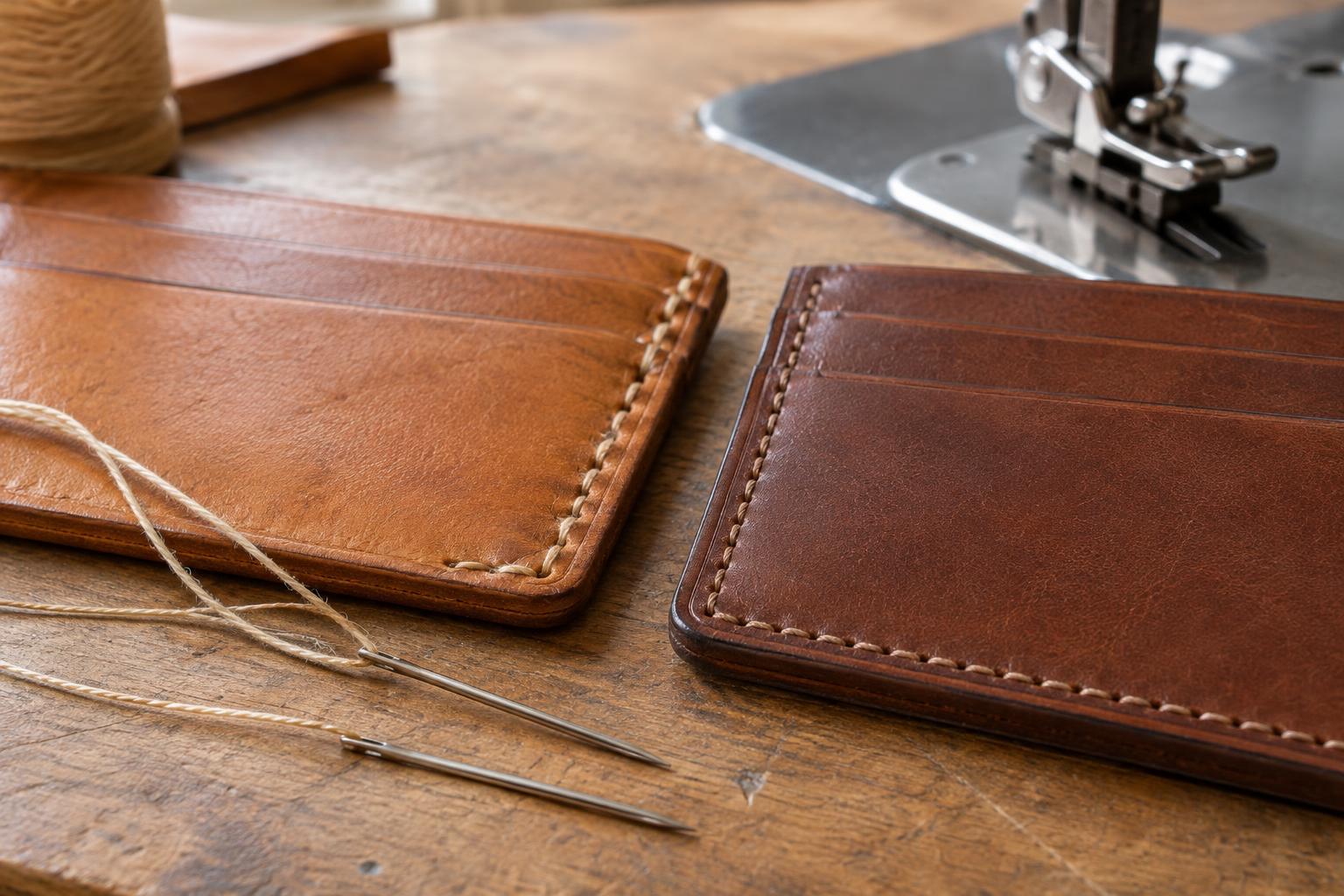
Leather and Small AccessoriesSaddle stitch and machine stitching can both make strong, attractive seams in leather accessories. Learn how each is formed, what to look for at an edge, and why construction and care matter as much as the stitch itself.
Read article · 4 min↗
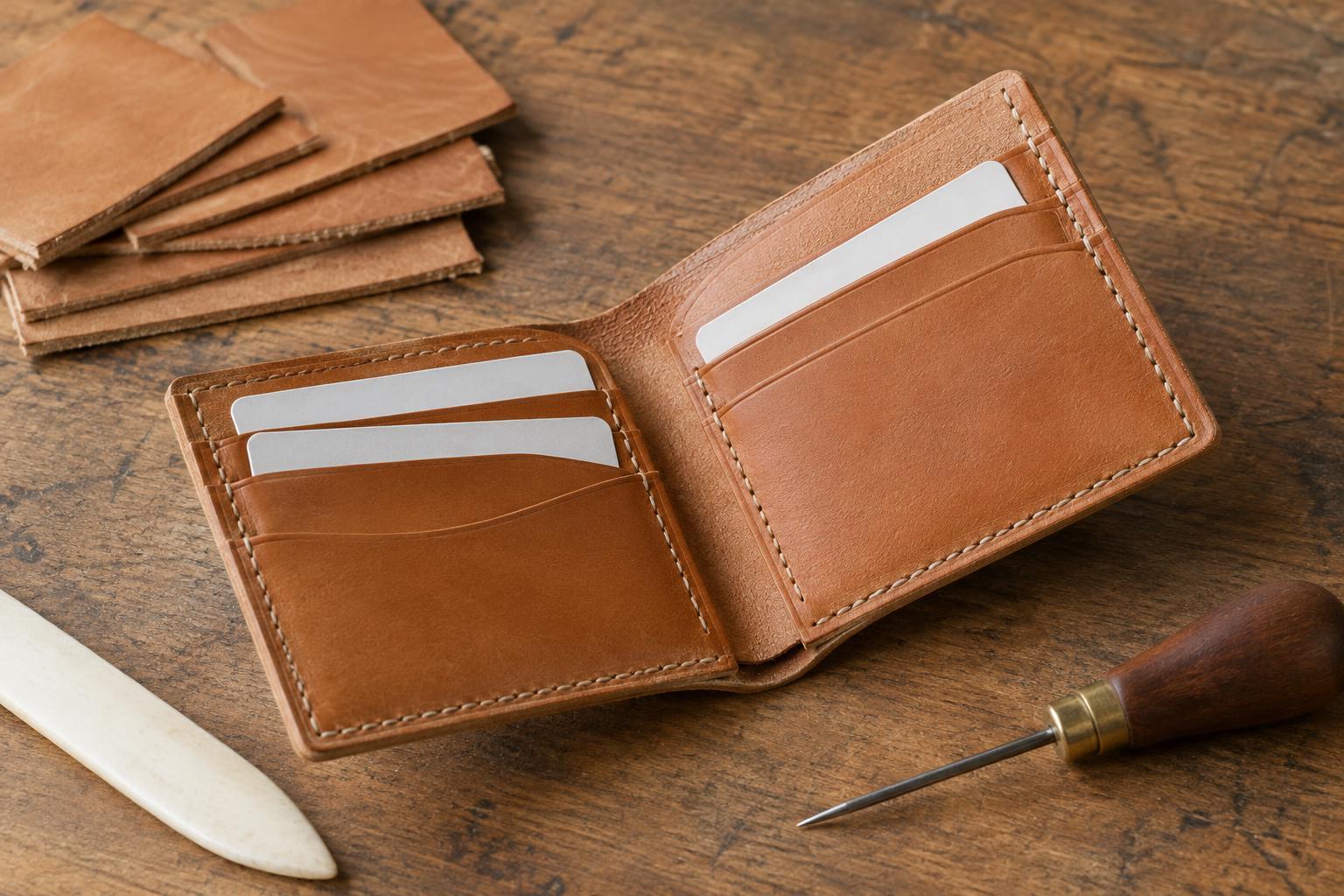
Leather and Small AccessoriesA wallet pattern that looks generous on paper can become tight once the leather is folded, stacked and stitched. Learn where thickness takes up space, how to test a fold, and how to leave room for cards without making a pocket loose.
Read article · 4 min↗
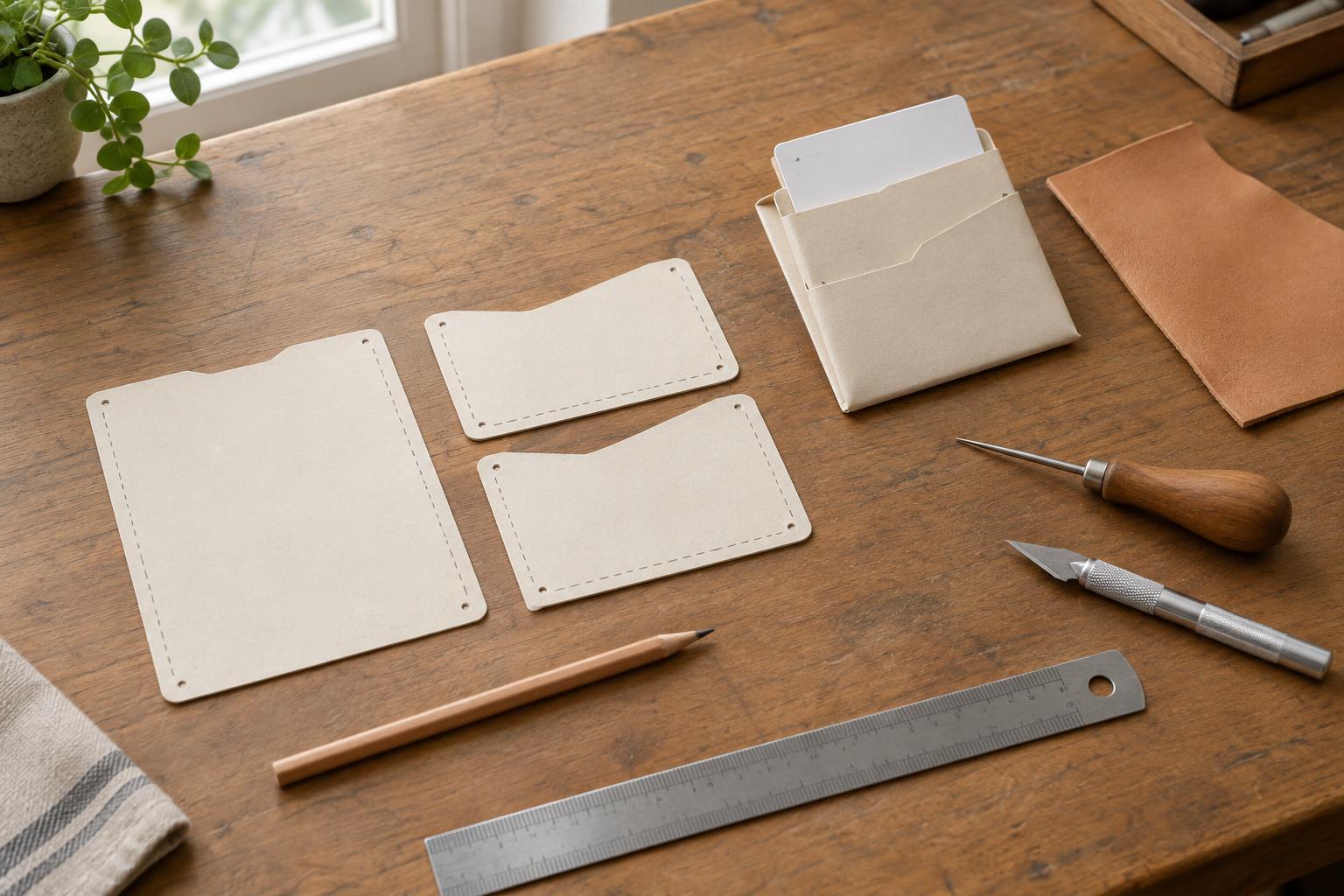
Leather and Small AccessoriesA good leather cardholder begins with a paper pattern you can test and adjust before cutting leather. Learn how to plan two accessible pockets, mark stitching lines, make a quick mock-up and transfer the final shapes accurately.
Read article · 4 min↗
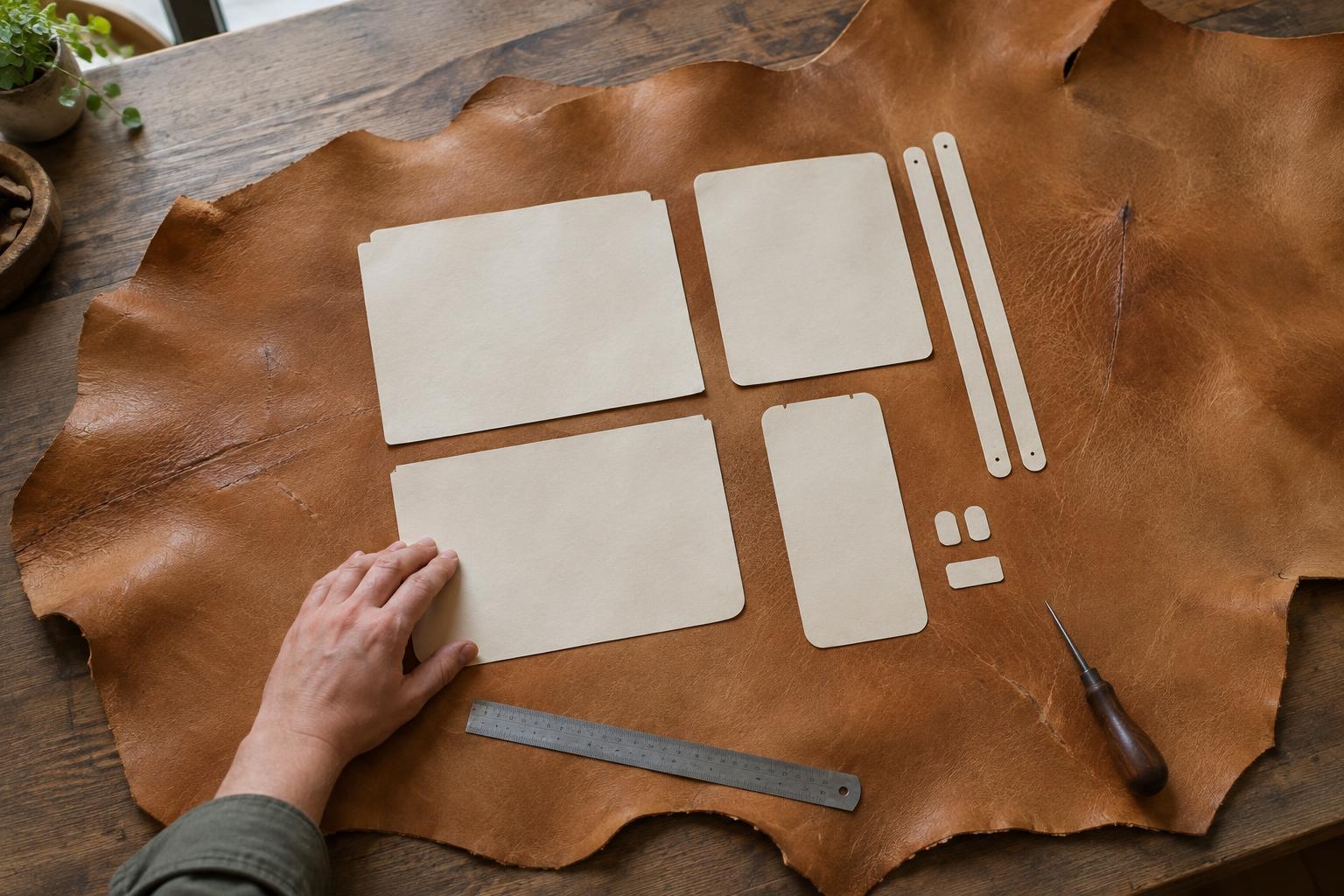
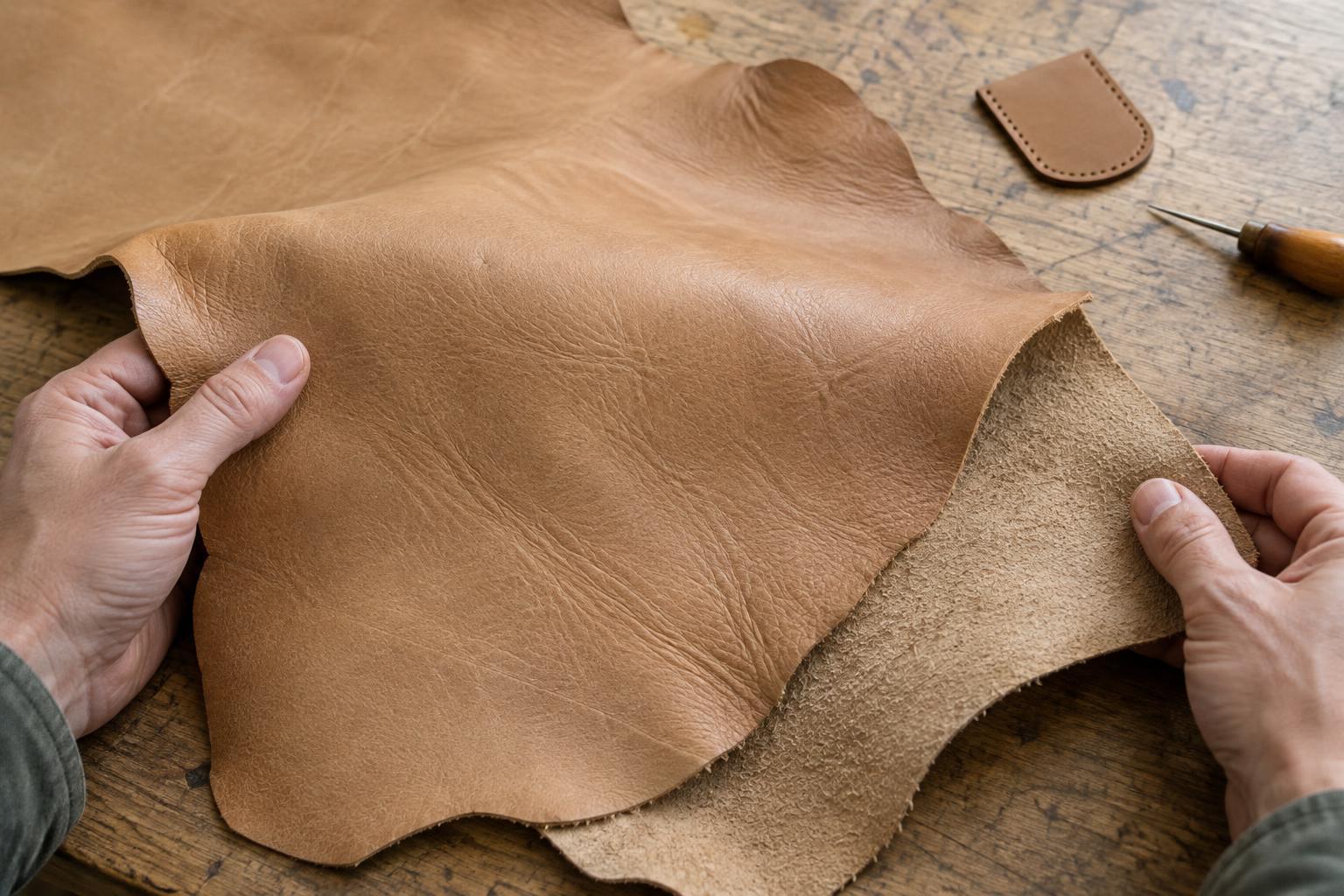
Leather and Small AccessoriesA leather hide is not a uniform sheet. Learn how to inspect its surface, map firmer and stretchier areas, and place pattern pieces so visible panels, straps and small components suit the leather available.
Read article · 4 min↗
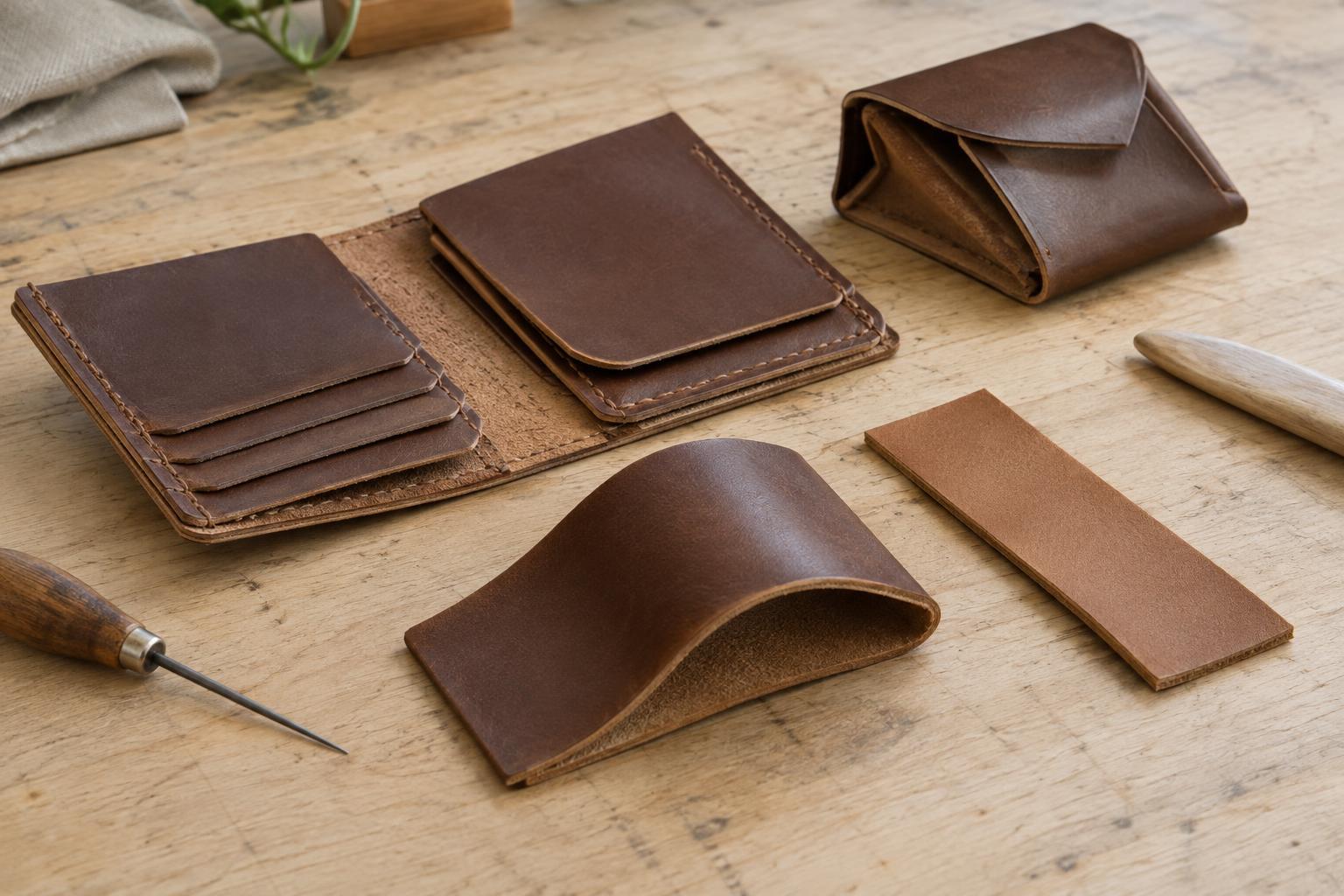
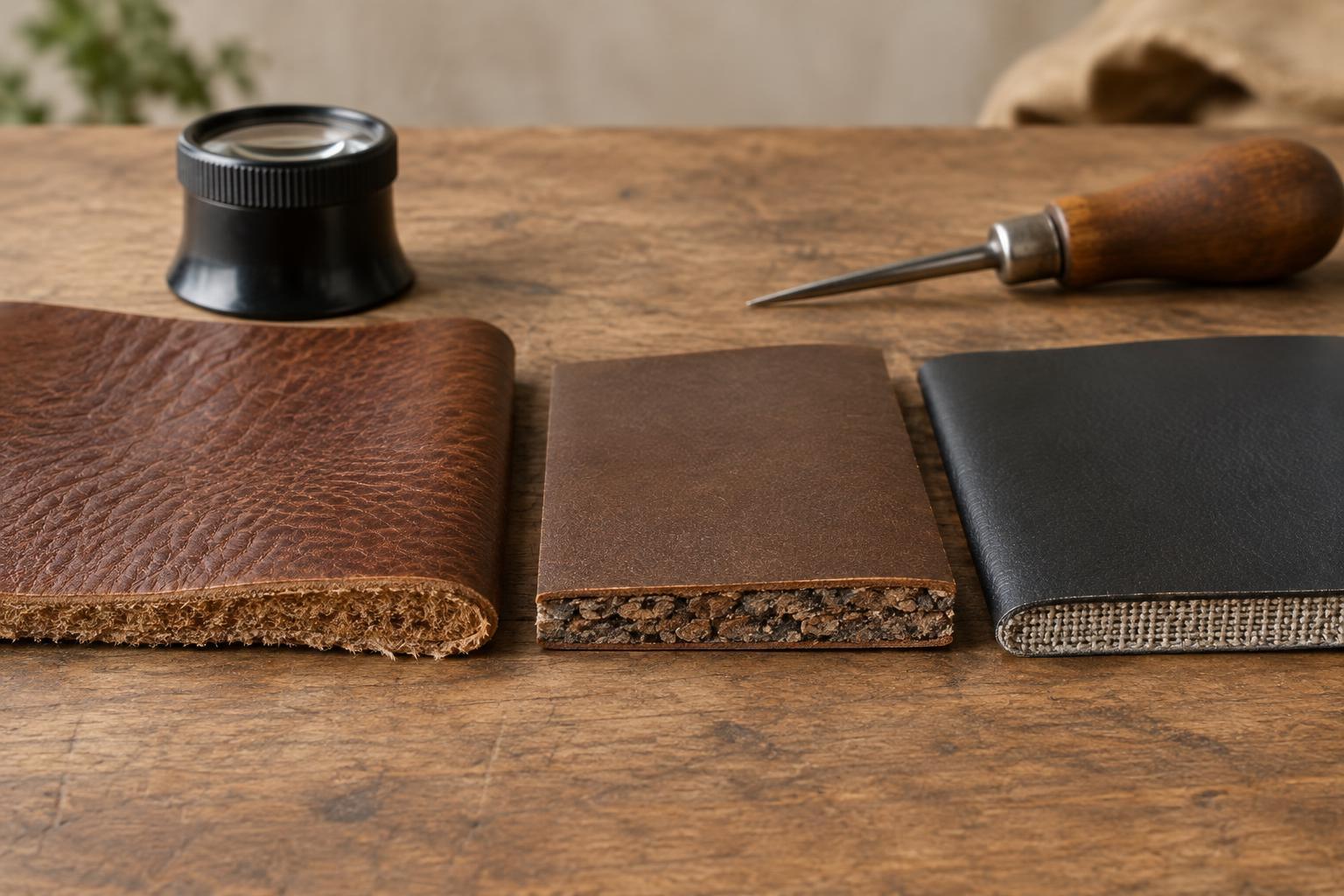
Leather and Small AccessoriesLeather, bonded leather and synthetic leather can look similar at first glance, but they are built in different ways. Learn what lies beneath the surface, which details to inspect and how construction affects care and repair.
Read article · 4 min↗
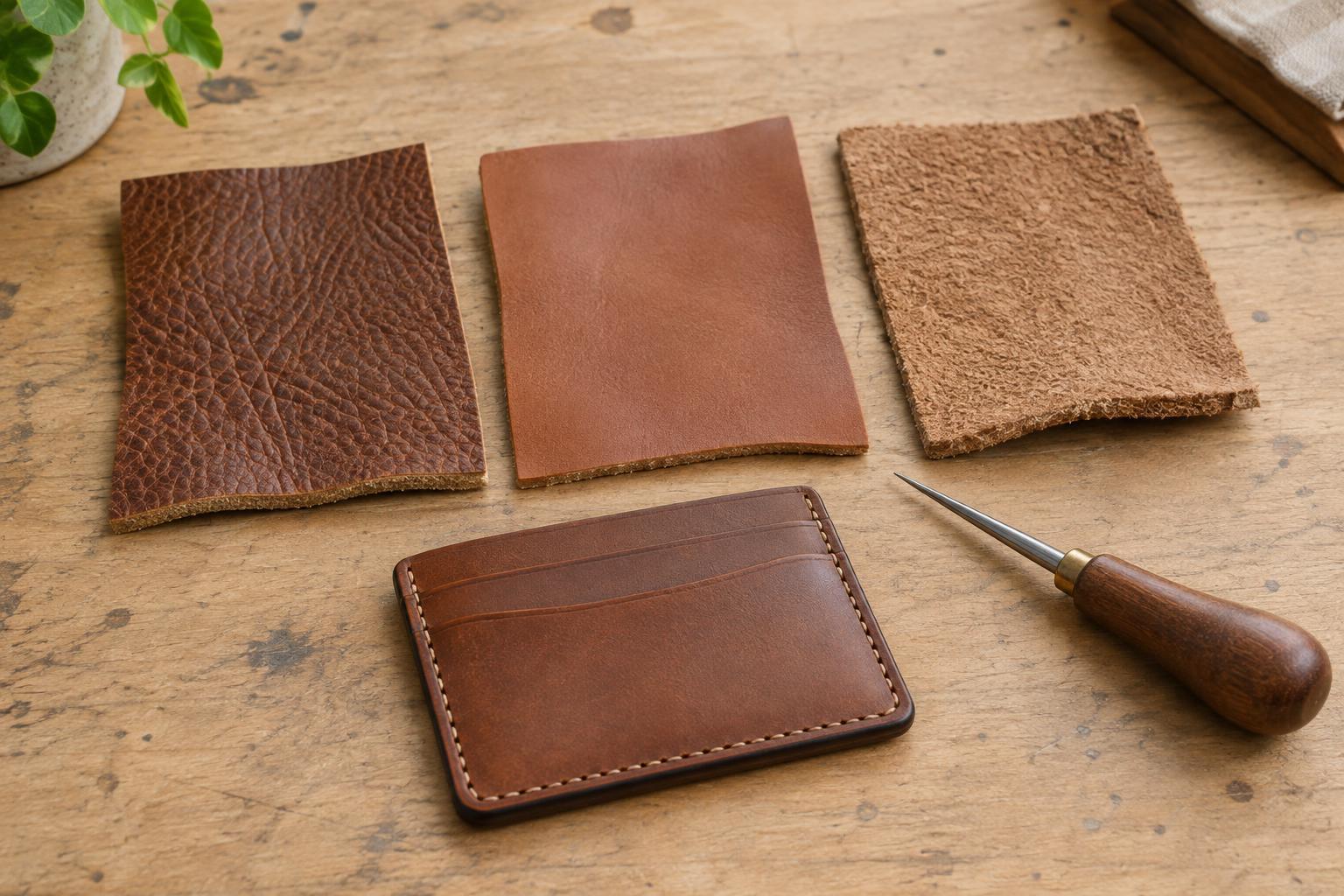
Leather and Small AccessoriesLeather labels often describe where a material came from within a hide, but they do not tell the whole story about quality. Learn how full-grain, top-grain and split leather differ, what finishing can conceal, and which construction details matter when choosing a small accessory.
Read article · 4 min↗