Start by identifying what moved
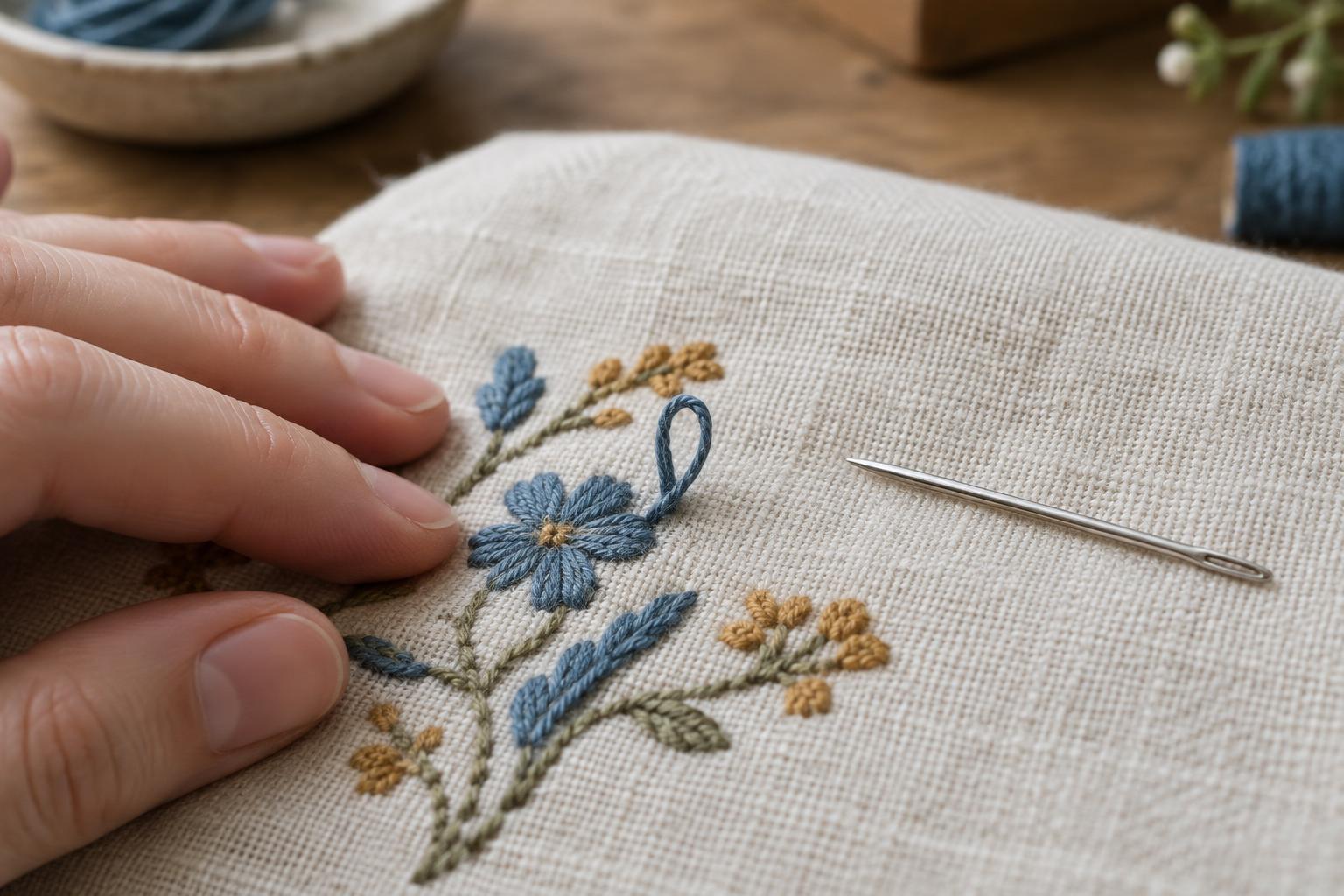
A snag may look like a single loose thread, but its position matters. It could be part of an embroidery stitch, a thread from the fabric beneath the design, or a free end that was already on the reverse. Pulling the wrong one can tighten nearby stitches, distort the cloth or create a longer run. Set the textile flat on a clean surface with good light, and avoid wearing rings or rough sleeves that might catch it again.
Look at both sides if you can do so without straining a lining or seam. A loop that follows the path of the decorative stitching may be an embroidery thread drawn out of place. A loop running through an unstitched part of the cloth may belong to the ground fabric instead. If several stitches have lifted together, or the surrounding fabric is torn, treat the problem as more than an isolated snag.
Decide whether the loop needs attention
Not every raised thread needs to be made perfectly flat. Embroidery can have intentional texture, especially where stitches cross or stand above the fabric. Compare the area with undamaged parts of the design before changing anything. If the loop is small, stable and unlikely to catch during use, leaving it alone may be safer than working it repeatedly.
A loose end is different from a loop that remains attached at both sides. Do not tug an end to see where it goes: it may be the tail holding nearby stitches in place. Likewise, avoid cutting a loop simply to make it disappear. Cutting turns one continuous thread into two ends that may work loose. If the textile has sentimental value, fragile fabric, dense stitching or an inaccessible reverse, consider asking a textile repair specialist to assess it.
Ease an attached loop back gently
If the fabric is sound and you can clearly see that one embroidery stitch has been drawn up, try redistributing the slack rather than pulling it tight from a single point. With clean hands, support the fabric around the snag. Use the blunt end of a needle or a smooth, fine tool to nudge the raised thread toward adjacent stitches, a little at a time. Work along the thread’s apparent path and stop if the cloth begins to pucker or another stitch lifts.
If the reverse is accessible and you can identify the same loop there, a blunt needle can sometimes guide the slack through to the back. Do not force a thick thread through a tight weave or pierce new holes to hide it. Once the loop is on the reverse, lay it flat without pulling the front of the design out of shape. A tiny amount of remaining slack is preferable to a tight stitch that strains the ground fabric.
Avoid adhesive as a quick way to hold the thread down. It can stiffen the area, mark the fabric or make a later repair harder. Heat is not a reliable shortcut either: pressing directly on raised embroidery can flatten its texture, while heat or steam may affect fibers or dyes in ways you cannot easily predict.
Protect the repair and prevent another catch
After handling the snag, inspect the front again in ordinary light. Check whether the design lies comfortably and whether nearby stitches are still secure. If an end remains loose on the reverse, do not knot it through the visible face. Securing ends within existing stitches can be possible, but it requires a clear view of the thread path and a needle suited to the fabric. When those conditions are missing, stop rather than improvising.
Reduce future snags by thinking about where the embroidery rubs. On a cushion or garment, jewellery, fasteners and rough surfaces may catch raised stitches. Turn a washable embroidered item inside out before laundering if its care requirements allow washing, and keep it away from items with hooks or zippers. For an object kept in storage, place a smooth, clean layer between the embroidery and anything that could press against or catch it.
The aim is not to make every stitch look identical. A careful repair preserves the shape of the design and the strength of the fabric while changing as little as necessary. If gentle adjustments do not settle the thread, leaving the snag protected until it can be assessed is a sound choice.