Two ways to shape a stone
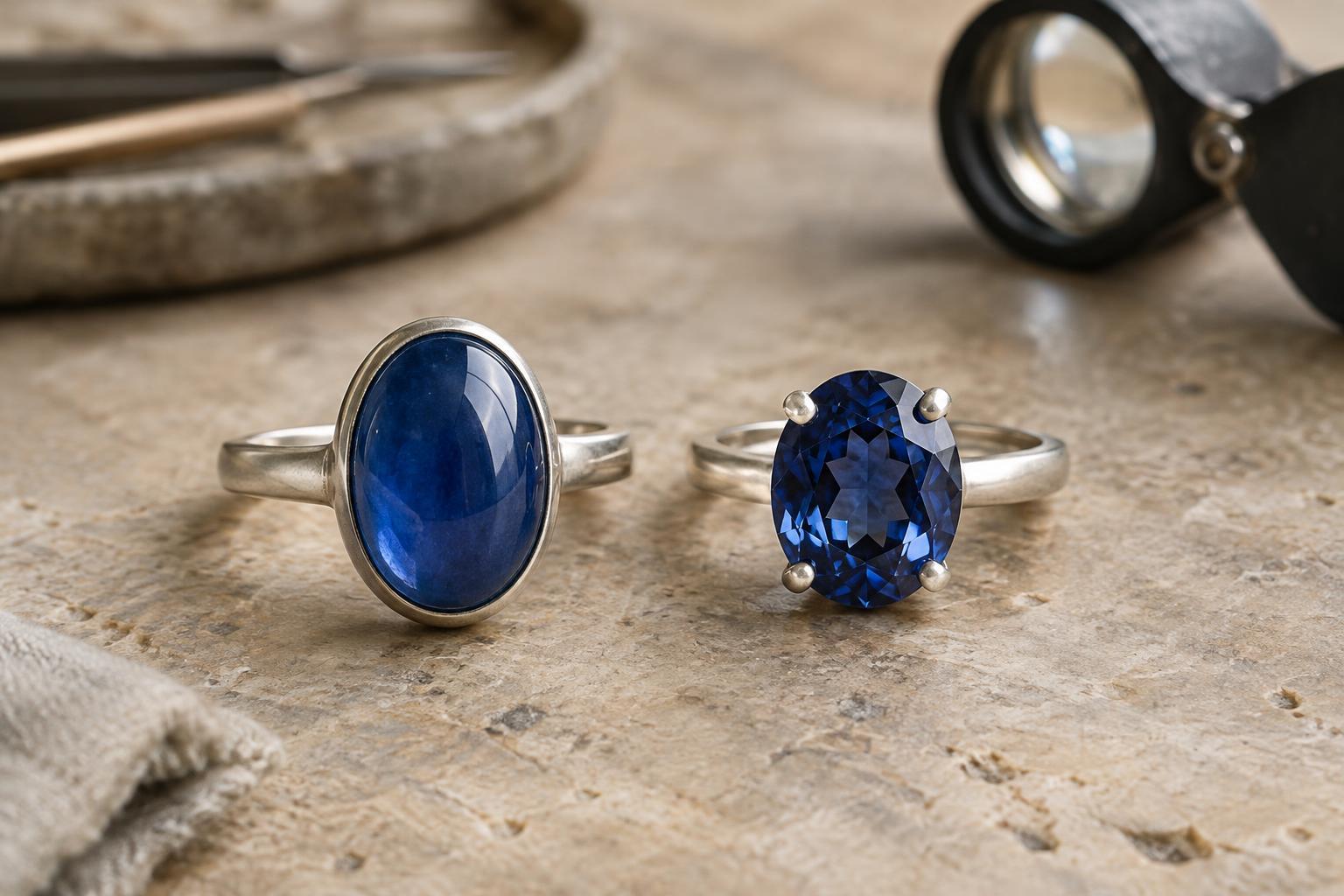
A cabochon is polished into a smooth, rounded surface, usually with a flat or gently curved back. Its dome may be high and pronounced or low and subtle. Rather than drawing attention to individual polished planes, it presents the material as a continuous surface. Colour, pattern and the shape of the dome become central to its appearance.
A faceted stone has multiple flat, polished surfaces arranged to catch and return light. The familiar brilliant-style cut is one example, but faceted stones come in many outlines and arrangements. Some have a pointed underside; others, such as rose cuts, can have a flatter back. Neither approach is inherently better craftsmanship. The choice depends on the material, the effect the maker wants and how the stone will sit in the finished piece.
How each cut handles light and detail
Facets create changes in brightness as a stone or the viewer moves. In a suitable transparent material, their angles can direct light through the stone and back toward the eye, producing flashes and contrast. The result depends on more than the number of facets: proportions, polish, transparency, colour and the setting all influence what a viewer sees. A faceted stone may look lively in one design and subdued in another.
A cabochon usually gives a gentler, broader reflection across its curved surface. That makes it useful when the appeal lies in an opaque colour, a visible pattern or a feature within the material. Some stones show a moving band or patch of light under particular lighting; a polished dome can make that effect easier to see. A smooth surface can also reveal pits or uneven polishing, so simplicity does not remove the need for careful finishing.
What the cut asks of the setting
Cabochons often pair naturally with bezels: a narrow rim of metal surrounds the stone and holds its edge. The outline can become part of the design, whether it is a clean border or a more decorative frame. A bezel may also shield the edge from some knocks, though it cannot make a vulnerable material indestructible. Cabochons can be held by prongs or other settings too; the important question is whether the setting grips the particular stone securely.
Faceted stones can be set in prongs that leave much of the stone visible, or in bezels and other protective designs. A stone with a deeper underside needs room beneath it, which can affect the height of a ring or pendant. That height matters in daily use: a raised setting may catch on clothing or meet doorframes more readily than a low one. Look at the piece from the side as well as the front to understand how the cut and setting work together.
Choosing a visual language
Cabochons tend to read as calm, sculptural shapes. Their uninterrupted surfaces can anchor a design with broad areas of metal, repeated curves or strong colour contrasts. In a small piece, a low dome can provide colour without making the jewellery appear busy. Patterned material can also become a focal point when the setting gives it enough open space to be seen.
Faceted stones introduce more small-scale movement. They can add points of brightness to delicate work or create a rhythm when several stones are arranged together. The cut is not restricted to formal or ornate jewellery: a single faceted stone in a restrained setting can be striking. When comparing pieces, consider whether you want the eye to rest on colour and surface or to follow shifting reflections. It is a design preference, not a test of which stone is more valuable.
Looking closely and caring for the finished piece
Before choosing a piece, view it in more than one kind of light if possible. Turn it gently to see whether the qualities you enjoy remain visible as it moves. Check that a cabochon sits evenly against its setting and that its polished surface looks intentional rather than patchy. On a faceted stone, look for an appealing balance of light and dark areas. On either type, inspect the metal around the edge for gaps, loose prongs or places likely to snag.
Care depends on the stone, any treatments it has received and the materials used to assemble the jewellery. Store pieces separately to reduce scratching and protect them from impacts. A soft, dry cloth is a cautious starting point for removing fingerprints, but do not assume that soaking, steam or ultrasonic cleaning suits every stone or setting. If the material is unidentified or the piece seems loose or damaged, ask a knowledgeable jeweller about safe cleaning and repair before attempting more.