Start with the leather and the job of the edge
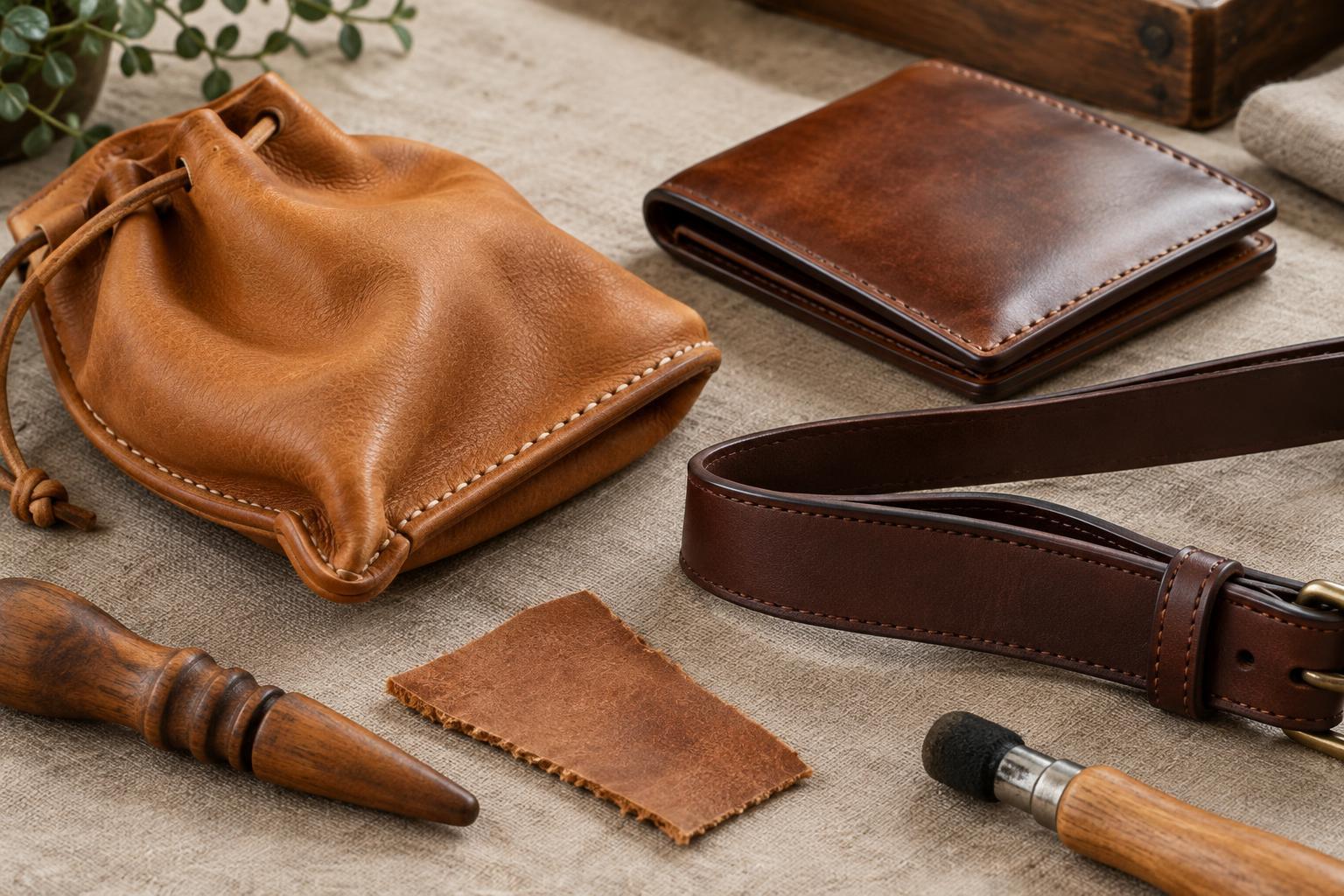
An edge finish does more than make a cut line look tidy. It can soften a corner against the hand, bring several layers together visually, or keep exposed fibres from feeling rough. The best choice depends on where the edge sits, how often it bends and what the leather is like at the cut. A firm card holder and a soft drawstring pouch may need different treatments even when their visible edges look similar.
Before choosing a finish, examine a clean offcut. Does the cut look dense and even, or loose and fibrous? Can it be compressed with a little rubbing, or does it remain soft and springy? Leather type, thickness and surface finish all affect the result. Rather than assuming a technique will work because it worked on another piece, make a small test edge using the same leather and construction as the accessory.
Burnished edges: a natural look for suitable leathers
Burnishing smooths and compresses an exposed edge through careful preparation, moisture or a suitable edge compound, and friction. It often suits firm leather that develops a cohesive, smooth cut edge, particularly on wallets, belts and straps. The result lets the leather itself remain visible. A neatly burnished edge usually feels smooth to the touch, with no prominent loose fibres or sharp corners.
Burnishing is less reliable on some soft or heavily finished leathers, whose fibres may resist compacting or become fuzzy again with handling. Stacked layers also need to be aligned and trimmed cleanly before they are smoothed; burnishing cannot conceal a noticeably uneven cut. Round exposed corners lightly if the design allows, and test the process before treating a long, visible edge.
Painted edges: a defined line that needs careful application
Edge paint forms a coating over the cut rather than relying solely on the leather fibres to become smooth. It can give a crisp, consistent line to firm accessories and can bring differently coloured layers into a unified edge. The edge still needs preparation: a rough cut, gaps between layers or excess paint can leave ridges that are easy to see and feel. Several controlled, fully dried applications generally give a neater result than one heavy application.
Flexibility matters. An edge on a rigid card case moves differently from the opening of a soft pouch or a strap folded repeatedly in the same place. A painted finish should be tested on a sample bent as the finished item will bend. If a sample cracks, lifts or feels stiff, reconsider the paint, the application or the edge design. Paint can also wear through at corners, so it is worth thinking about how easily the edge could be touched up later.
Turned and raw edges: useful alternatives for soft pieces
A turned edge folds the leather inward so the cut edge is hidden. It can give a soft accessory a clean outline without placing a coating on an area that flexes. Turning takes planning: a thick fold may become bulky, while a thin or weakened fold may not hold its shape well. Makers may reduce thickness where the leather folds, but this needs care around seams, corners and points of strain. On a small pouch or supple flap, a well-proportioned turn can feel more natural than a hard, built-up edge.
A raw edge leaves the cut visible. This can be an intentional choice when the leather has a tidy cross-section and the edge will not rub against skin or clothing. Raw does not mean careless: the cut should still be even, and any loose fibres or sharp points deserve attention. On a soft item, a raw edge may move freely, but its appearance can change with use. Try it first on an area that will receive the same amount of handling as the finished piece.
Make the choice by testing how the accessory moves
For a firm wallet or structured strap, compare a burnished and a painted sample after building each to the finished thickness. Look at the line where layers meet, feel the edge with a fingertip and bend it gently where the accessory will bend. For a soft pouch, compare a turned edge with a carefully cut raw edge. Check whether the turn adds unwanted stiffness or whether the raw cut feels too exposed. The most attractive flat sample is not always the most comfortable choice in use.
Once finished, keep edges clean with gentle, dry wiping and avoid soaking them. Inspect high-contact corners from time to time. Loose fibres, lifting paint or a separating fold are easier to address before a larger area is affected. An edge finish succeeds when it suits both the leather and the movement of the object—not simply when it looks polished on the workbench.