Start with the cloth, not the yarn label
Before choosing a weft, describe the cloth you want to make. Should it fold softly over an edge, hang with a little body, or hold a firm shape? How much light should pass through it? Drape describes how cloth falls and bends; density describes how closely its threads sit together. A dense cloth can still drape, while an open cloth can feel stiff. Thinking about these qualities separately gives you a clearer goal than simply looking for a “soft” or “strong” yarn.
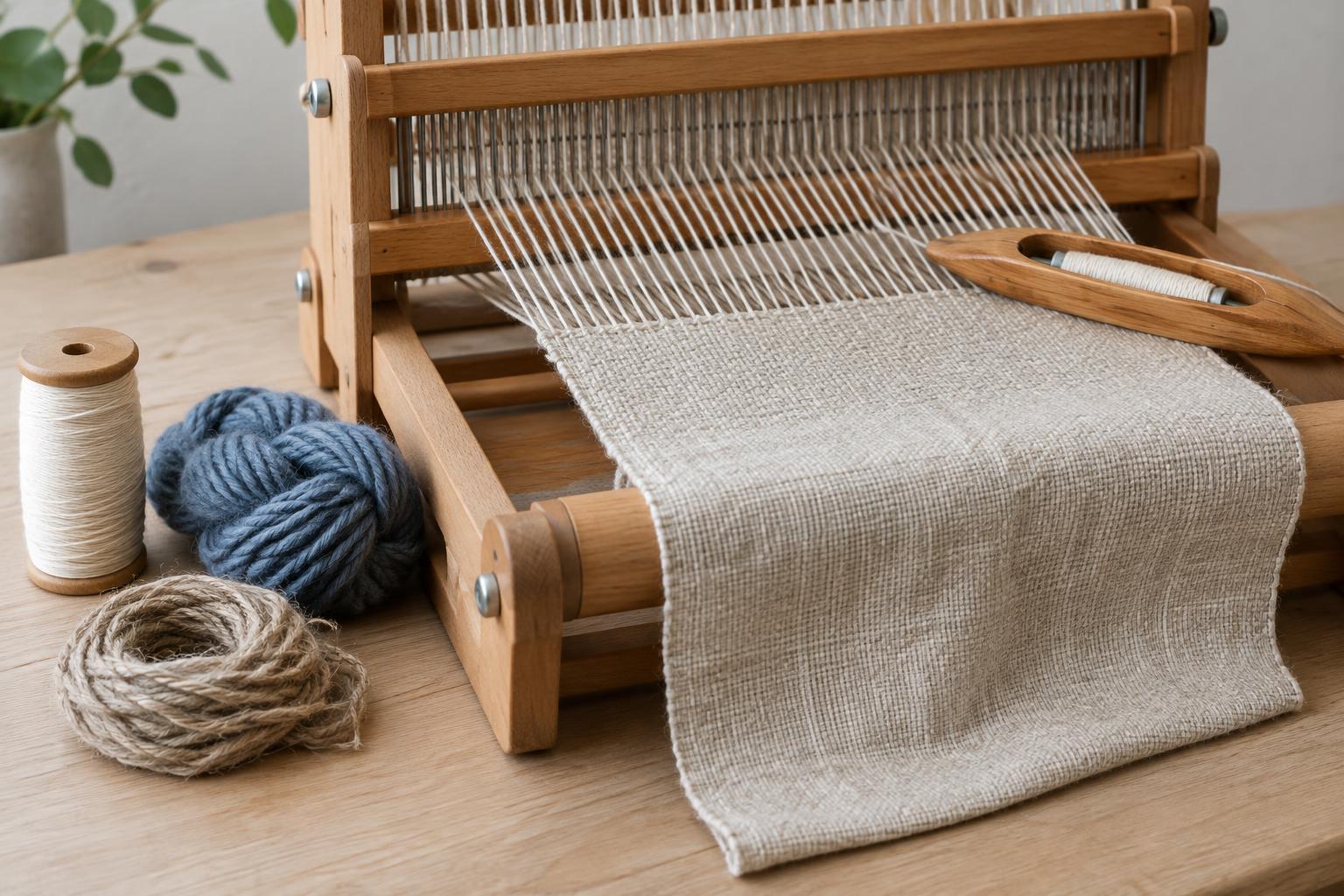
The weft runs across the warp threads held on the loom. Its effect depends partly on what is already fixed: the warp yarn, the distance between warp ends, and the weave structure. A weft that fills the spaces in an open warp may crowd a closely spaced one. If you have not yet prepared the loom, consider the warp and weft as a pair. If the warp is already in place, use its spacing as the starting point for your choice.
Compare thickness, texture and twist
Yarn thickness influences how much space each pass of weft occupies. A thicker weft generally builds coverage more quickly; a finer one can leave more room between rows. But yarns with the same stated size may behave differently. A lofty yarn can compress under the beater and expand during finishing, while a smooth, compact yarn may keep a clearer outline. Compare candidates by handling short lengths and looking at their actual diameter, rather than relying only on a label.
Twist and surface texture also change the result. A firm, tightly twisted yarn may give the cloth a crisp feel and distinct lines. A softer-spun yarn may make a gentler surface, though it may be more vulnerable to abrasion in use. Fuzzy yarns can visually fill gaps even when the underlying cloth is fairly open. That can be useful for a warm, soft-looking fabric, but it may hide a pattern that depends on sharply defined threads.
Think about fibre and the way the cloth will move
Fibre choice shapes the feel of the finished weave, but no fibre guarantees a particular drape. Smooth, relatively inelastic yarns can help a cloth keep clean edges and visible structure. Springier yarns may settle closer together after washing, changing both coverage and hand. Blends, spinning methods and finishes add further variation. If you can, bend and fold a sample of the actual yarn or a fabric made with it; descriptions such as “cotton” or “wool” alone cannot tell you how your cloth will hang.
Consider use as well as appearance. A cloth intended to wrap around the body needs enough flexibility to move comfortably. A table mat or structured panel may benefit from more firmness. Where the fabric will face frequent rubbing, examine whether the weft surface is likely to snag or shed with handling. The most pleasant yarn to touch on a cone or skein is not always the one that gives the best working surface in a finished object.
Leave room for weave structure and beating
Weave structure controls where warp and weft meet. In plain weave, the frequent crossings can make a cloth feel firmer than a weave with longer thread floats, even when both use the same yarns. Floats can allow more movement, but they may also catch more easily, depending on their length and the intended use. Judge a weft in the structure you plan to weave rather than assuming it will behave the same way in every pattern.
The force and consistency of your beat matter too. Packing each row tightly can increase coverage and firmness; leaving more space can produce a lighter cloth. Neither approach can fully compensate for an unsuitable yarn. If a thick weft must be forced into a close warp, the fabric may become rigid or distorted. If a fine weft leaves larger openings than you want, beating harder may change the proportions without giving the cloth the feel you hoped for.
Sample, finish and make the choice
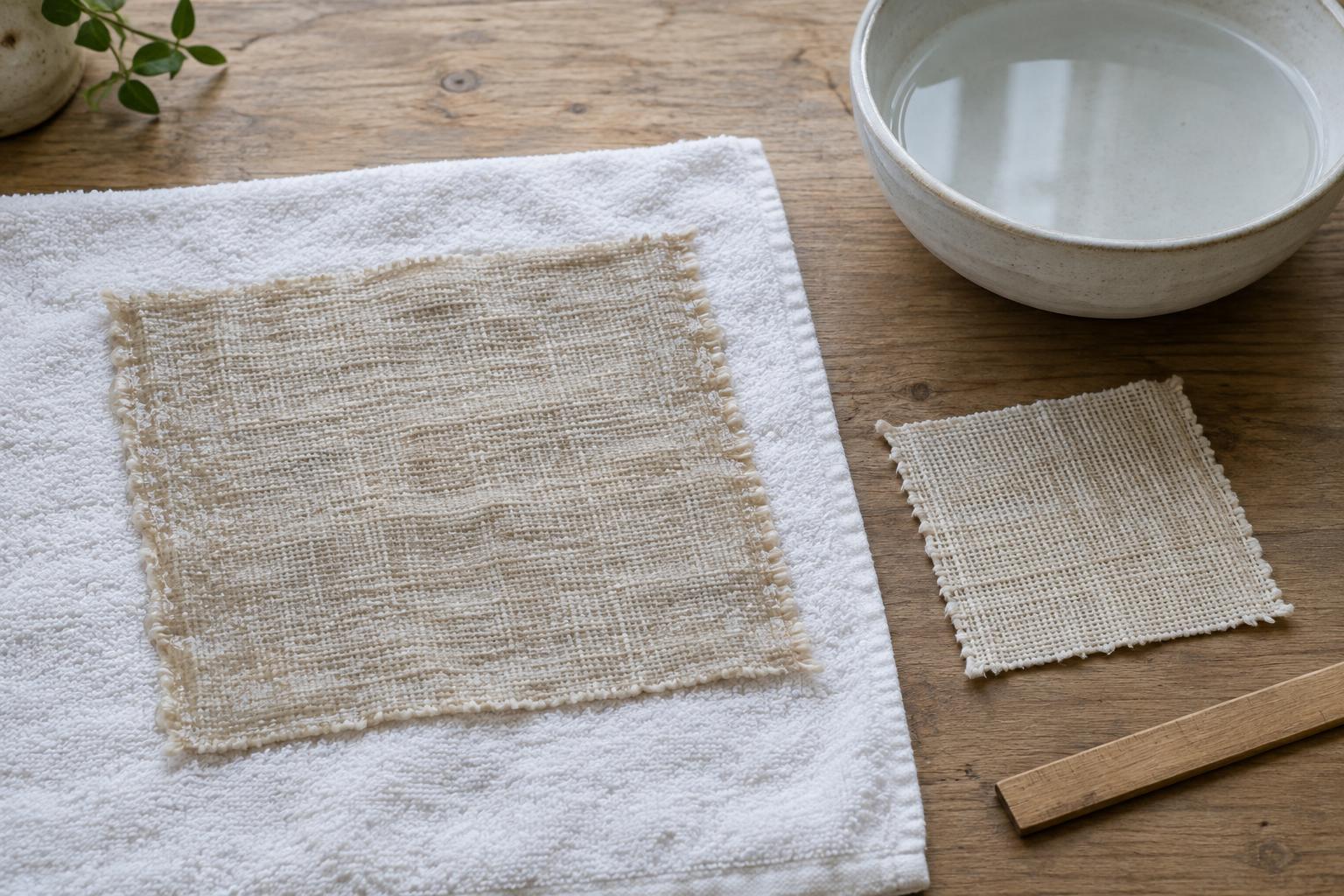
Weave a small sample with each promising weft, keeping the warp and structure the same. Try to beat consistently, and note which yarn you used and how the cloth looked on the loom. If your project allows it, include enough length to cut off, wash and dry the samples in the way you intend to care for the finished piece. Yarn can relax, bloom or draw closer together during finishing, so an unfinished sample is only part of the picture.
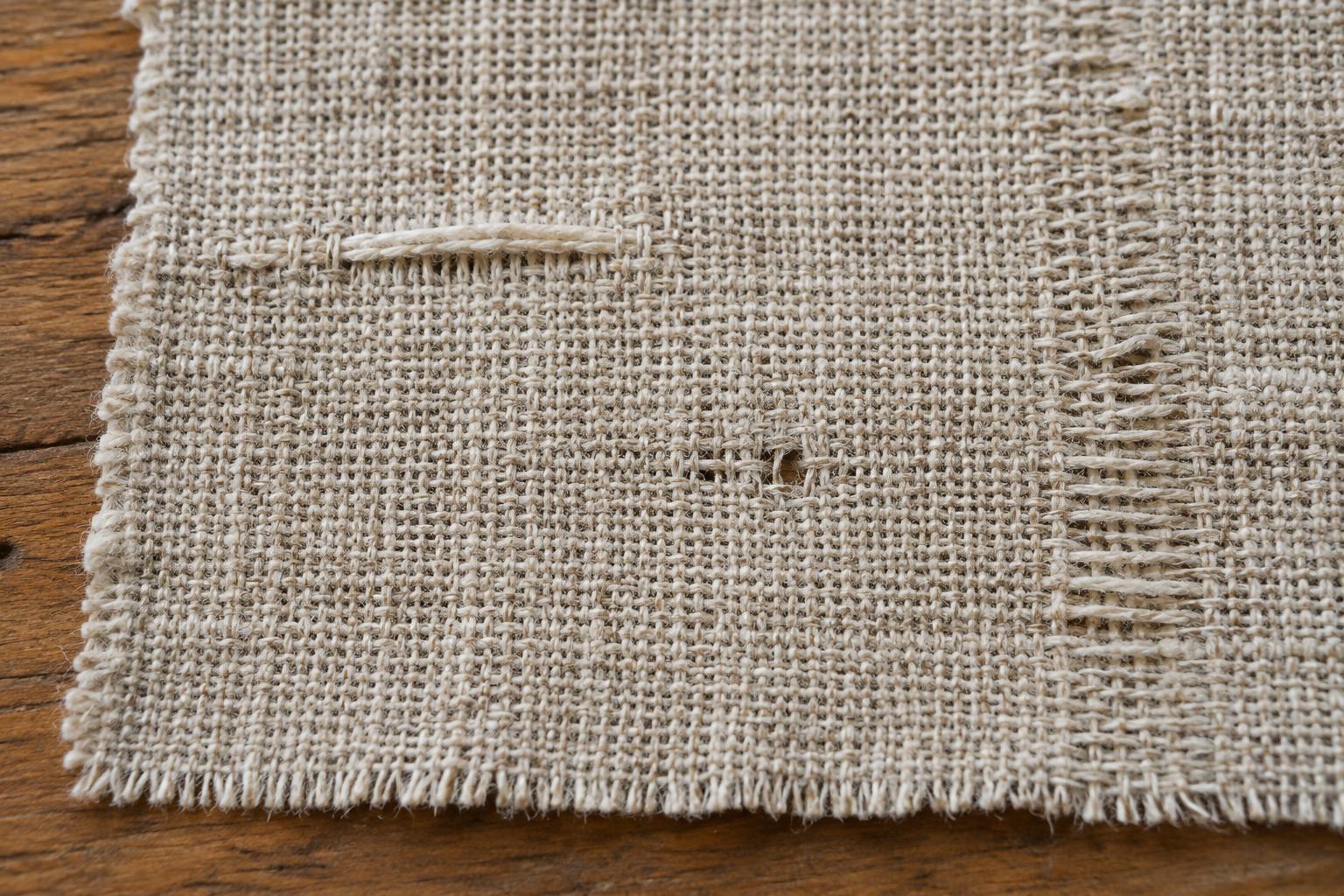
Once dry, hold each sample up to the light to compare coverage. Fold it over your hand or an edge to see how it falls, then flex it gently to judge whether it feels supple or resistant. Look for uneven packing, puckering and loss of pattern clarity. Choose the sample that best balances drape, density and suitability for use. Keeping the others as references will make the next weft decision easier.