What a reversible repair really means
A reversible repair can be removed or adjusted later without causing substantial new damage to the original object. That might mean securing a loose textile edge with stitches that can be carefully unpicked, rather than coating it with glue. In practice, no intervention is perfectly reversible: a needle leaves holes, and even a removable fastening can put pressure on a fragile surface. The aim is to keep the change limited, understandable and as gentle as the material allows.
Reversibility matters because handmade objects continue to age. A repair that looks tidy today may need adjustment if a fabric weakens, a leather panel dries out or a setting loosens. Keeping the original material accessible gives a future owner or repairer more options. It also helps preserve construction details, such as seams, knots and tool marks, that can be obscured by an ambitious makeover.
Decide whether to mend, stabilise or leave it alone
Start by asking what the object needs to do. A basket displayed on a shelf may only need support to prevent further distortion; a bag carried every day needs a handle that can bear its expected load. Look for movement at joins, new tears, loose threads and areas that shed material when handled. Note whether the damage is active or simply a visible sign of age. Not every scratch, faded patch or uneven stitch needs correction.
If the object is stable, careful storage and gentler use may be better than a repair. If it is deteriorating, stabilisation may be enough: supporting a weak area, reducing strain or keeping detached pieces together until they can be assessed. Before making a change, take clear photographs and record any loose components. A small record helps you see whether damage is progressing and makes later decisions easier.
Why quick fixes can close off better options
Strong adhesive is tempting when a seam opens or an ornament comes loose. Yet glue can soak into fibres, stain porous surfaces, stiffen flexible materials or cover the edges a repairer needs to examine. Tape can leave residue and pull away weakened surfaces. A thick patch may conceal a tear while transferring strain to the fabric around it. The problem is not that every adhesive or patch is unsuitable; it is that a poorly matched one may be difficult to remove without taking original material with it.
Treat heat, moisture and cleaning products with similar caution. They can change dyes, finishes, coatings and old repairs in ways that are hard to predict from appearance alone. If you cannot identify a material or are unsure how it will respond, do not use a visible area as a test site. For a valuable, fragile or personally irreplaceable object, pausing before treatment is often the most useful first step.
Match the intervention to the material
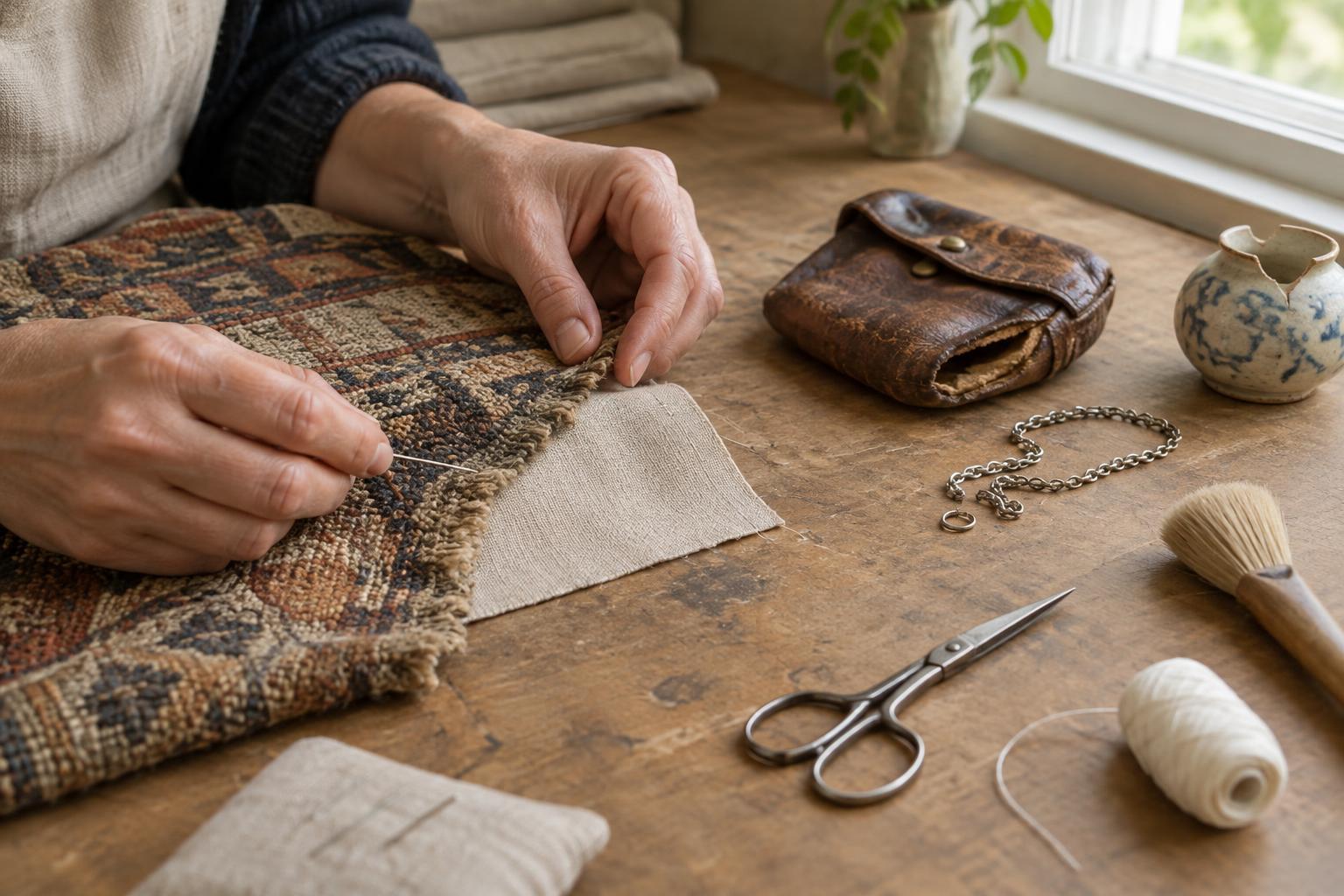
On a woven textile, a few well-placed stitches through sound fabric may hold a small split while leaving the weave visible. Match the repair thread and stitch placement to the fabric’s strength rather than trying to pull frayed edges tightly together. On leather, a failing handle or seam needs an assessment of both the stitching and the leather around its holes. Restitching into brittle material may simply create another line of failure; reducing use or adding carefully planned support may be wiser.
Jewellery and decorative objects call for different judgments. A loose clasp may be replaceable without altering the main piece, provided the connection is strong enough for wear. A cracked ceramic handle, by contrast, may not be safe to lift even after it is joined. Decide whether the goal is display or use before choosing a repair. Avoid presenting a neat-looking join as proof that the object has regained its former strength.
Choose a repair you can explain later
Before proceeding, ask four questions: What original material will the repair touch? Can the added material be removed or replaced? Will it change how stress moves through the object? Will someone be able to tell what was done? A good repair does not have to be invisible. A discreet, legible mend can be more respectful of a handmade object than a seamless-looking fix that conceals damage or original construction.
Keep removed parts with the object when practical, and note the materials and methods used. If the object is fragile, structurally complex or intended to carry weight, seek a craftsperson or conservator familiar with its materials rather than experimenting. Conservation-minded repair is not a refusal to make things useful. It is a way to meet the object’s present needs while leaving room for better choices in the future.