Start with the object, not the thread spool
A stitched leather seam does two jobs: it holds pieces together and forms a visible part of the object. Thread that looks discreet on a slim card holder may appear too fine on a belt, while thread chosen for its bold appearance can crowd the edge of a small pouch. Before choosing a fibre or colour, consider the leather’s thickness, the seam’s position and how often the object will be handled, bent or pulled.
Also consider what the thread is being asked to hold. A decorative line on a lightly used item faces different demands from a seam joining parts that move against each other. Strong thread helps, but it cannot make up for poorly placed holes, an edge with too little leather around the stitches, or a seam design unsuited to the object.
Linen, polyester and nylon: what changes in use
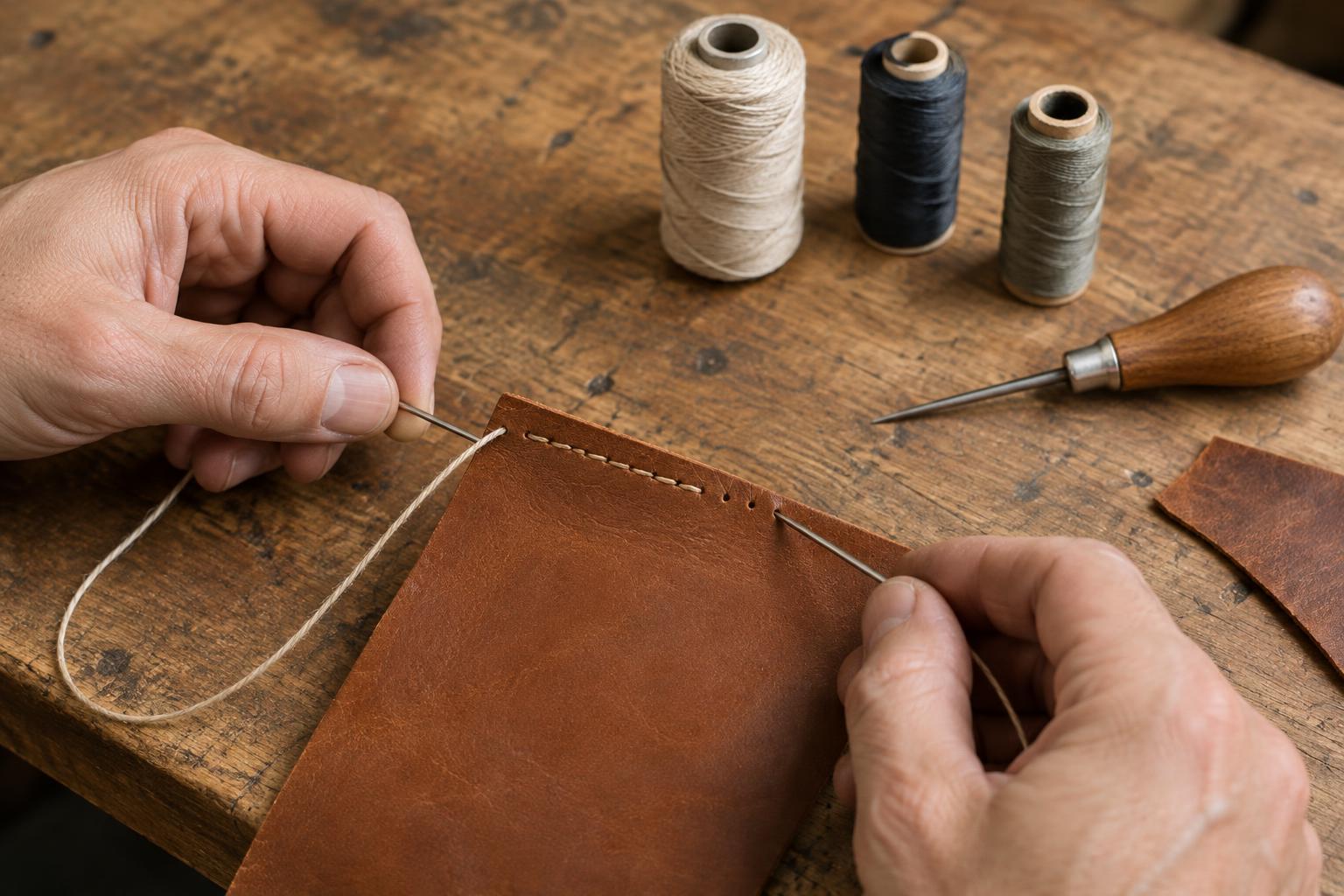
Linen is a traditional choice for hand sewing leather. It has a natural-looking surface and can make a crisp, understated stitch. Waxed linen is easier to grip and manage than loose, unwaxed strands, particularly when passing two needles through the same holes. Its finish can develop a softer appearance with handling. For an item likely to stay damp or experience repeated abrasion, however, a synthetic thread may be the more practical option.
Polyester thread is commonly chosen when resistance to moisture and everyday wear matters. It is available in many colours and constructions, including braided versions that produce a distinct, even line of stitching. Nylon can also be strong and abrasion-resistant, but some nylon threads stretch more than comparable polyester threads. Stretch is not necessarily a flaw; whether it is helpful depends on the seam and the look you want. Because construction varies between products, judge a sample thread by how it handles rather than by fibre name alone.
Match thickness to the holes and the leather
Thread thickness affects more than appearance. A thick thread in small holes can be difficult to pull through and may bunch up where the needles cross. A very fine thread in large holes can look lost and leave the punctures conspicuous. Aim for a thread that fills the stitch holes neatly without forcing the leather apart. Leave enough leather between the seam and the edge that the row of holes does not become an easy tear line.
Thread labels are not always directly comparable across brands or fibre types, so a stated size is best treated as a starting point. Lay several candidate threads against the edge, then make a short row of holes in a scrap of the same leather. Stitch it with the needles and spacing you intend to use. Check both faces: the thread should sit consistently, and you should be able to draw each stitch snug without excessive force.
Needle choice belongs in the same test. A needle must be comfortable to handle and able to carry the thread through the holes, but a large needle can make a narrow hole harder to use. If every pass is a struggle, reconsider the combination of thread, needle and hole size rather than pulling harder.
Wax, finish and colour affect the result
Wax can help thread hold together, reduce tangling and make hand stitching feel more controlled. Some thread arrives pre-waxed; other thread can be waxed lightly before use. Too much wax may collect at the holes or leave marks on the leather, so test it first, especially on pale or absorbent surfaces. If a finished seam needs to lie flat, a smooth, evenly coated thread may be easier to settle than a fuzzy one.
Colour changes how prominent the construction appears. A close match lets the leather’s shape take the lead, while contrast makes each stitch and any uneven spacing easier to see. Before committing, place the thread beside the leather in ordinary light. A short stitched sample is more revealing than the spool: the thread may look darker when doubled through the seam or when coated with wax.
Test for the wear your project will see
Make your sample long enough to bend and handle, not just to inspect. Look for fraying where the thread passes through the holes, stitches that sit proud enough to catch on objects, and any tendency for the seam to pucker. For an accessory that folds, flex the sample gently several times and see whether the stitching remains tidy. A test will not predict years of use, but it can expose a poor match before the final pieces are sewn.
There is no single thread that suits every hand-stitched leather object. Choose the fibre for the likely conditions, the thickness for the leather and holes, and the finish for the appearance you want. When those choices work together, the seam is easier to sew and more likely to remain both useful and pleasing to look at.