Why warp asks more of a yarn
Warp threads run lengthwise through woven cloth. On the loom, they are held under tension, separated to form a shed and repeatedly touched by heddles, a reed or other parts of the weaving setup. A weft yarn crosses the warp and may be placed with much less sustained tension. That is why a yarn that works beautifully as weft can be frustrating as warp.
A suitable warp yarn does not have to be rigid or exceptionally thick. It needs to remain intact and behave predictably under the conditions of the project. A small frame loom, for example, may place different demands on yarn than a loom with many heddles and a frequently moving reed. The intended cloth matters too: a soft scarf and a firm bag fabric call for different handling and finishes. Start by considering the loom, the weave structure and how much wear the finished object will receive.
Check strength under steady tension
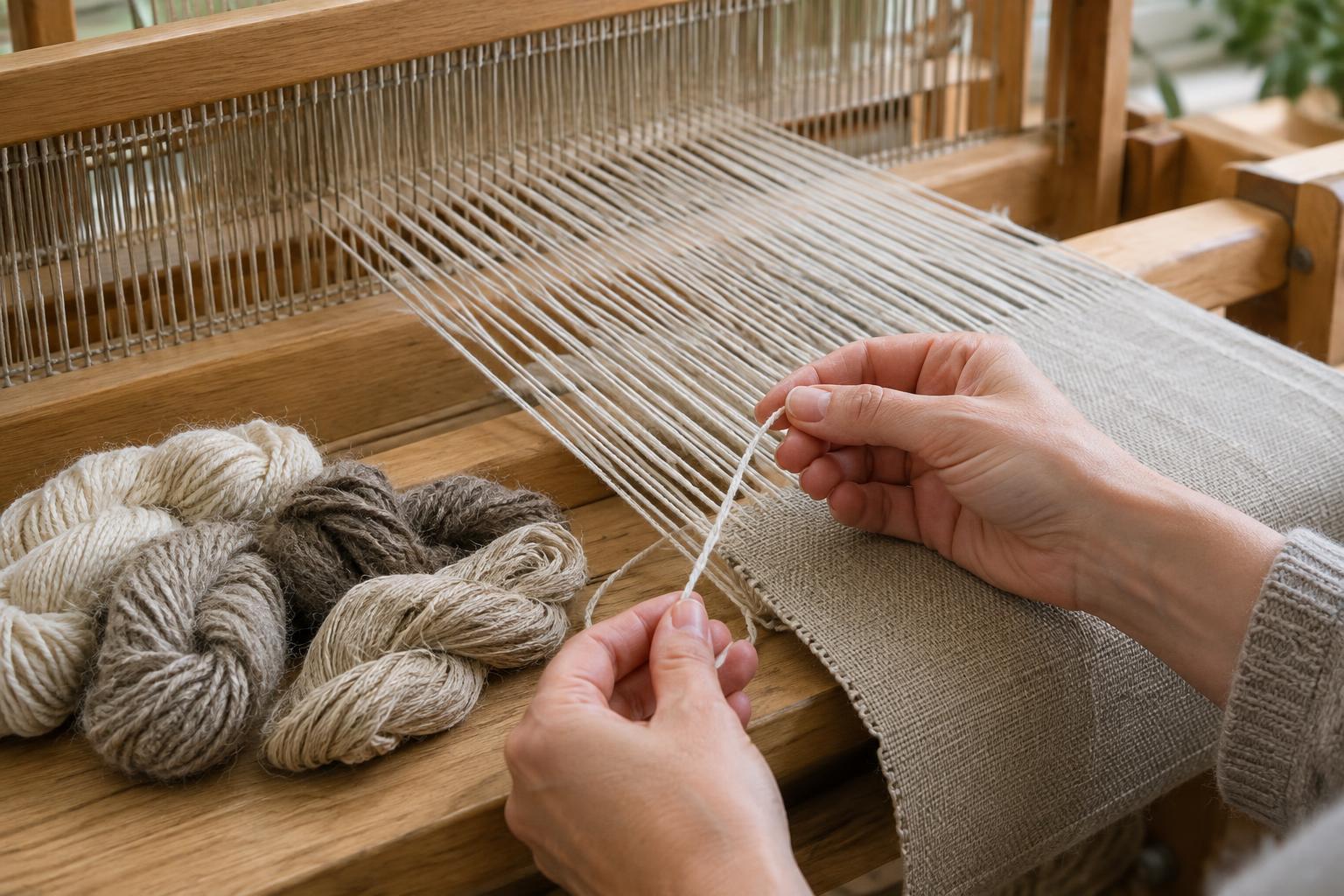
To assess strength, pull a short length of yarn firmly and steadily between your hands. Then try several lengths from different parts of the supply. If it breaks easily or has noticeably weak spots, it may not withstand winding and weaving. This hand test is a useful screen, not a guarantee: tension on a loom acts over a longer period, and knots, joins or worn areas may fail first.
Construction matters as much as fiber name. A well-spun, evenly plied yarn often holds together more reliably than a loosely spun yarn of similar thickness. Look for thin places, uneven twist and strands that separate when handled. If a yarn is sold specifically for weaving warp, that can be a helpful starting point, but it is still worth testing it with your loom and planned sett.
Avoid assuming that a heavier yarn is automatically stronger. Thickness can come from a loose, airy structure that compresses or pulls apart under load. Conversely, a finer yarn with firm twist may prove surprisingly robust. Compare candidates by handling them, rather than judging only by their labels or appearance on the cone or skein.
Notice how the surface handles abrasion
Strength in a single pull is not the same as resistance to rubbing. As the shed opens and closes, neighboring warp threads may brush against each other; heddles and reed dents can also contact the yarn repeatedly. A yarn can feel strong at first yet gradually grow fuzzy, shed fibers or wear thin at these contact points.
Rub a short length back and forth through your fingers or over a smooth edge, using a light touch similar to the contact it will meet on the loom. Watch for pilling, fraying and strands coming loose. Smooth, firmly twisted yarns often tolerate this better than very fluffy or loosely spun yarns, though results vary with fiber, construction and loom setup. A hairy yarn is not automatically unusable; it may simply need a more forgiving weave structure or gentler handling.
Fiber choice offers clues but not a verdict. Cotton and linen are common warp choices, while wool, silk and manufactured fibers can also work well when their construction suits the task. Rather than relying on a fiber category alone, examine the particular yarn. If it catches on itself when you separate adjacent strands, imagine what may happen when an entire warp opens into a shed.
Balance elasticity with control
A little give can help a warp absorb movement, but too much stretch can make even tension difficult to maintain. Stretch a measured-looking length gently, release it and observe whether it returns close to its original length. Repeat the test a few times. Yarn that stays elongated or varies markedly from strand to strand may cause uneven sheds or areas of cloth that weave differently.
Some yarns change behavior when damp or after washing. If the finished cloth will be washed, make a small sample and finish it as you expect to finish the final piece. This can reveal shrinkage, relaxation or changes in surface texture that a dry hand test misses. It also helps you decide whether the finished cloth feels right, not merely whether the yarn survives weaving.
Test a sample before committing to the full warp
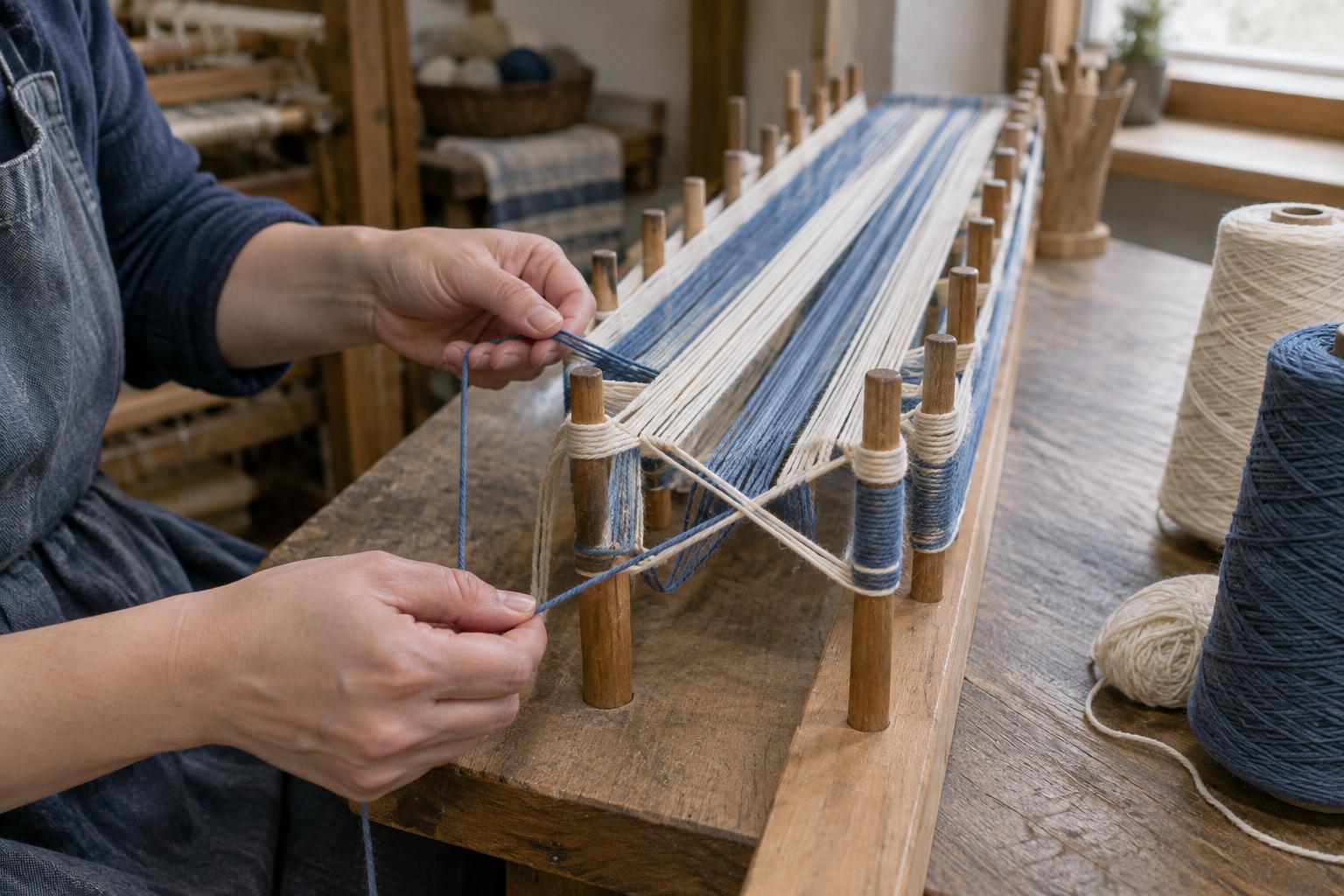
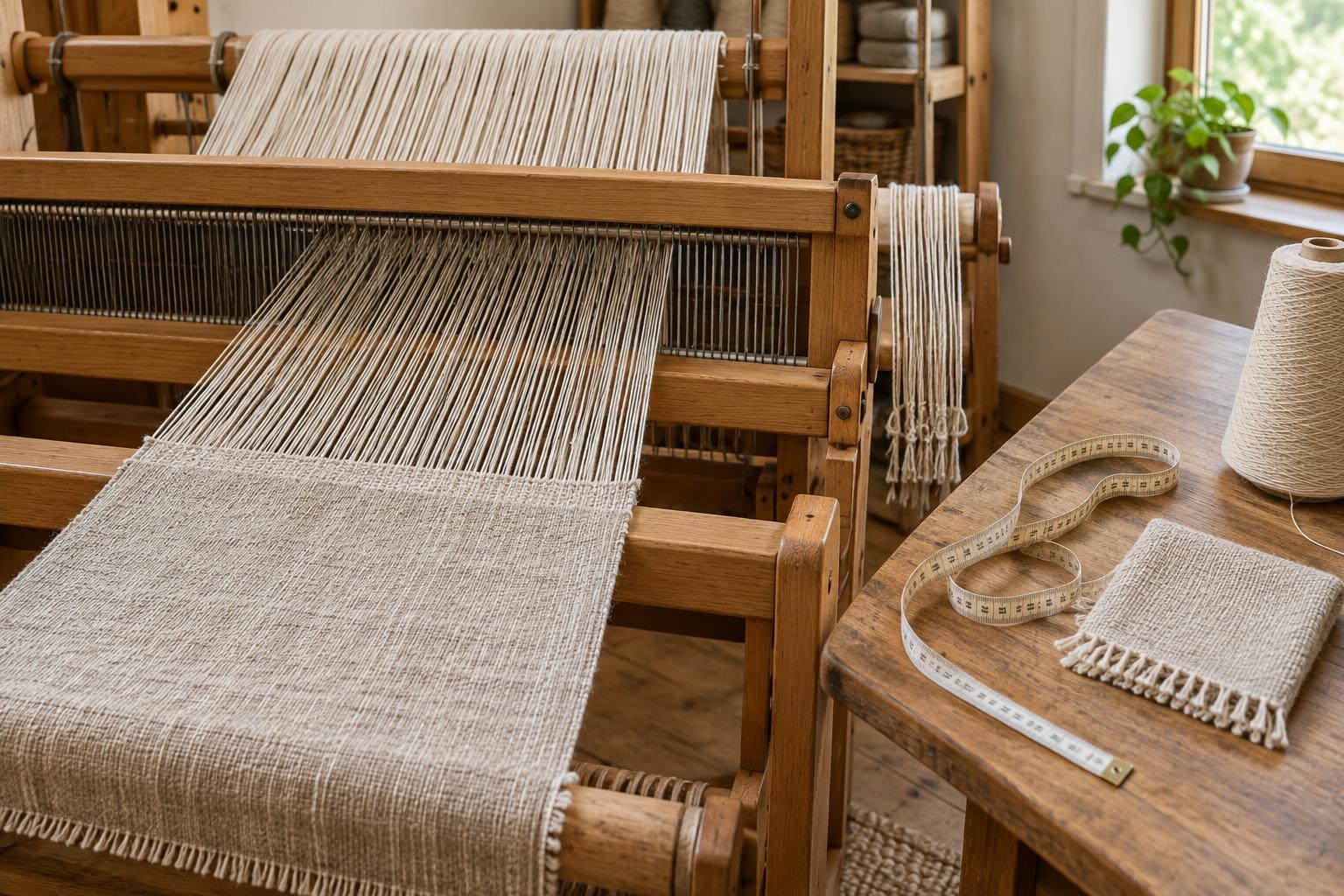
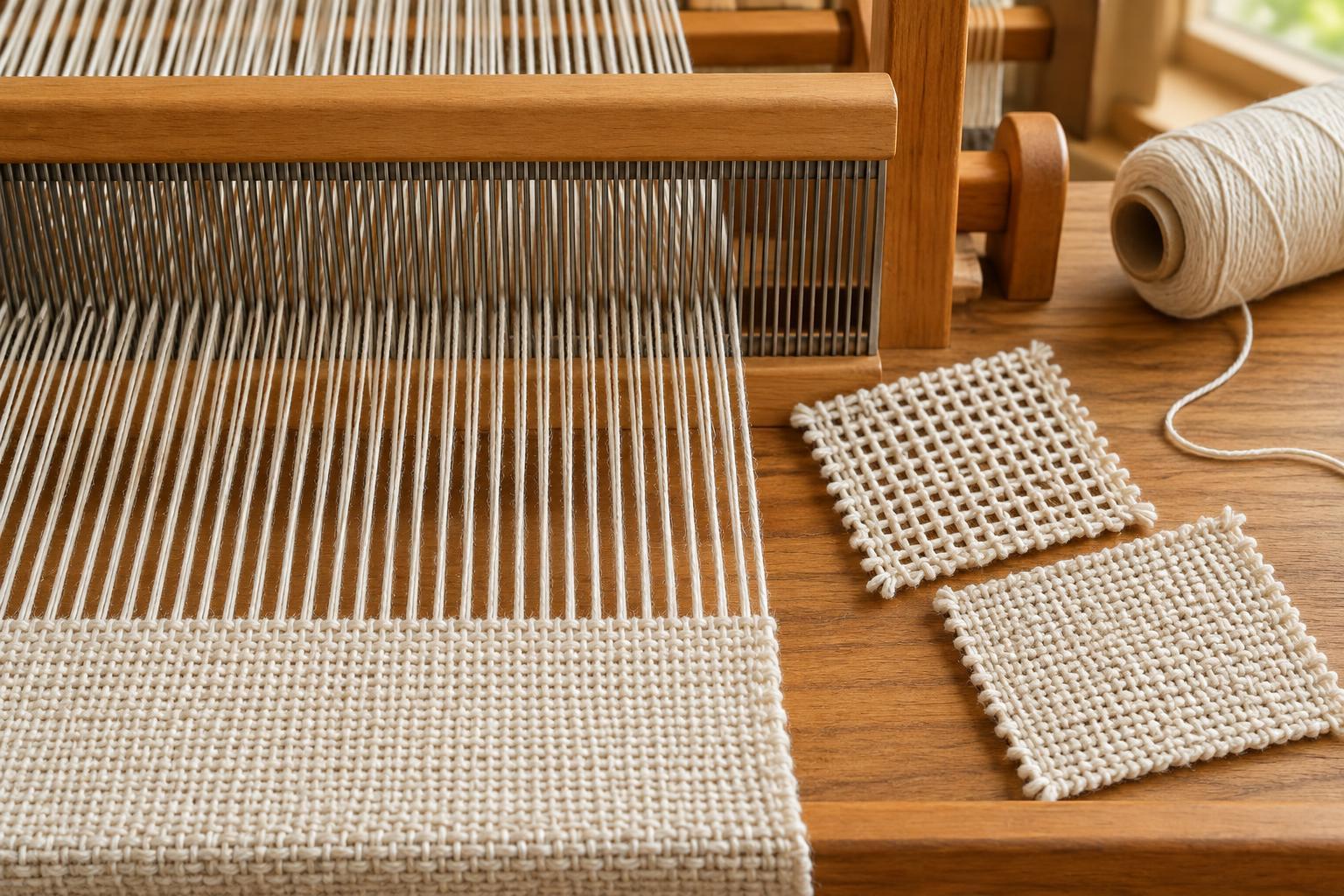
The most informative test is a short warp woven on the equipment you plan to use. Wind and thread it as you would the full project, then weave enough to repeat the motions of opening the shed and beating in the weft. Notice whether threads break, snag, shed excessive fuzz or become difficult to tension evenly. A yarn that passes a hand test but causes constant stops at the loom may be better reserved for weft or for a different project.
If problems appear, change one factor at a time. A gentler beat, a different sett, reduced friction at a contact point or another weave structure may help. Check the loom for rough surfaces before blaming the yarn. When a candidate still performs poorly, choosing a smoother or more stable yarn is often simpler than fighting it through a long warp. The best choice is the one that weaves dependably and produces the cloth you intended.