Start with the stone, not the cleaning product
Gemstone jewellery collects skin oils, dust and traces of everyday products. It is tempting to clean every piece with warm water, soap and a brush, but stones differ in ways that matter during cleaning. Hardness describes resistance to scratching; it does not tell you whether a gem can tolerate heat, liquids or a cleaning machine. Some stones can be chipped despite being hard, while others may absorb liquid or have surface treatments that need particular care.
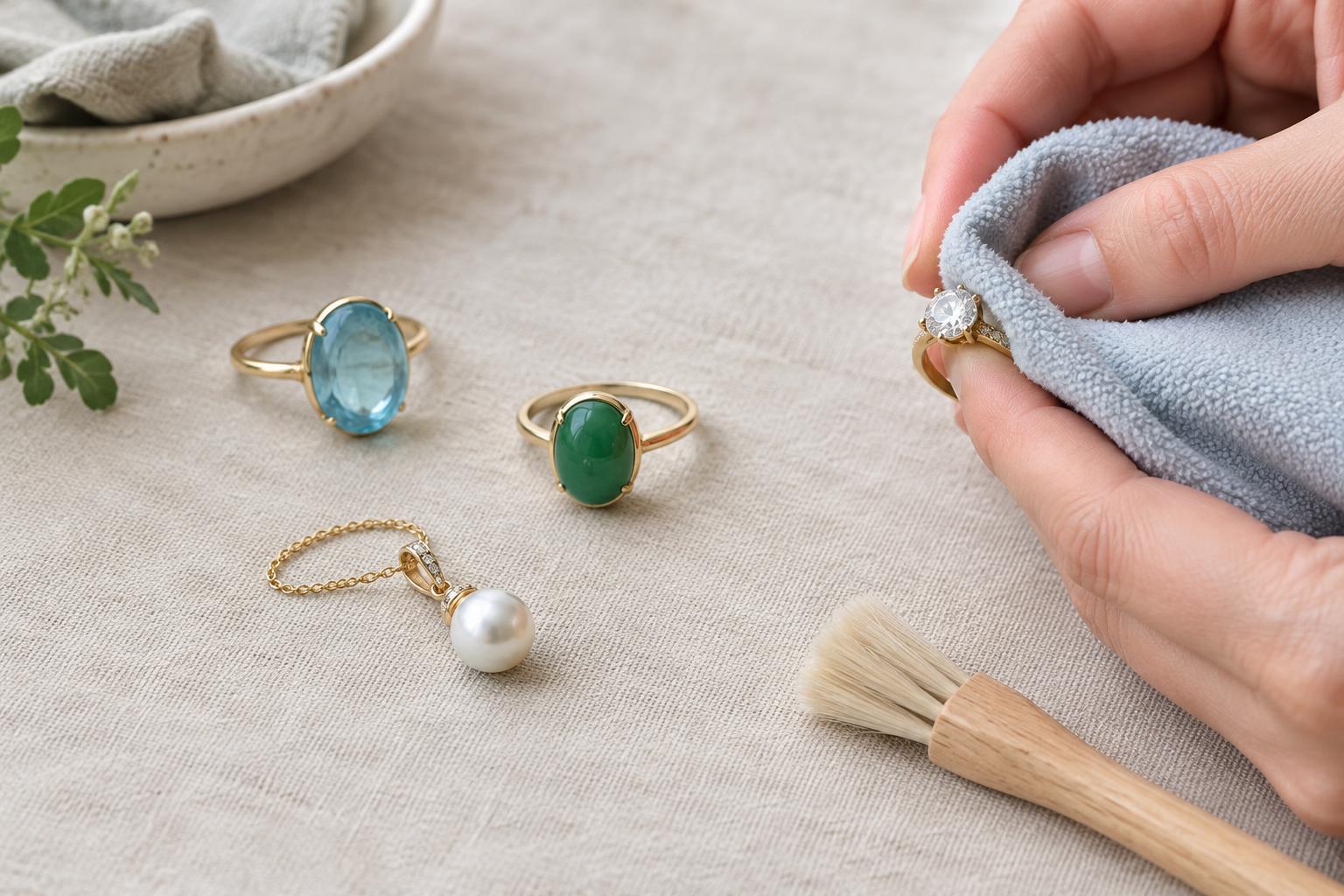
The safest starting point is to identify the stone as well as you can and consider what you do not know about it. A gem may have been dyed, filled, coated or assembled from several materials, and those details are not always visible. If its identity or treatment is uncertain, avoid soaking and strong cleaners. A soft, dry, lint-free cloth is a sensible first step for removing light surface dirt.
Why delicate and treated gems need extra caution
Pearls, opals and turquoise illustrate why a universal cleaning recipe falls short. Pearls have a surface that can be affected by abrasive cleaning and harsh chemicals. Wipe them gently with a soft cloth after wear; if needed, use a cloth lightly dampened with water, then let them dry before storing. Keep perfume and other products from settling directly on the jewellery where practical.
Opals can vary in composition and construction, so prolonged soaking or abrupt temperature changes are poor default choices. Turquoise may be porous or treated, making it especially unwise to assume that water and cleaner are harmless. Emeralds may contain filled surface-reaching fractures; aggressive cleaning can disturb some fillers. For these and other uncertain stones, a light wipe is preferable to experimenting with solvents, steam or an ultrasonic cleaner.
The setting matters as much as the gem
Even a stone that tolerates gentle washing may sit in a vulnerable piece of jewellery. Water can remain behind closed settings, under a stone or around glued components. A brush can catch a delicate claw, and vigorous rubbing may loosen a stone that was already insecure. Before cleaning, look for movement, damaged prongs, lifting edges or visible gaps. If anything seems loose, stop and have the setting checked rather than trying to clean around it.
Take care with the metal finish, too. A polishing cloth intended for bare metal may not be appropriate for a plated surface, an intentionally darkened detail or a stone it touches. Cleaning a ring or pendant means considering the whole object, including its finish, joins and any materials you cannot readily identify.
A cautious routine for everyday upkeep
After wearing jewellery, gently wipe it with a clean, soft cloth to remove surface oils and residue. Store pieces separately so stones and metal edges do not rub against one another. Remove jewellery before applying products likely to leave a film, and avoid wearing it during tasks that expose it to impacts or cleaning chemicals. These habits can reduce the need for more intensive cleaning.
For a piece whose stone and construction you know can tolerate water, a brief clean with lukewarm water and a small amount of mild soap may be appropriate. Use a very soft brush only where the setting is secure, with minimal pressure. Rinse carefully if suitable for the whole piece, then dry it thoroughly with a soft cloth and allow any hard-to-reach areas to finish drying before storage. Do not use this routine as a default for unknown, porous, filled, glued or especially delicate jewellery.
Know when to leave deeper cleaning to a jeweller
Steam and ultrasonic machines can remove dirt from some jewellery, but they introduce heat or vibration that may be unsuitable for particular stones, treatments or settings. Household bleach, abrasive powders and improvised chemical mixtures add risks without being necessary for routine care. More force is rarely a good answer to dirt trapped beneath a gem.
If a piece is valuable to you, has stubborn buildup or contains a stone you cannot confidently identify, ask a jeweller to examine it before deeper cleaning. Tell them what you know about the piece, including any known repairs or treatments. The useful question is not simply “How do I make it shine?” but “Which parts of this particular piece can safely be cleaned, and how?” That approach protects both the appearance of the jewellery and the details that hold it together.