Pattern without a new weave structure
Plain weave has a simple rhythm: each weft yarn passes over one warp yarn, then under the next. On the following pass, that order reverses. Despite this regular structure, the finished cloth need not look plain. If light and dark yarns are placed in deliberate sequences, their visible intersections can form lines, small blocks and other repeating effects. These are called colour-and-weave effects.
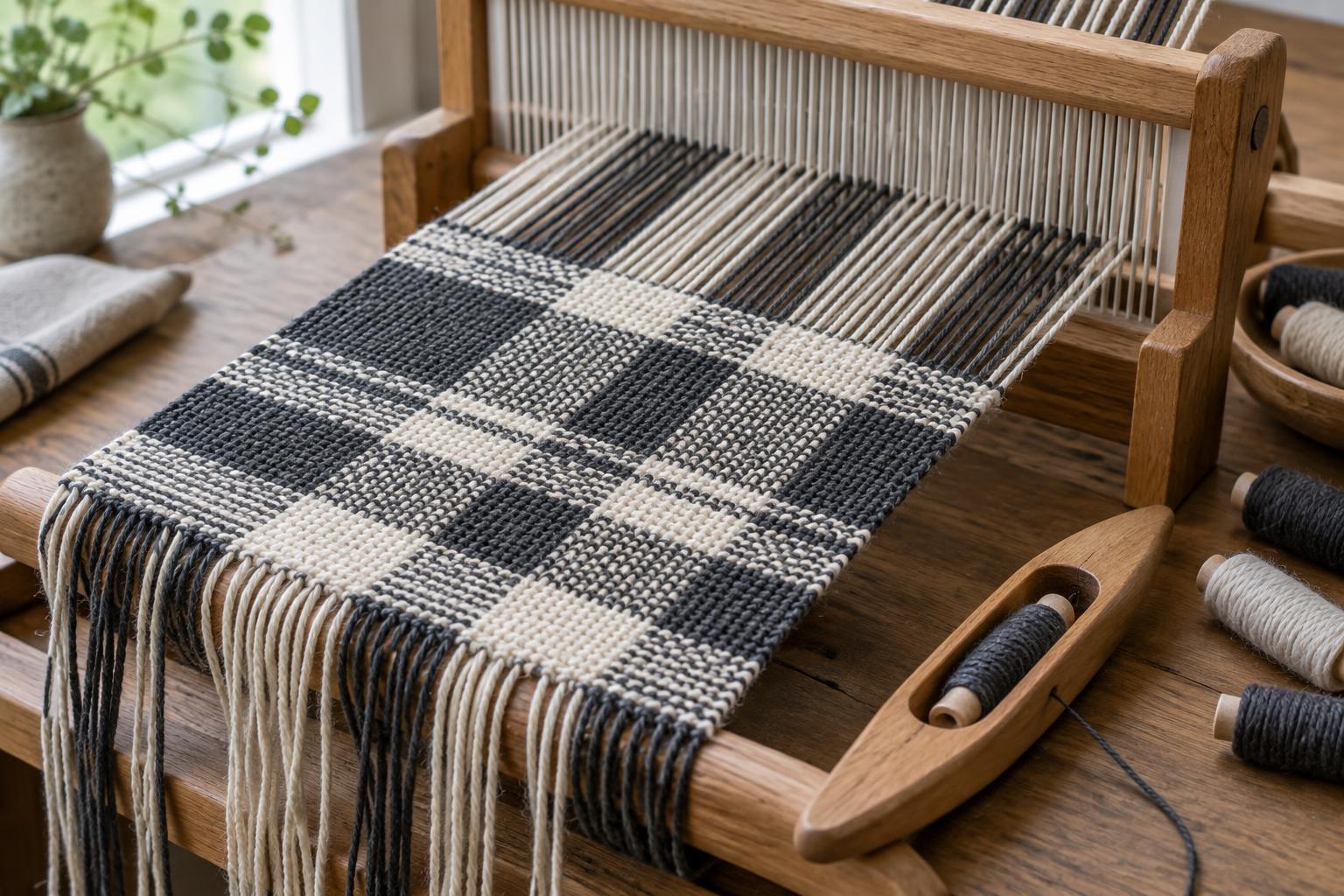
The distinction is between structure and appearance. The yarns still interlace in plain weave; colour changes which parts of that interlacement catch the eye. From a distance, neighbouring light intersections may appear to join into a line, while dark ones recede or form a competing line. Look closely, and the individual over-under crossings are still there.
How warp and weft work together
The warp runs lengthwise on the loom, while the weft travels across it. A sequence such as two light warp ends followed by two dark ends repeats along the width. The weaver can then introduce light and dark weft in another repeating sequence. Where the two sequences meet, the visible colour depends on which yarn is on top at each crossing.
The starting position matters. Shifting a weft colour sequence by one pick can change which colours appear beside one another, even though the yarns and plain-weave structure remain the same. Pattern scale matters too: short runs tend to produce fine visual texture, while longer runs can create broader areas of colour. Neither sequence guarantees a particular-looking check or stripe until it is tested with the chosen yarn and sett.
Planning a small sample
Start with two yarn colours that are easy to tell apart and, if possible, are similar in thickness and character. A balanced plain weave, in which warp and weft are both clearly visible, makes it easier to study their interaction. Wind a modest warp with a repeated sequence, such as two light ends and two dark ends. On paper, record where each sequence begins so you can repeat or alter it deliberately.
Weave a short section using the same two-and-two colour order in the weft. Then try starting the weft sequence with the opposite colour, or change to a one-light, one-dark order for a few centimetres. Keep the plain-weave over-under rhythm unchanged. You are testing colour placement, not adding a different weave structure.
Take notes before cutting the sample from the loom. After washing and drying it as you would the intended finished cloth, compare the sections again. Yarn can settle and shift during finishing, changing how closely the visible colours seem to connect. A small sample is more reliable than a drawing alone for judging the final effect.
Adjusting an effect that looks unclear
If the pattern is hard to read, first consider contrast. Two colours that look distinct on cones or in skeins may appear similar when reduced to tiny woven intersections. Differences in yarn texture, thickness or sheen can also compete with the intended colour pattern. Strong contrast is useful for learning the technique, though subtler combinations may suit a finished piece.
Next, look at how much warp and weft is visible. A closely packed weft can obscure much of the warp; a more open weave can leave the warp visually dominant. Consistent beating helps you judge the colour sequence rather than variations in spacing. Change one factor at a time—colour order, starting position, yarn choice or spacing—so that each new section of the sample teaches you something specific.
Recognising the effect in finished cloth
Colour-and-weave effects can resemble patterns made with more complex structures, especially when viewed from a distance. To examine a cloth, look for the regular one-over, one-under crossings of plain weave, then follow the colour of a few warp and weft yarns. You may find that an apparent block is built from a repeated yarn order rather than a change in how the threads interlace.
This way of looking is useful beyond identifying a technique. It reveals why a simple structure can offer many design choices: alter the colour sequence or its alignment, and the surface can change while the basic weaving motion stays familiar.