Start with the fibre, not the label
Cotton comes from the soft fibres surrounding a cotton plant’s seeds. Linen is made from fibres in flax stems, while hemp yarn is made from fibres in hemp stems. Flax and hemp are often called bast fibres. Separating them from the stem, preparing them and spinning them all influence the yarn that reaches a weaver. A fibre name tells you something useful, but it cannot tell you everything about how a particular yarn will behave.
Cotton fibres are relatively short and have a natural twist that helps them hold together when spun. Flax and hemp fibres can be much longer, though processing may shorten them. Long, well-prepared bast fibres can be spun into smooth, fine yarns; shorter fibres may produce a hairier, more textured surface. In any of these materials, yarn thickness, twist and whether strands are plied together can matter as much to a weaving project as the plant itself.
What changes on the loom
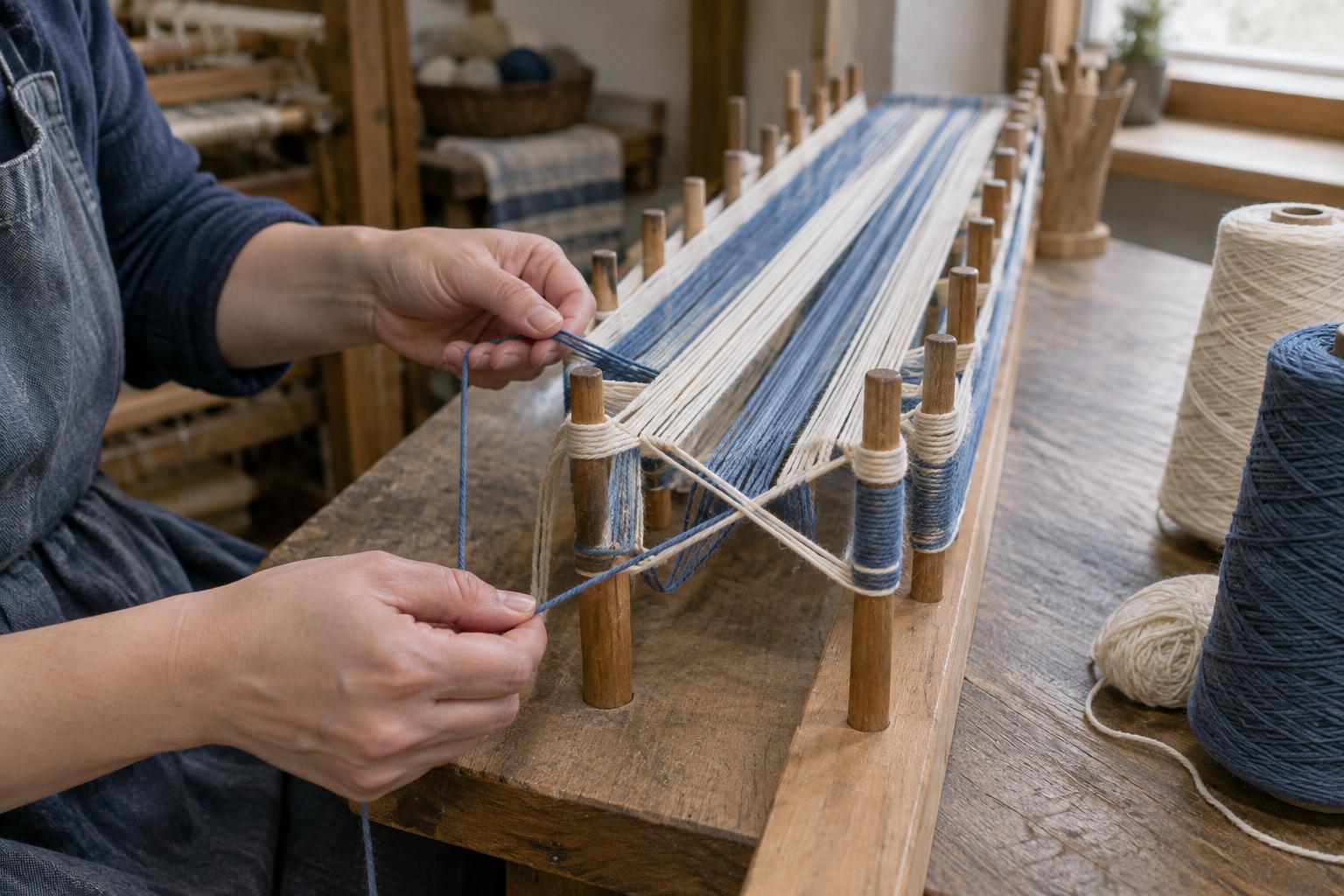
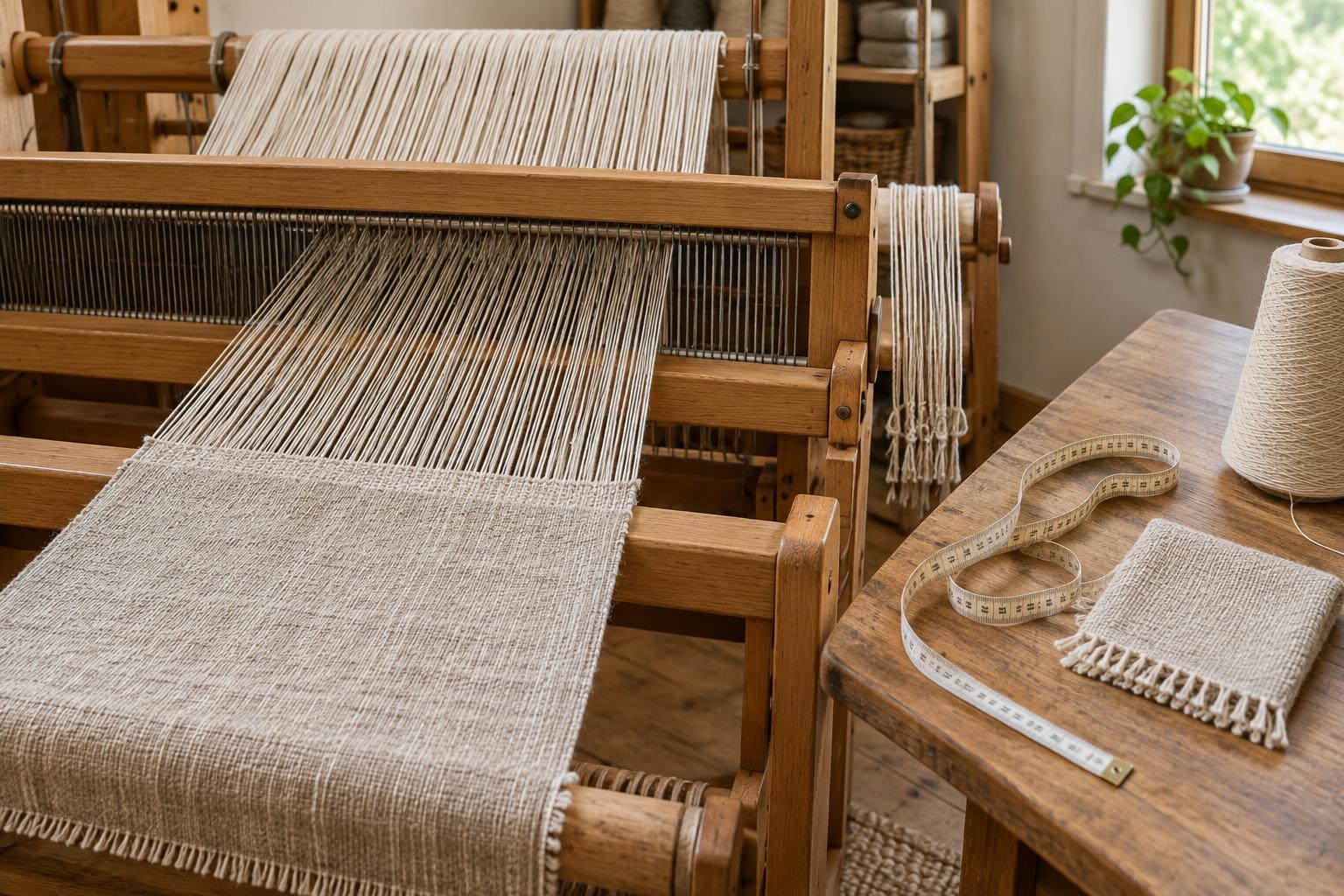
Warp yarns run lengthwise on a loom under tension, so they need to withstand repeated rubbing as the weft passes through. Many cotton yarns are pliable and easy to handle, which makes cotton a useful starting point for sampling a new weave. Linen and hemp can feel firmer and less elastic. That limited stretch can help a fabric hold a defined structure, but it also makes uneven warp tension more noticeable.
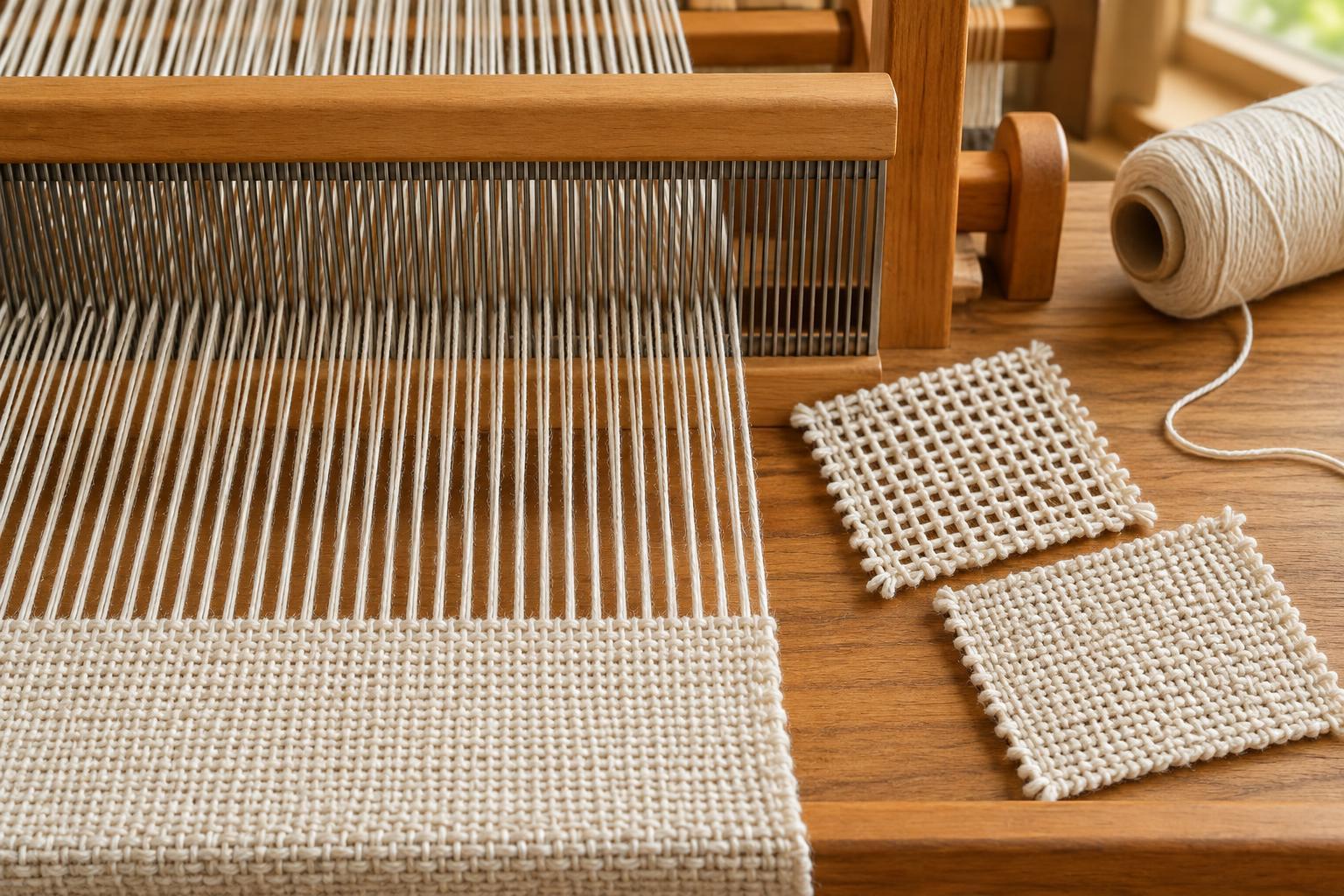
No fibre is automatically suitable for every warp. A loosely spun yarn may shed or abrade, while a tightly spun or plied yarn of the same fibre may hold up better. Before committing to a long warp, rub a short length of yarn between your fingers and check whether it frays readily. A small woven sample can show whether the yarns move cleanly past one another and whether the chosen sett—the spacing of warp threads—gives the cloth the openness or firmness you want.
Texture, drape and the look of a weave
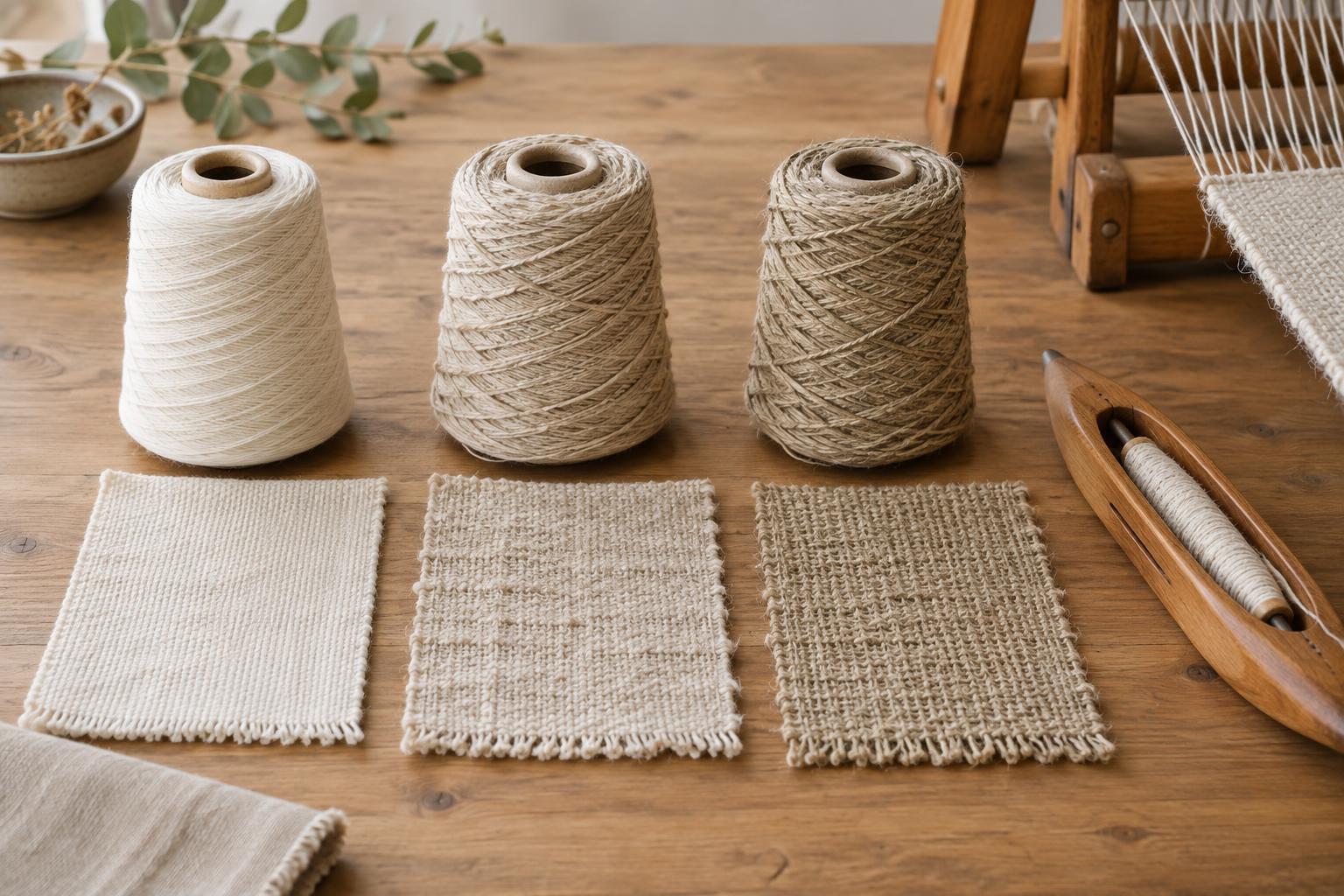
Cotton is often associated with a soft, familiar hand, but it can produce anything from a light cloth to a firm canvas-like fabric. Linen frequently has a crisp feel and a subtle lustre, especially when made from smoother yarn. Hemp can also form a crisp cloth, though its appearance varies widely with fibre preparation and spinning. None of these textures is fixed: weave structure, yarn size and finishing can change the result substantially.
For example, a balanced plain weave in fine yarn may feel quite different from a dense twill made with a heavier version of the same fibre. A smooth yarn can make the intersections of a weave look clear and regular; a slubby yarn draws attention to irregularities in the thread instead. If you are choosing yarn for a visible pattern, consider whether you want the structure to stand out or the yarn’s own texture to take the lead.
Why finishing deserves a sample
Cloth usually changes after it comes off the loom. Washing or other appropriate wet finishing lets threads settle into their woven positions and can soften a fabric that initially feels stiff. Cotton, linen and hemp fabrics may all shrink, but the amount depends on the yarn, weave and previous treatment. A sample measured before and after finishing gives more useful guidance than a general assumption about a fibre.
Finish the sample in a way that suits the intended object. A cloth meant for regular washing should be tested with that use in mind, while a decorative textile may need a gentler approach. Note its dimensions, surface and drape when dry. If the weave becomes too open, too dense or less comfortable than expected, you can adjust the sett, yarn or structure before making the full piece.
Choosing and caring for the finished cloth
Choose cotton when you want a wide range of yarn weights and a supple feel is a priority. Consider linen or hemp when you want a firmer hand, visible yarn character or a weave that retains a crisp outline. These are starting points, not rules: a fine linen cloth may drape beautifully, and a dense cotton cloth may be quite rigid. Compare actual yarns and finished samples whenever possible.
For care, follow any instructions supplied for the yarn or finished object, especially if it includes dye, added finishes or other fibres. Test colourfastness before washing a valued textile. Handle wet cloth without harsh twisting, reshape it as it dries and avoid assuming that every plant-fibre fabric tolerates the same washing temperature. The most reliable guide is the way the specific cloth was made and how it responds to a careful first clean.