Three techniques, three ways of shaping a surface
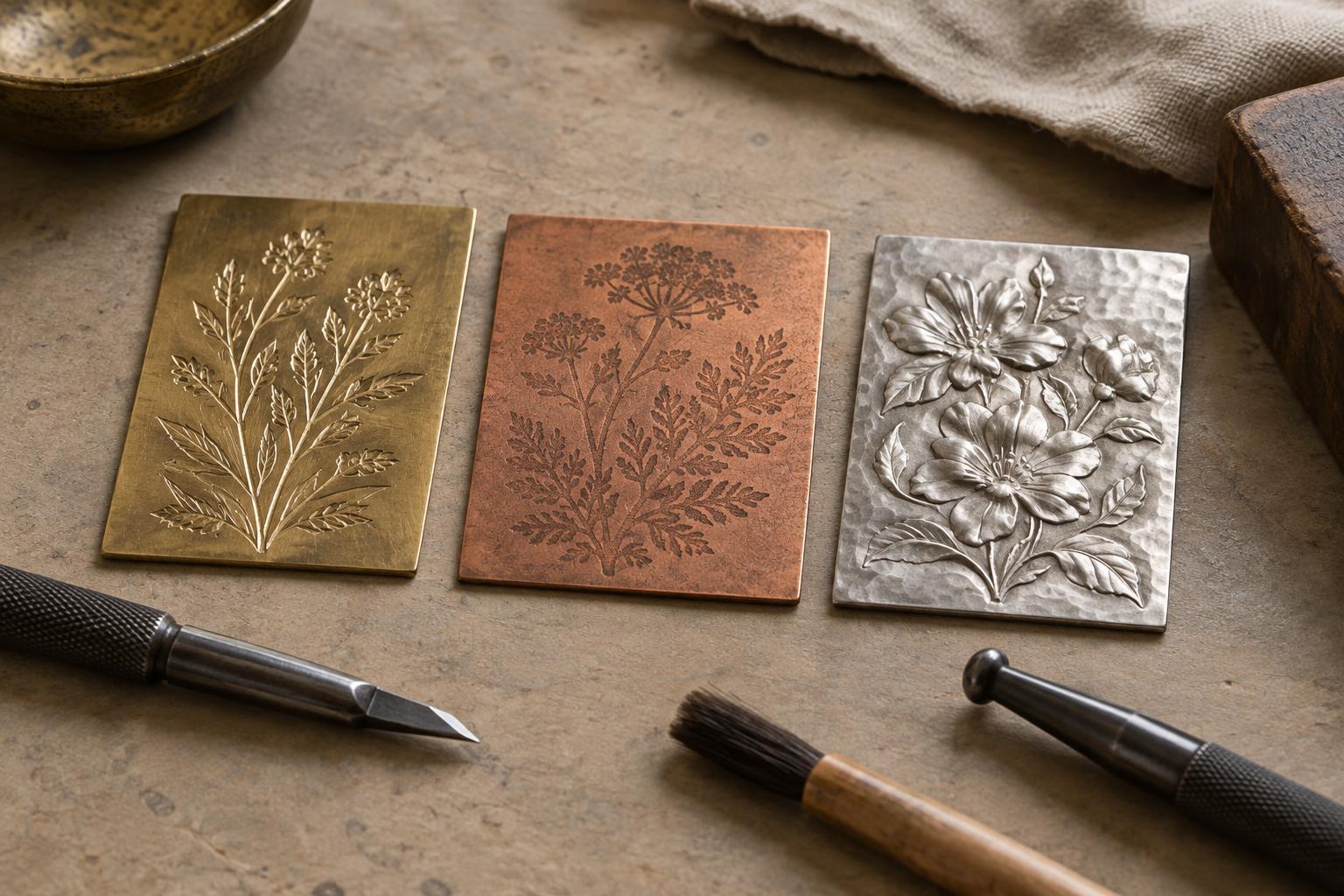
Metal decoration can be as quiet as a fine line around a pendant or as bold as a raised pattern on a bowl. Engraving, etching and chasing are often mentioned together because each can create detailed designs. The distinction is in what happens to the metal: engraving cuts it away, etching selectively dissolves it, and chasing pushes it into shape with tools.
Those differences affect the character of a finished piece, but appearance alone does not always identify the process. A design may combine techniques, or another method may imitate their effects. Looking closely is most useful when it helps you describe what you see, rather than making a firm claim about how an unfamiliar object was made.
Engraving: drawing by cutting
In hand engraving, a sharpened tool cuts a controlled path through the metal. The cut removes a small shaving and leaves a groove whose width and depth depend on the tool and the engraver’s movement. Lines can describe lettering, borders, shaded areas or small pictorial details. Some cuts catch the light at their edges, giving a design definition even when it has little depth.
Under magnification, an engraved line may show a clean channel, changes in width or tapered ends. These are clues, not guarantees: machine engraving and other processes can also produce precise grooves. The finish of the surrounding surface matters, too. A polished field makes a cut look different from the same line on brushed metal. If a piece has been worn or polished repeatedly, its shallowest engraved details may be harder to see.
Etching: protecting some areas while removing others
Etching begins with a protective coating, often called a resist, applied to areas intended to remain untouched. Exposed metal is then removed by a controlled chemical or electrochemical process. Depending on the design, the result may be recessed lines, a textured background or a broader matte area. Because the pattern is defined through the resist rather than cut line by line with a tool, etching can accommodate repeated motifs and intricate fields of detail.
An etched recess may appear more even in depth across a design than an expressive hand-cut line, though the finish varies with the process and later work. Etching is also sometimes combined with engraving or other decoration to sharpen selected details. It involves substances or equipment that require appropriate training, ventilation and protective measures; recognising an etched surface does not require trying the process yourself.
Chasing: moving metal to create relief
Chasing uses shaped punches and a hammer to move metal without intentionally cutting it away. The maker can define outlines, deepen passages and refine textures from the front of a metal surface. It is often paired with repoussé, in which the metal is worked from the back to raise larger forms. Together, the techniques can turn a sheet into a pattern of ridges, hollows and rounded relief.
On a chased object, look at how light moves across raised and lowered areas. Tool marks may remain as part of the texture, or they may be softened during finishing. A raised design is not proof of chasing: casting, stamping and pressing can also make relief. On a hollow object, its construction and any accessible reverse side may offer more clues, but a lining, backing or later repair can hide them.
Looking closely and caring for the details
To compare the techniques, use gentle, angled light and change the viewing angle. Ask whether the design reads primarily as cut grooves, recessed areas or shaped relief. Notice where lines end, whether background texture is consistent, and how the design meets an edge or seam. These observations can help you ask better questions about an object without assuming that every mark was made by a single method.
Fine decoration is vulnerable to abrasion. Dust an object with a soft, clean cloth before wiping it, and avoid scrubbing recessed patterns with stiff tools. Be cautious with polishing compounds: residue can lodge in etched or chased details, while aggressive polishing can soften shallow lines and raised edges. If an object has stones, plating, a darkened finish or an uncertain coating, its safest cleaning method may differ from that of bare metal. When in doubt, keep handling and cleaning gentle and seek advice from a qualified conservator or jeweller before attempting a more intensive treatment.