Start with the warp and weft
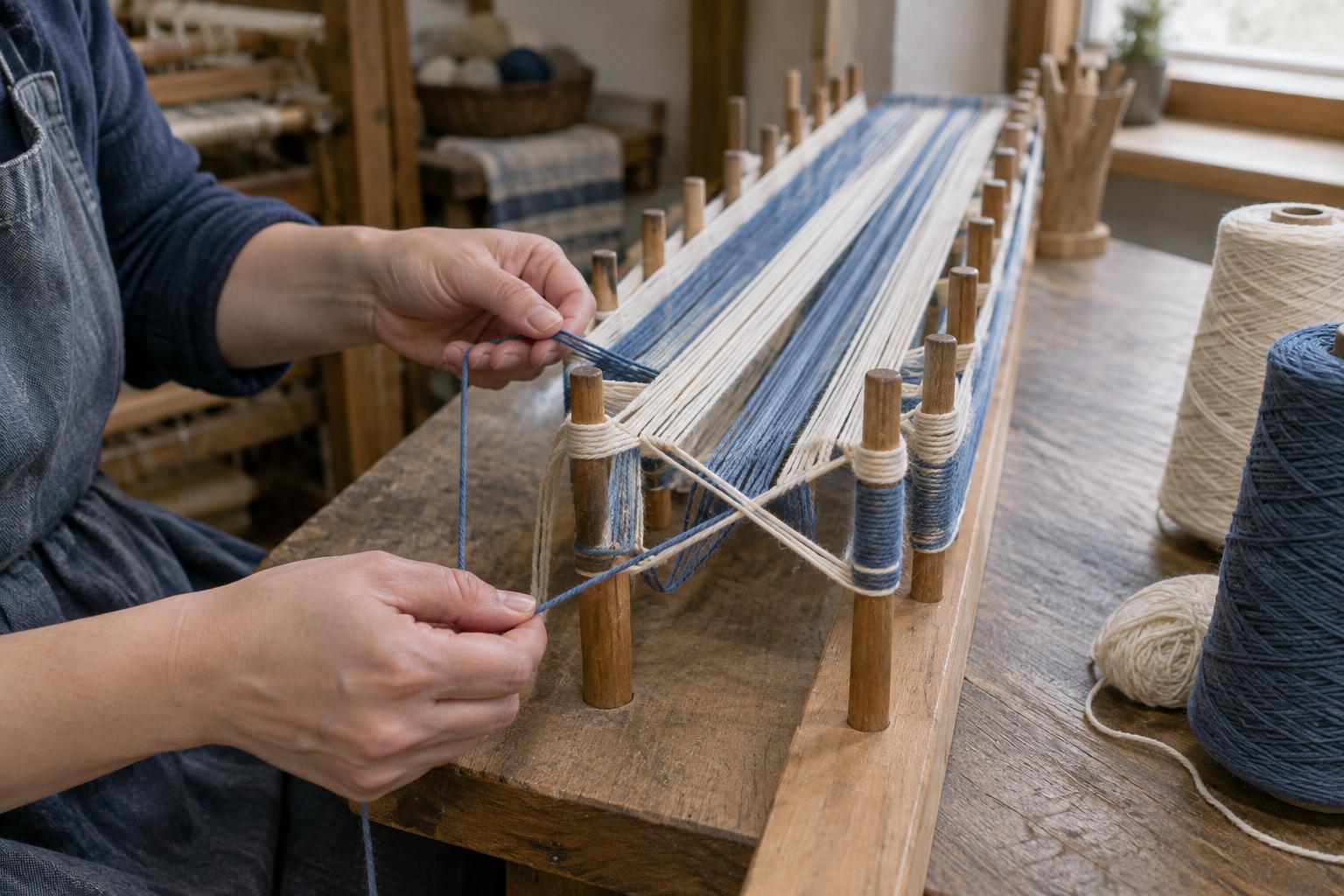
A loom holds one set of threads under tension while another set crosses them. The lengthwise threads held by the loom are the warp. The crossing thread is the weft. Their repeated intersections form woven fabric. On a small frame loom, you can see this process clearly: the warp is stretched between opposite sides of a frame, and the weft is worked over and under it.
The names of loom parts can be confusing because not every loom has the same equipment. A basic frame loom may have no moving parts at all. A rigid-heddle loom or a larger loom may add devices to store warp, open a path for the weft and press it into place. Knowing each part’s job is more useful than expecting every loom to match a single diagram.
Warp beam: storing warp and helping maintain tension
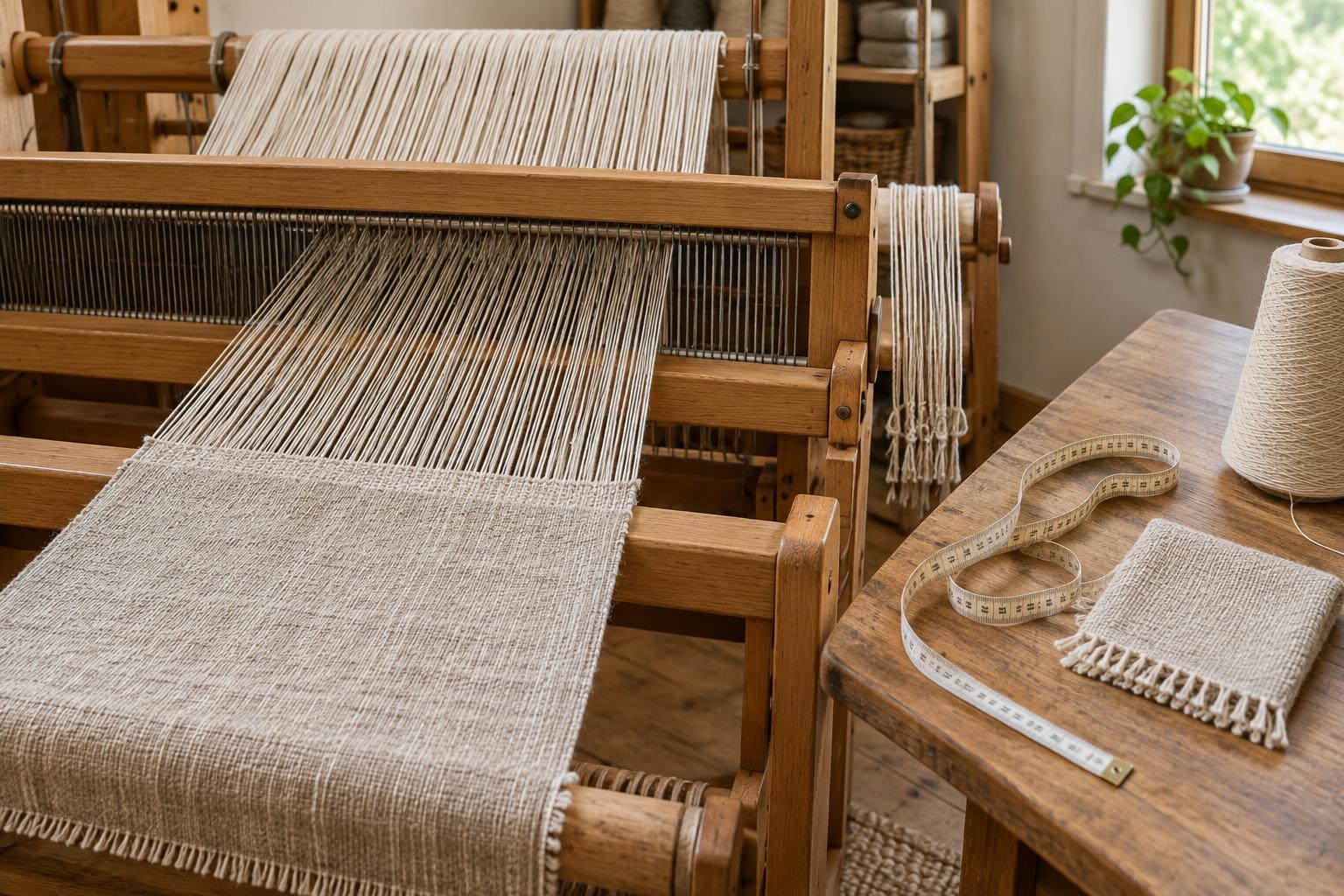
A warp beam is a roller at the back of some looms. Extra warp is wound around it, then released gradually as weaving advances. This makes it possible to weave a piece longer than the working space visible between the front and back of the loom. On looms with beams, the woven cloth is commonly taken up at the front while more warp is let out from the back.
Many small frame looms do not have a warp beam. Their warp threads are tied, looped or otherwise secured directly to the frame. The frame holds a fixed working length, so the size of the frame limits how much can be woven without changing the setup. Some frames have adjustable bars or other tensioning features, but these are not necessarily warp beams. Whatever the design, the warp needs enough even tension to stay orderly without being pulled so tight that the frame bends or the threads are strained.
Heddles: making a path through the warp
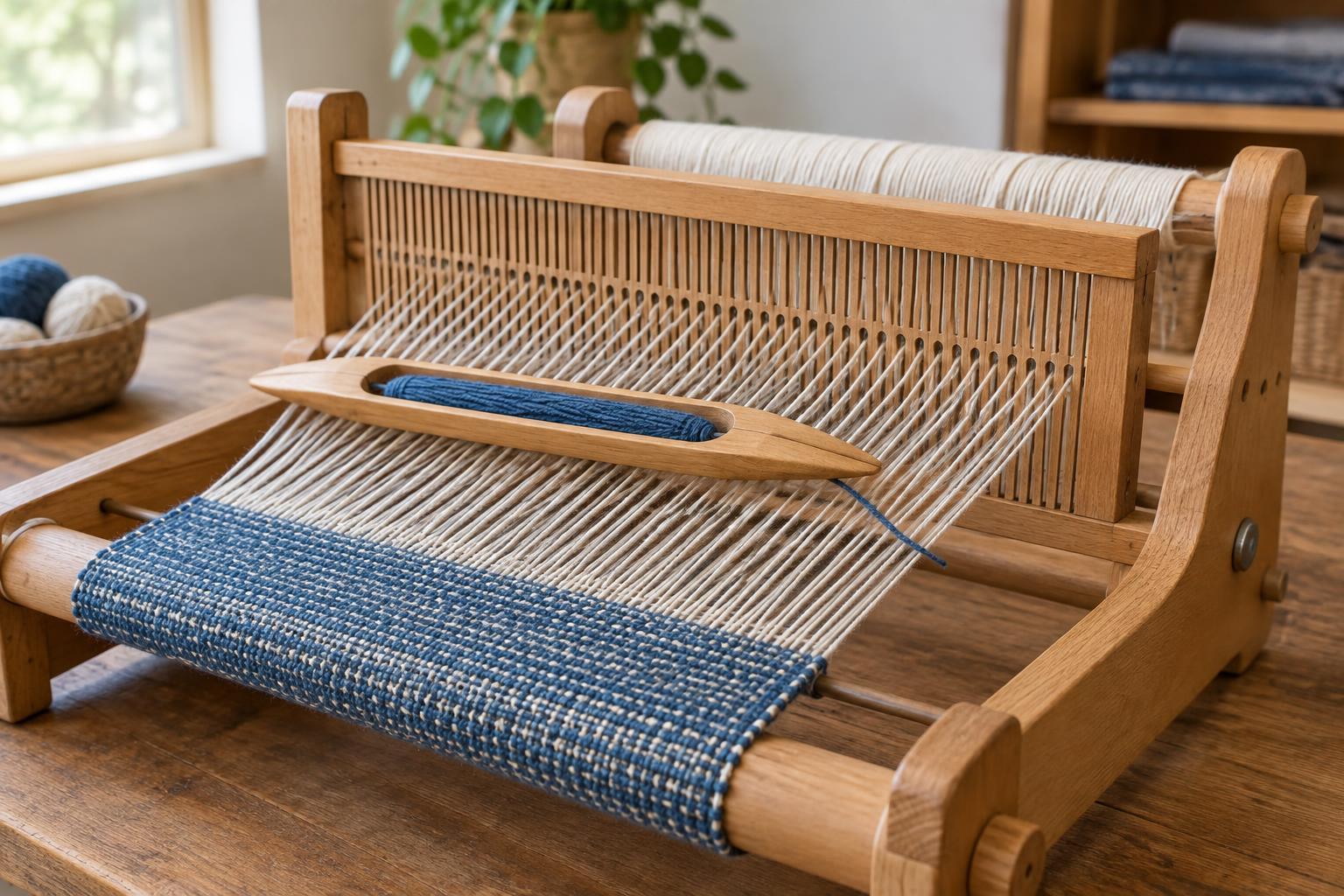
A heddle controls the position of a warp thread. When selected warp threads are raised or lowered, a gap called a shed opens between two groups of threads. The weft passes through that gap. Changing which threads are separated makes it easier to repeat a weave structure, particularly plain weave, where the weft alternates over and under adjacent warp threads.
On some looms, individual heddles are carried on frames or shafts. A rigid heddle combines thread-guiding slots and holes in one piece: moving it up or down changes which warp threads are lifted. A simple frame loom may use a shed stick to hold one opening and a heddle bar or string heddles to help make the opposite opening. It may also have no heddles; the weaver can pass a needle over and under the warp by hand. Heddles speed up repeated movements, but they do not replace careful attention to the order of the threads.
Reed: spacing threads and packing the weft
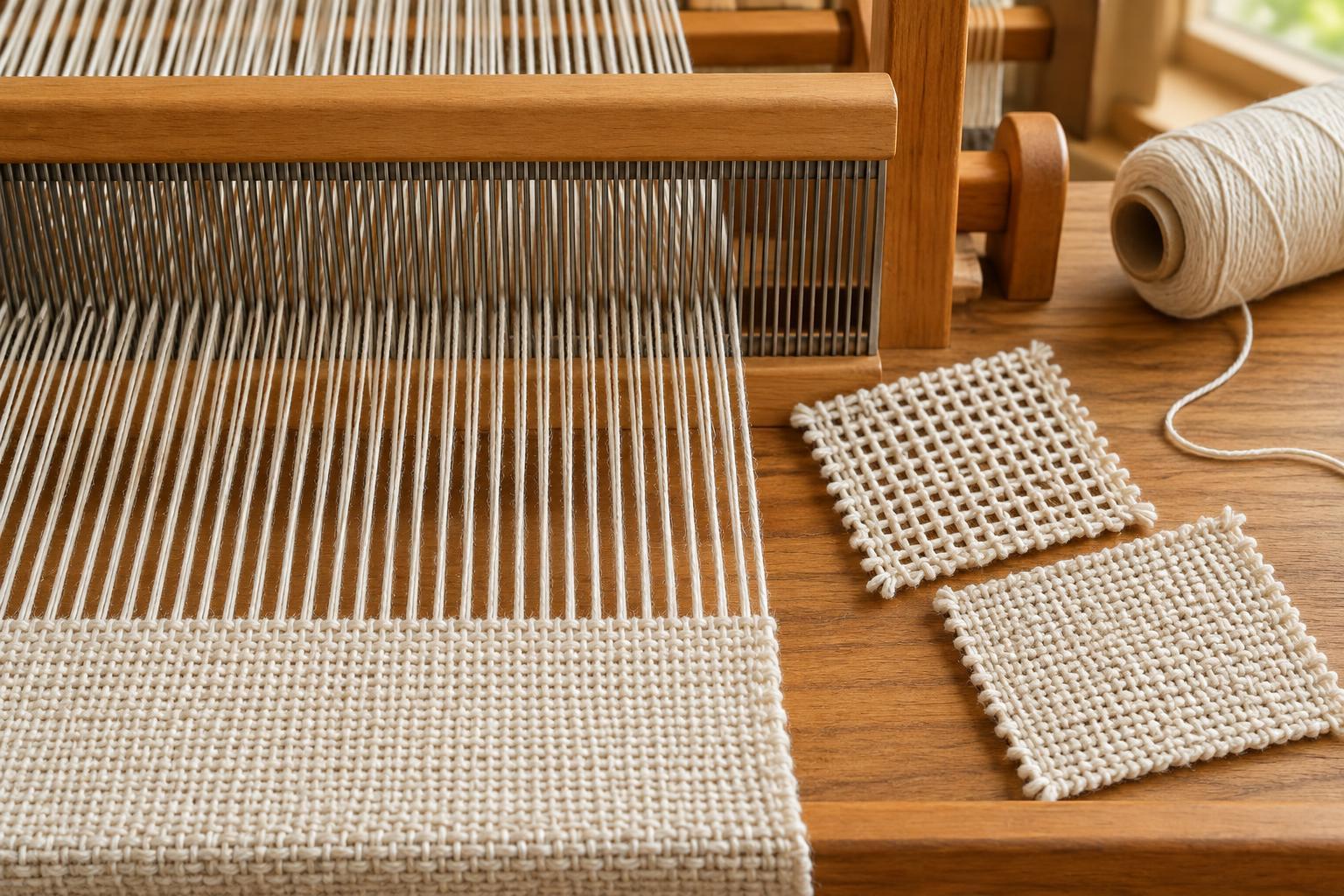
A reed is a set of evenly spaced openings or spaces between thin strips, often held in a frame. Warp threads pass through it. On looms equipped with a separate reed, it helps space the warp and, when moved toward the woven cloth, pushes each new weft pass into position. This pushing action is called beating. How firmly the weft is packed affects the fabric’s appearance and feel.
The term can be misleading when comparing looms. A rigid heddle also serves as a reed, spacing the warp and beating in the weft. A basic frame loom often has no reed at all. Instead, a weaver can use a comb or their fingers to settle each row. The aim is usually consistent placement, not maximum force: packing every row too hard can narrow the weaving or distort its edges.
Shuttle: carrying the weft across
A shuttle holds weft yarn and carries it through the shed from one side of the warp to the other. Shuttles vary in shape, from a flat stick wound with yarn to designs that hold a separate bobbin. For a small frame loom, a weaving needle or a compact stick shuttle may be easier to handle than a larger shuttle, especially when the working space is narrow.
To picture the parts working together, imagine a loom with all four. The warp beam supplies tensioned warp; heddles open a shed; the shuttle carries weft through it; and the reed presses that weft into place. Then the shed changes and the sequence repeats. On a simple frame, the same essential steps happen, but the weaver may create the opening by hand and pack the weft with a comb. The tools differ; the underlying task remains the controlled crossing of warp and weft.