Start by looking at the weave
Before cleaning a basket, look closely at its materials and construction. Baskets may be made from willow, cane, reed, grasses, paper cord or a mixture of materials. Some have dyed strands, painted surfaces, fabric linings or glued decorations. Their care needs can differ, so begin with the least intrusive method: dry dusting. If a strand feels brittle, a rim is loose or a finish is flaking, handle that area as little as possible.
Check where dust collects: at the base, under the rim, around handles and in the gaps where strands cross. Notice whether the basket holds its shape when empty and whether any ends have worked loose. A basket made for display may be more delicate than one built for carrying, but appearance alone will not tell you how much weight it can bear. Support it from underneath rather than lifting a heavy or damaged basket by its handles.
Remove dust without catching the strands
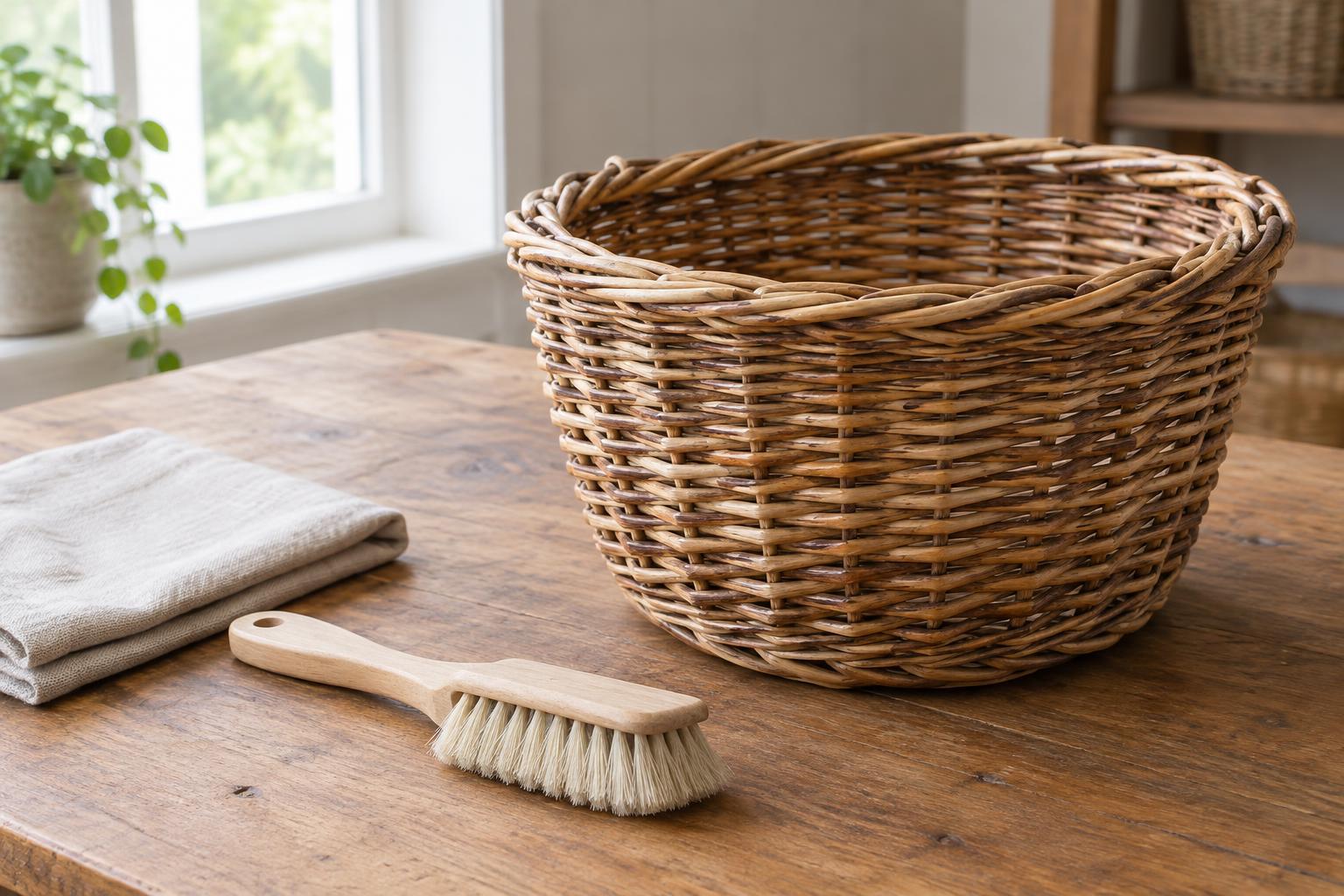
For routine care, empty the basket and take it to a well-ventilated place. Use a soft, dry brush to lift dust from the weave, working in the direction of the strands rather than scrubbing across loose ends. Hold the basket over a cloth or gently tap its base to release debris. A vacuum on low suction can help if you keep the nozzle slightly away from the surface; a brush attachment or a piece of mesh over the nozzle reduces the chance of pulling in a loose strand.
Avoid stiff brushes, abrasive pads and vigorous rubbing. They can roughen natural fibres, wear colour from dyed areas or dislodge fragile bindings. If the basket has a lining, remove it only if it is designed to come out. Clean the lining according to its own material, and make sure it is completely dry before replacing it. A soft cloth is useful for a smooth handle, but may snag on an open weave.
Manage moisture carefully
Many woven materials respond to humidity: some become more pliable when damp and may tighten again as they dry, while prolonged dampness can encourage staining, odour or mould. Keep baskets away from persistent condensation, leaks and wet floors. After using one to carry damp items, empty it promptly and let air circulate around the base and interior. Do not put it away inside a sealed bag or stack it while it still feels damp.
If a sturdy, unfinished basket has a small dirty patch that dry cleaning will not shift, try a barely damp cloth on an inconspicuous area first. Blot rather than saturate the weave, and stop if colour transfers or the surface softens. Water can mark dyed fibres, weaken paper cord and affect glue, so skip damp cleaning when the material or finish is uncertain. Never soak a basket to clean it. Let any treated area dry naturally with good airflow, away from radiators, strong direct sun and other concentrated heat.
Decide whether reshaping is safe
A slight lean or flattened side does not always need correcting. First empty the basket and check for broken, cracked or detached strands. Do not force a damaged weave into place: pressure may turn a minor distortion into a break. For an intact basket made from a naturally flexible material, gentle support can sometimes help. Press the side gradually with your hands, then use a clean, smooth object inside the basket to support the intended shape while it rests. The support should fit without stretching the weave.
Some makers use moisture to make certain plant fibres easier to shape, but that approach is not suitable for every basket. Without knowing the material and finish, avoid wetting a basket simply to straighten it. Leave the support in place only while the basket settles, checking that it does not leave dents or put strain on the rim. Stop if you hear cracking, see strands separating or feel strong resistance. A valuable, fragile or heavily distorted basket is better assessed by someone experienced in basket repair.
Store baskets so their shape can last
Store a basket clean and fully dry, with nothing heavy resting on its rim or handles. If baskets must be nested, place a soft, breathable layer between them and make sure the inner basket does not wedge tightly against the outer one. Avoid tightly packing a basket for long periods, especially if its sides are already leaning. A light, removable support can help an empty basket retain its shape without placing pressure on the weave.
Occasional checks make care simpler. Brush away new dust before it builds up, look for loosening ends and make sure stored baskets are not sitting against a damp wall. Small changes are easier to address when noticed early. The aim is not to make every strand look new, but to keep the weave clean, dry and supported without removing the character that comes from use.