Start with a close inspection
A clasp can look intact while no longer closing securely. Set the jewellery on a soft, well-lit surface and examine the clasp, its moving parts and the connections on both sides. Open and close it several times without pulling hard on the chain. A spring-ring or lobster clasp should move freely and return to a fully closed position. If its gate sticks, leaves a gap or feels unusually loose, it may need replacing.
Check the jump rings and other small connectors too. A ring that has opened slightly can let a sound clasp slip free. Look for gaps, distorted loops, thinning metal or a connector that no longer sits neatly in its fitting. On a bracelet, pay particular attention to parts that rub against a wrist or desk. If the piece has fallen off before, inspect the entire length rather than assuming the clasp is the only problem.
Decide what actually needs replacing
Not every closure problem calls for a new clasp. A slightly open, otherwise sound jump ring may simply need to be closed correctly. A damaged or thin ring should be replaced rather than bent back repeatedly. If the clasp gate fails to close, replacing the clasp is generally more dependable than trying to reshape its tiny internal parts.
Identify how the clasp is attached before buying anything. Some are linked by an openable jump ring, making a straightforward change possible. Others are attached through a crimped cord end, a soldered ring or a fitting built into the piece. Those connections require different methods; forcing them apart can damage the jewellery. For a valuable, delicate or sentimental piece, a jeweller can assess both the clasp and the surrounding construction before work begins.
Choose a replacement that fits the piece
Match the replacement to the jewellery’s weight, style and existing connections. A clasp that is too small may be awkward to operate; one that is too large can change how a light necklace hangs. Check that the clasp opening can pass over the ring at the opposite end. Consider how easily the wearer can handle the mechanism, particularly on a bracelet that must be fastened with one hand.
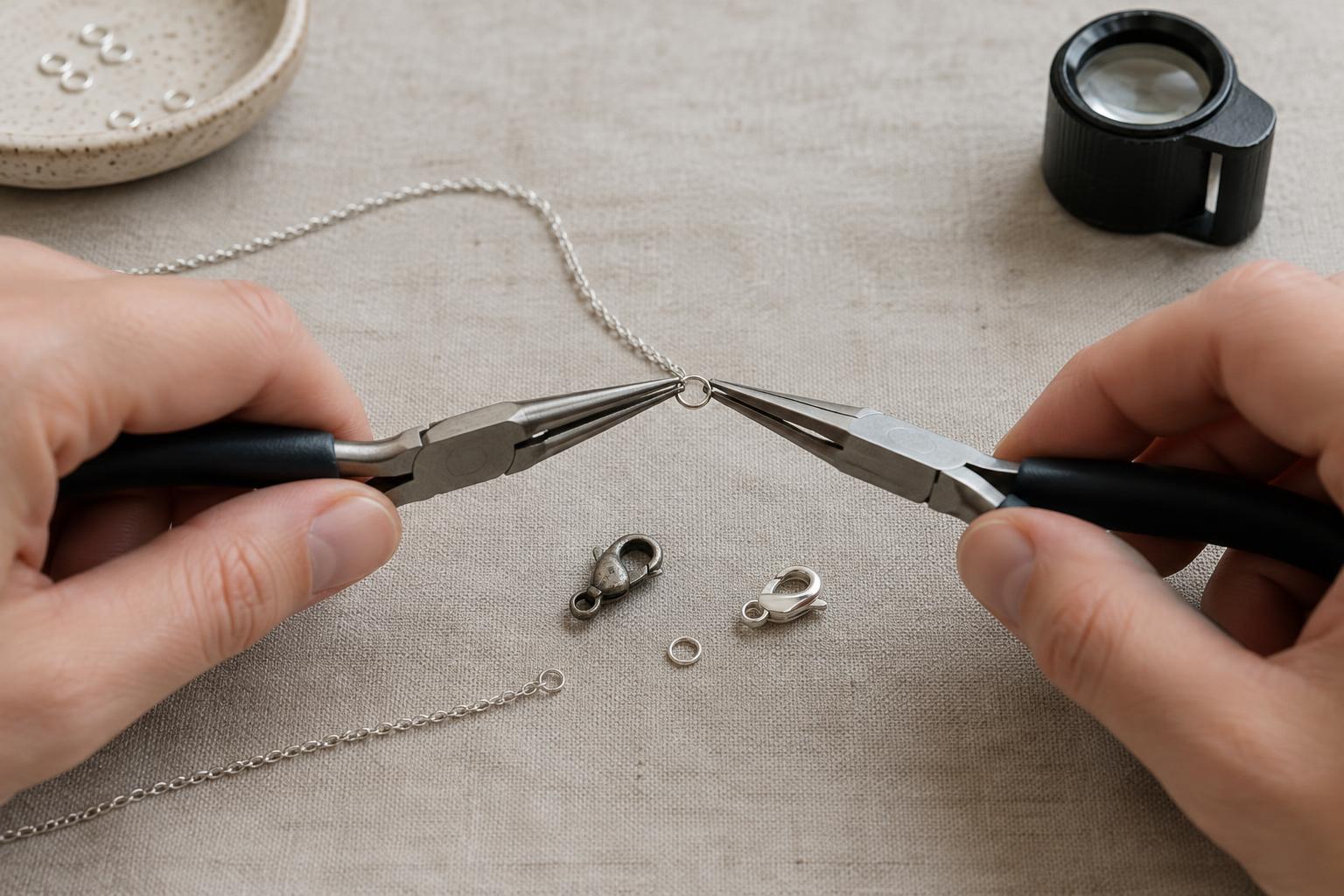
Where possible, choose a metal and finish compatible with the rest of the piece. Closely matched colours can still wear differently over time, and plated components may reveal a different metal beneath the surface. If you are unsure what the original metal is, avoid making assumptions based on colour alone. For a simple replacement, gather the new clasp, a sound jump ring of suitable size and two pairs of smooth-jawed pliers. A soft cloth or mat helps keep small parts from rolling away.
Replace a clasp attached by an openable jump ring
Before opening anything, take a photo of the original arrangement. Note which end holds the clasp and how any decorative findings face. Hold the jump ring with one pair of pliers on each side of its split. Twist one side gently toward you and the other away from you, just far enough to release the old clasp. Do not pull the ends directly apart: that can distort the ring and make it harder to close securely.
Slide off the worn clasp, add the replacement and reverse the twisting motion until the ring ends meet closely. A small back-and-forth adjustment can help align them, but avoid repeated bending. If the old ring is worn, use a suitable new one instead. Keep the pliers away from pearls, soft stones and delicate surfaces, which can be marked by accidental contact. If the connection resists opening or appears to be soldered shut, stop rather than applying more force.
Test the repair and know when to seek help
Close the clasp and check that its gate meets the body without a visible gap. Gently move the clasp and connecting ring in different directions to see whether either can work free. Run a fingertip carefully around the connection to check for a protruding ring end that could catch on fabric. Test the closure over a soft surface before wearing the piece outside.
A simple clasp swap cannot fix a weakened chain end, failing crimp or worn solder joint. Likewise, a heavy pendant or bracelet may put more strain on a small connector than it can safely bear. If parts are thinning, separating or difficult to identify, ask a repair specialist to examine the whole closure. Regularly checking the clasp while cleaning or putting the jewellery away is a small habit that can help you catch wear before a piece is lost.