Start by identifying the surface
Before reaching for a cleaner, look closely at the wallet. Many everyday wallets have a smooth, coated leather surface that tolerates careful wiping. Suede and nubuck have a soft nap and react differently to moisture. Some smooth leathers are lightly finished or unfinished; they may darken readily when touched with water. If the wallet has a care label or came with care instructions, follow those first.
Check the wallet in good light for loose stitching, cracked edges, peeling coatings, or areas where colour has already worn away. Cleaning removes surface dirt; it will not restore a damaged finish. A heavily worn or valuable wallet may be better assessed by a leather repair specialist before you apply anything to it. When you cannot identify the material or finish, begin with dry cleaning and keep liquids to a minimum.
Gather a few gentle tools
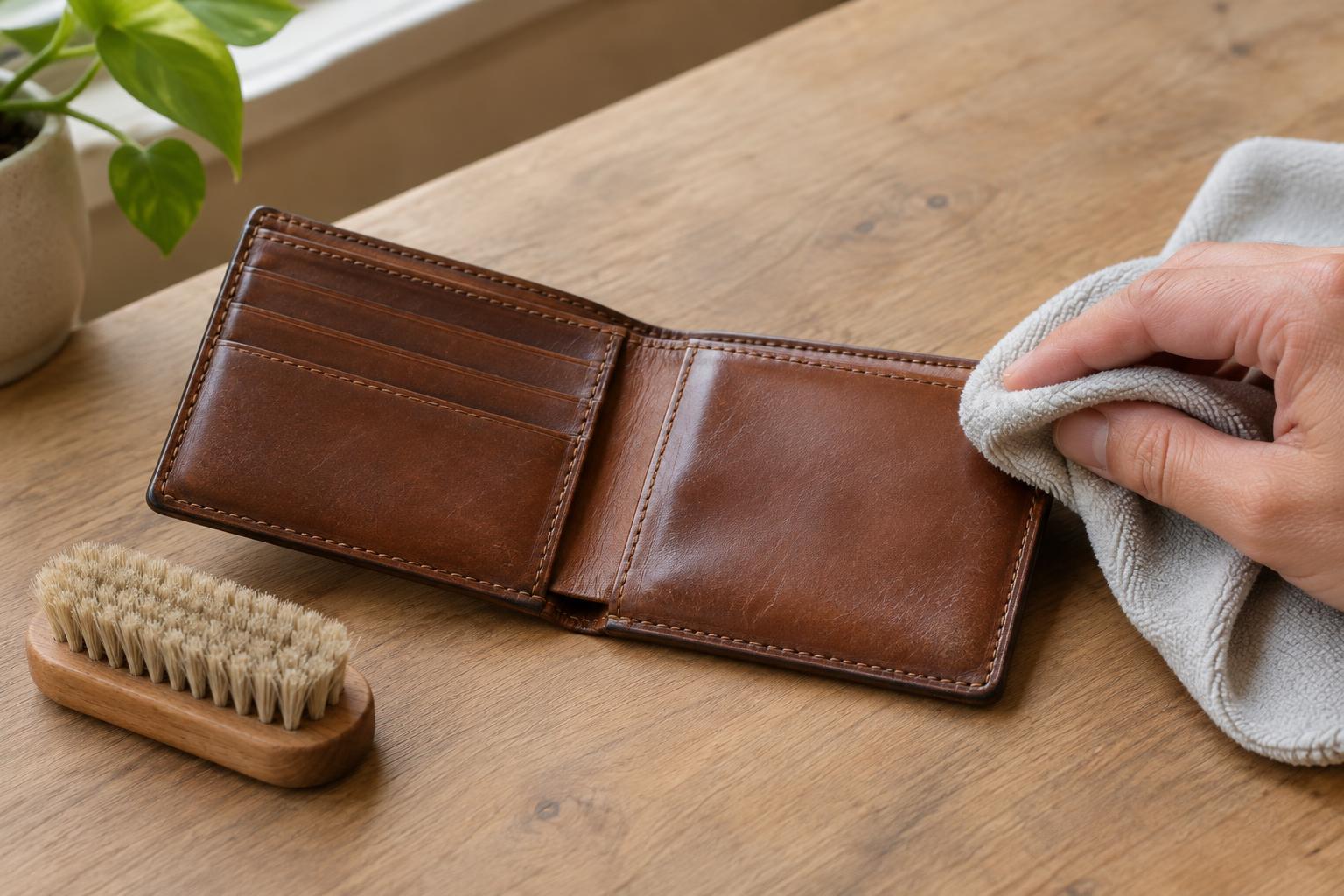
For routine care, use a clean, soft cloth, a second dry cloth, and a soft brush for seams and corners. A slightly damp cloth may be enough for a finished leather wallet. If it needs more, choose a cleaner specifically intended for the type of leather you have, and follow its directions. Apply cleaner to the cloth rather than pouring it onto the wallet.
Test any moisture or product on a small, inconspicuous area, such as an interior edge, and let it dry fully before continuing. A test cannot guarantee a perfect result everywhere, but it can reveal obvious darkening, colour transfer, or changes in texture. Use little product: repeated light passes are easier to control than one wet scrub.
Clean a smooth, finished leather wallet
Empty every compartment, then turn the wallet upside down and gently shake out crumbs or grit. Brush along seams, around card slots, and near the edges without forcing the bristles into stitching. Wipe the exterior and accessible interior surfaces with a dry cloth first. This removes loose dust that might otherwise be rubbed across the leather.
If marks remain and the finish passed your test, wipe gently with a barely damp cloth. Work over a small area at a time, paying particular attention to places handled most often. For persistent surface grime, use a small amount of suitable leather cleaner according to its instructions, then remove any residue as directed. Avoid soaking the cloth, scrubbing one spot repeatedly, or pushing moisture into pockets and layered edges. Those areas can be slow to dry.
Know what to avoid—and when to stop
Skip household solvents, alcohol-based wipes, bleach, abrasive sponges, and strong detergents. They may strip colour, alter a finish, or leave a surface dry or uneven. Kitchen oils and heavy creams are poor substitutes for leather-care products: they can darken leather and leave residue. Do not assume a homemade mixture is safe simply because its ingredients seem mild. Different leather finishes can respond differently to the same substance.
Do not use the damp-cloth method on suede or nubuck unless the maker’s instructions specifically allow it. Instead, start with a brush intended for those surfaces, brushing gently in the direction of the nap. Avoid rubbing a stain deeper into the fibres. If the wallet is stained with ink, heavily soiled, sticky, or showing colour loss, stop before repeated cleaning makes the mark larger. A specialist may have options that are not practical to attempt at home.
Dry and store it with care
After cleaning, leave the wallet open in a well-ventilated place at room temperature until it is completely dry, including the card slots. Keep it away from radiators, direct heat, and prolonged strong sunlight. Heat can affect leather and adhesives, while closing a damp wallet can trap moisture between its layers. Once dry, buff smooth leather lightly with a clean cloth if the finish permits.
Conditioner is not necessary after every wipe-down. If a smooth leather wallet feels dry and its care guidance allows conditioning, use a product suited to its finish, test it first, and apply it sparingly. Avoid conditioning suede, nubuck, or coated surfaces unless the product is explicitly suitable for them. For everyday upkeep, emptying trapped debris, wiping away fresh surface dirt, and letting the wallet dry naturally will often do more good than frequent deep cleaning.