Know what surface you are caring for
An unfinished wooden object may have bare wood exposed, but the word “unfinished” is not always precise. A surface that looks natural could have a thin coat of oil, wax or another treatment. Before cleaning, look for differences in sheen, darker areas around handled edges and signs of an existing coating. If you know how the object was made or have its care instructions, use that information rather than judging by appearance alone.
Check the construction as well as the surface. Carving, open joints, glued details and inlays can trap dirt or respond differently to moisture. End grain, often visible at the ends of boards or turned pieces, can absorb liquid more readily than surrounding faces. A sound, simple utensil can tolerate a different level of handling from a fragile decorative object with loose parts. When an object is valuable to you, unusually delicate or already damaged, the safest first step is often to leave it as it is and seek advice from a suitable repair specialist.
Start with dry, gentle cleaning
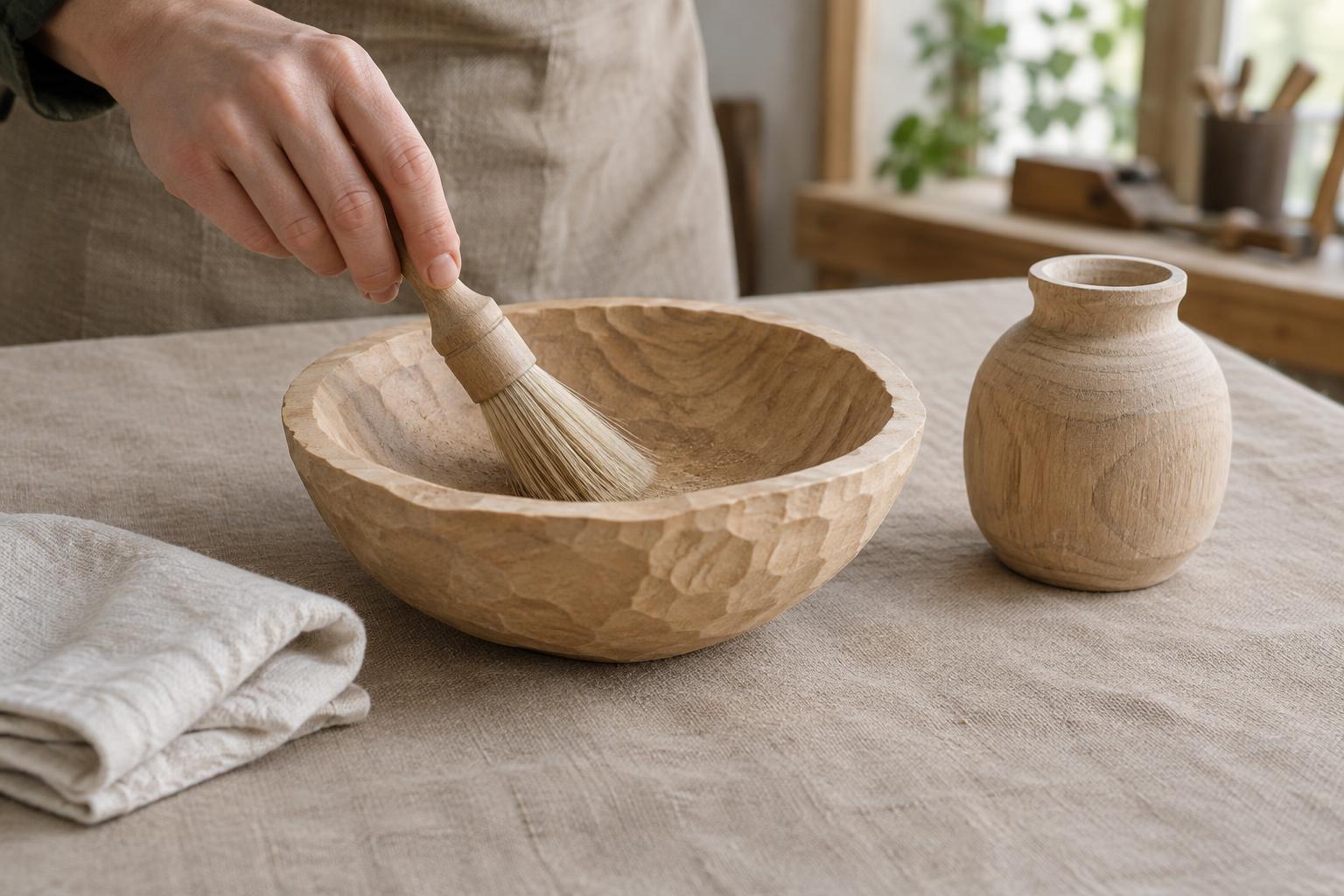
For routine care, remove loose dust before considering water. Use a clean, soft, dry cloth on broad surfaces, supporting the object so it does not twist or slide. For carved recesses, try a soft brush with light strokes that carry dust out of the detail. Avoid driving the brush tip into cracks, lifting splinters or rubbing across flaking decoration. A vacuum held nearby on a low setting may help collect loosened dust, but keep its nozzle from striking the wood.
If dust remains lodged in rough grain, do not assume it needs to be scrubbed away. Abrasive pads, stiff brushes and repeated rubbing can smooth raised details or leave pale patches that stand out against the surrounding surface. Dusting regularly with a light touch is usually more effective than allowing a thick layer to build up and then attempting an intensive clean.
Use moisture only when it is needed
For a sturdy object with a sound surface, a barely damp, lint-free cloth may lift a mark that dry dusting cannot. First test a small, inconspicuous area and let it dry fully. If the test shows darkening that persists, a roughened feel, colour transfer or any other unwanted change, stop. When the test is satisfactory, wipe a small area lightly and follow at once with a dry cloth. Do not pour water onto the object or leave moisture sitting in joints, carved hollows or end grain.
Unfinished wood can absorb water unevenly, leaving stains or raising the grain. For that reason, soaking, steam cleaning and sprays applied directly to the surface are poor choices for general care. Household cleaners may also leave residues or react with an unknown earlier treatment. If a stain cannot be lifted by gentle dusting or a cautious damp wipe, it may be better to accept it than to turn a small mark into a larger, altered area. Let any cleaned object air-dry thoroughly before putting it away.
Protect the surface without changing it by accident
A protective coating is a choice, not an automatic part of cleaning. Oils and waxes can deepen colour, change sheen, attract dirt if applied excessively or make later repair more complicated. Even a product described as natural may change the look and feel of bare wood. If preserving the unfinished appearance matters, try protection through careful handling and storage before deciding to apply anything.
For an object meant to be used, match any proposed treatment to its actual purpose and the maker’s instructions if available. A decorative bowl, a toy and a utensil have different practical requirements; do not assume one coating suits them all. Test a product on an inconspicuous area, follow its directions and allow the specified drying or curing time. If using a drying oil, follow the label’s precautions for used cloths: oil-soaked rags can heat up if left crumpled together.
Make everyday storage part of the care routine
Keep unfinished wooden objects away from persistent damp, strong heat and long periods of direct sunlight. Changes in their surroundings can encourage movement in the wood, while light may alter its colour unevenly. A stable shelf or drawer is preferable to a windowsill, a damp cupboard or a position beside a heater. Leave space around delicate pieces so that they are not knocked or compressed by neighbouring objects.
Handle objects with clean, dry hands, and lift them by strong parts rather than projecting details. Use a soft barrier where a piece might rub against a shelf, making sure the material itself is clean and does not shed fibres into rough grain. Check stored objects occasionally for dust, new cracks, loose joints or signs of damp. These simple observations help you respond early while keeping intervention to a minimum.