First, decide whether the leather needs conditioner
A leather wallet, belt or bag does not need conditioner simply because it has been used. Some leathers contain enough oils and waxes to remain flexible for a long time, while others have a surface finish that limits how much conditioner can enter. Adding product when it is not needed can leave a greasy feel, attract dirt or soften an accessory that relies on its shape.
Look at the leather’s behaviour rather than following a fixed schedule. Does it feel unusually stiff or dry in areas that bend? Are there fine surface lines that become more noticeable when it flexes? Compare those signs with less-handled areas of the same object. A worn-looking corner alone may reflect friction or a damaged finish, neither of which conditioner will necessarily repair. If the accessory feels supple and looks sound, cleaning and sensible storage may be enough.
Identify the surface before choosing a product
Smooth leather is not one uniform material. A coated or pigmented surface may resist absorption, while an open, absorbent surface can take up product quickly and darken. Waxed or oiled leather may already have a treatment that affects how a new conditioner spreads. A shiny surface is not reliable proof of how the leather was finished, so start cautiously when its construction is unknown.
Do not use an ordinary smooth-leather conditioner on suede or nubuck unless the product specifically says it is suitable. Their raised surfaces can flatten or stain when treated with creams and oils. Leather with a delicate colour, painted design or decorative finish also deserves particular caution. For an unfamiliar, valuable or fragile item, asking a leather-care specialist is safer than experimenting.
Test for colour and texture changes
No conditioner can be assumed to leave every leather unchanged. Even a product described as light or neutral may deepen a pale colour, alter the sheen or make the surface feel softer. Choose a conditioner intended for the type of leather you have, and follow its label. Avoid substituting cooking oils or heavy household products: they can be difficult to apply evenly and may leave unwanted residue.
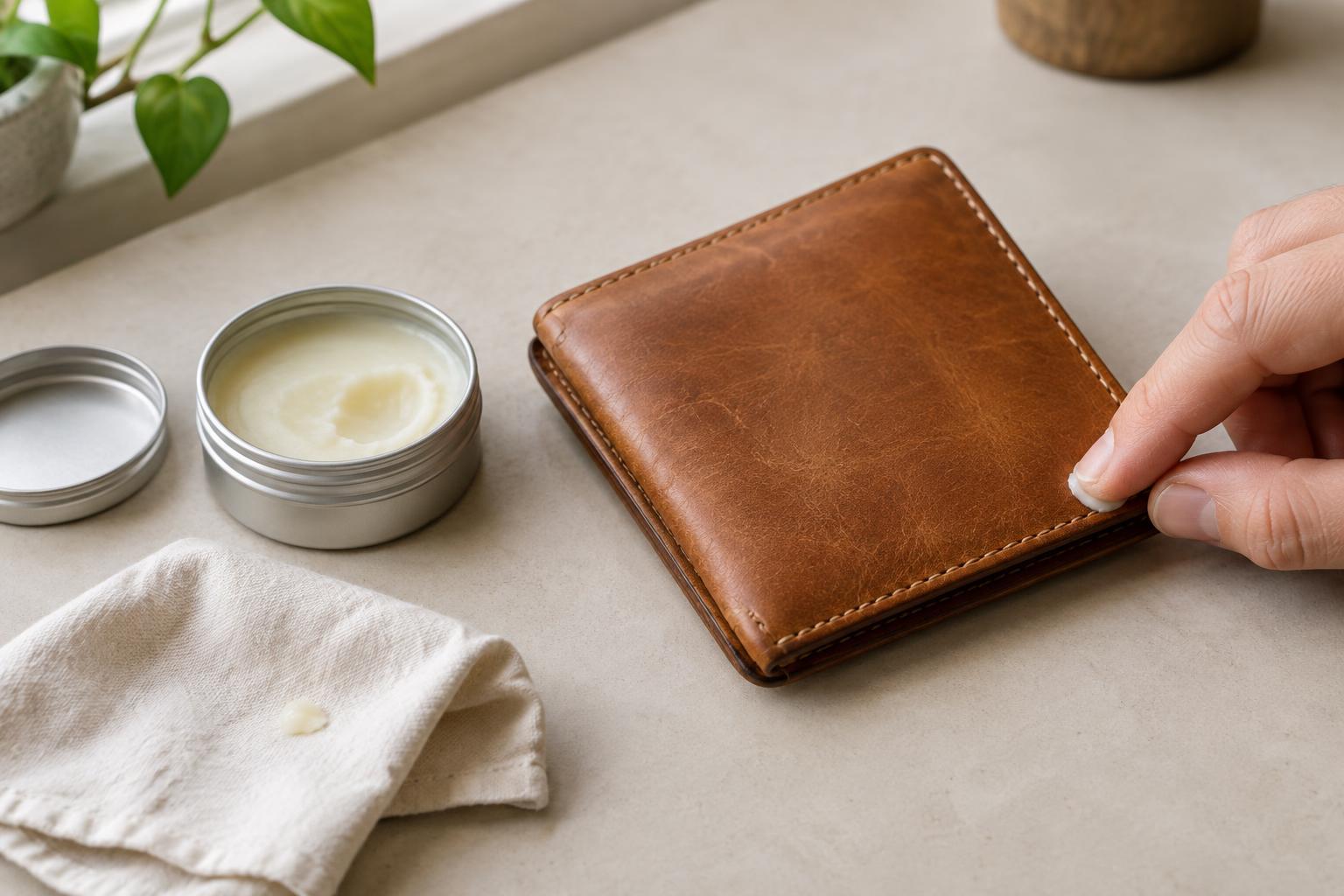
Before treating the whole accessory, put a very small amount on a clean, inconspicuous area, such as an underside or an interior edge made from the same leather. Allow it to settle and dry fully before judging it. Check the test patch in ordinary light from more than one angle, then feel it for tackiness or excessive softness. If the change is unacceptable, stop. A hidden test cannot guarantee that every panel will respond alike, especially if different pieces of leather or finishes were used.
Apply less than you think you need
Begin with a dry accessory free of loose dust and grit. If cleaning is necessary, use a method appropriate to its finish and let the leather dry naturally before conditioning. Keep it away from direct heat, which can cause uneven drying. Put a small amount of conditioner on a soft, clean cloth rather than pouring it onto the leather, then spread a thin layer across one panel at a time.
Work gently around seams, edges and hardware. Conditioner can collect near stitching, soak into an exposed edge or leave residue where metal fittings meet leather. Wipe away any visible excess, and give the accessory time to absorb what it can. If the surface remains coated or slippery, more product will not improve it. Once dry, buff lightly with a clean cloth if the product instructions call for it.
A structured bag, firm belt or fitted case needs enough stiffness to do its job. Stop before the leather feels noticeably limp. If a dry area still seems to need attention after the first thin application has settled, reassess that area rather than automatically coating the entire object again.
Let care and storage do the rest
Conditioner cannot reverse deep cracks, replace a worn finish or mend failing stitches. It also should not be used to disguise a problem before repair: residue may make later work more difficult. If an accessory shows splitting at a fold, loose stitching or damage around a fastener, address the construction problem instead of applying more conditioner.
Between treatments, remove surface dust, keep leather accessories dry when possible and allow damp items to air-dry away from heat. Avoid crushing a structured piece in storage, and give it room to breathe. The most reliable way to limit darkening and over-softening is to treat conditioner as an occasional, tested intervention—not a routine finishing step after every use.