Why slits form at colour changes
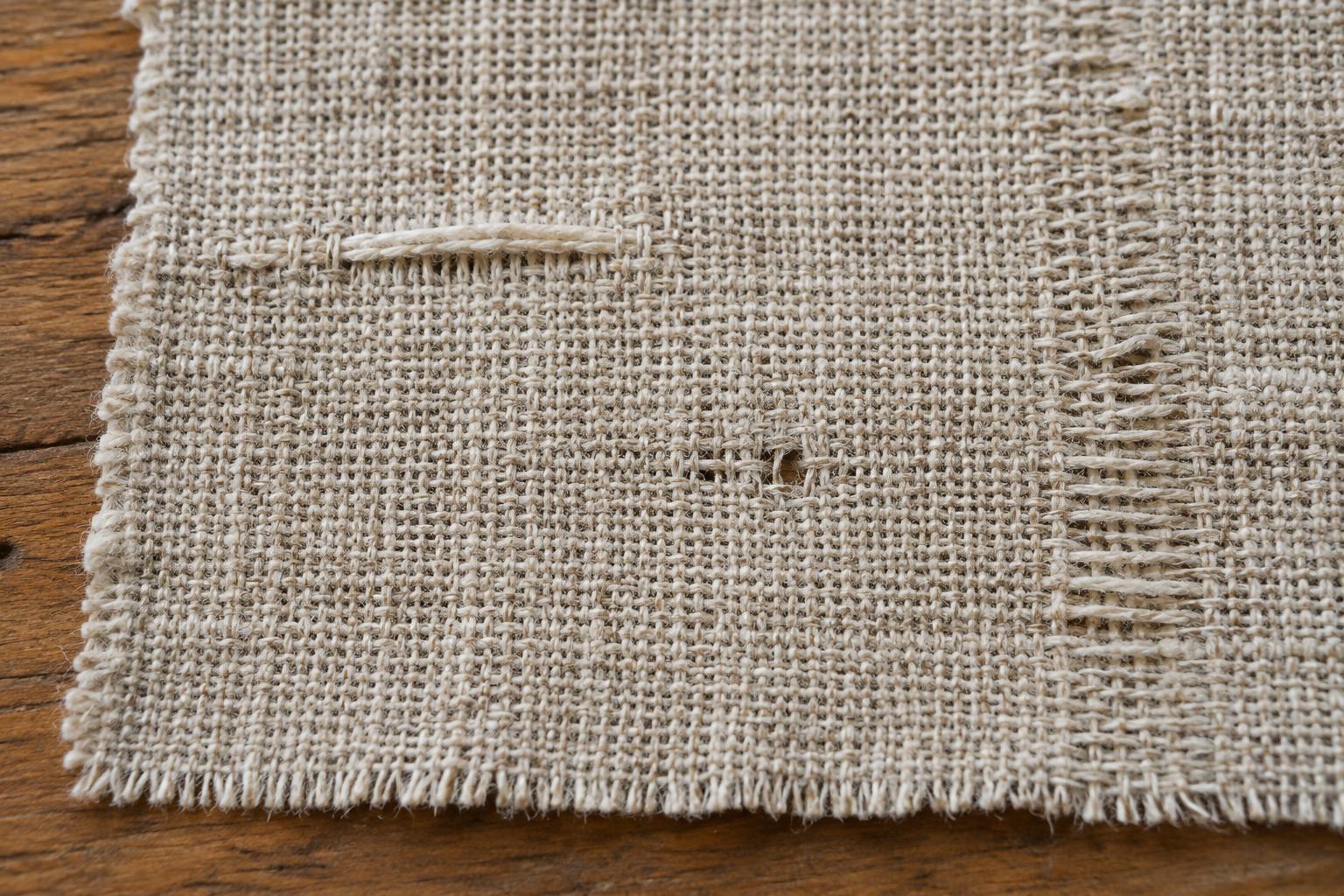
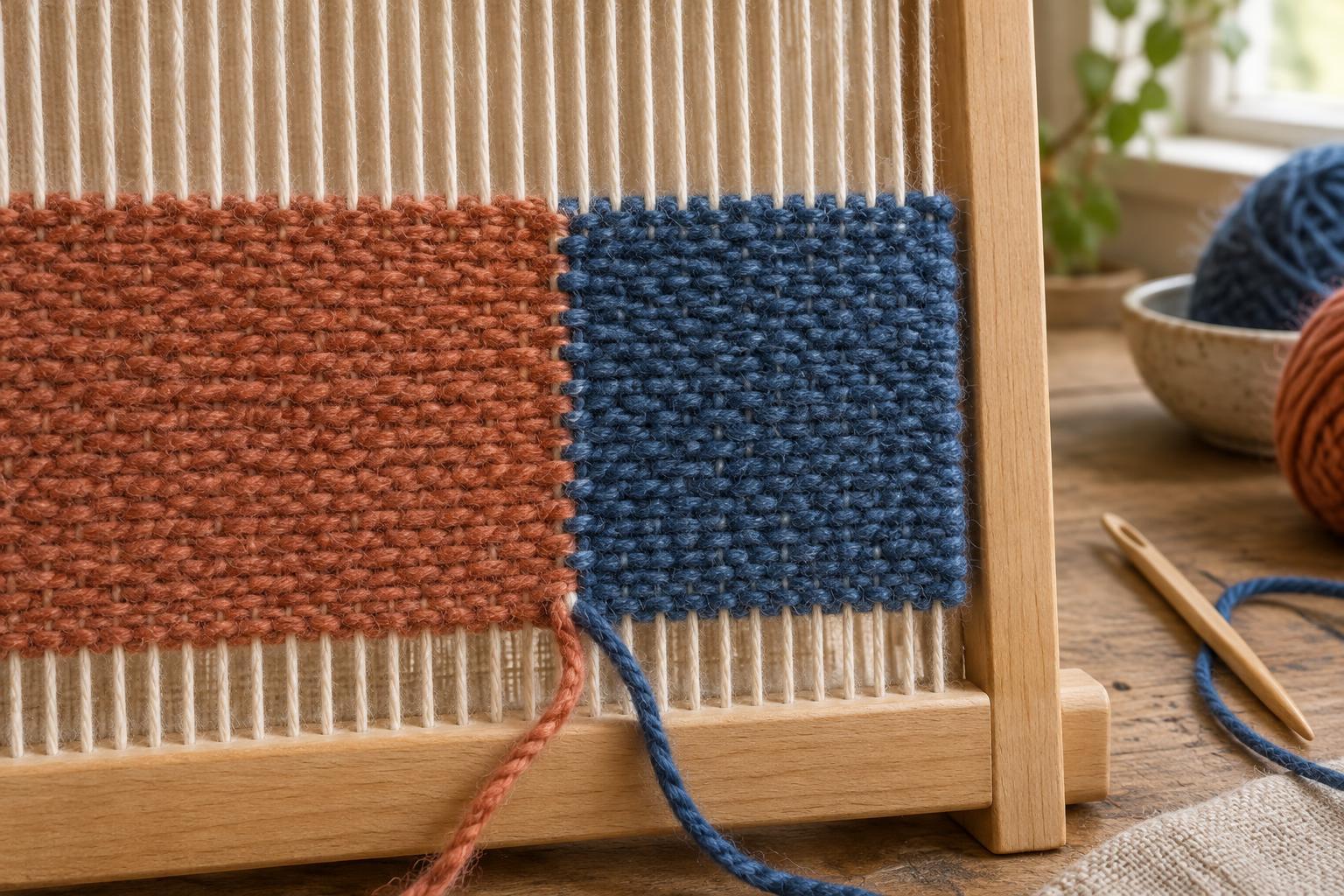
In tapestry weaving, a weft often works only within its own area of colour. When two neighbouring wefts turn back without connecting, they leave a vertical gap where the colours meet. A short slit may be an intentional part of a design. A longer one can open when the textile is handled, especially if it falls in a place that needs to hold together.
Before choosing a join, look at how the boundary runs. A straight vertical boundary offers repeated opportunities to connect the same two wefts. Along a diagonal or stepped shape, the meeting point moves across the warps as you weave. The aim is not to force every colour change into one method, but to make a secure join that suits the line and the thickness of the yarn.
Share a warp at the boundary
One way to prevent a slit is to turn both wefts around the same boundary warp. Bring the first colour to that warp, turn it back into its own area, then bring the neighbouring colour to the same warp and turn it back on its side. The two colours meet at a shared point rather than leaving an unconnected space between separate turns.
This method can make a clear, slightly raised line where the colours meet. Watch that the shared warp remains covered and that neither weft pulls it sideways. If the boundary begins to look thick, ease the turns rather than packing extra yarn into the join. A small sample is useful when the two wefts differ in thickness: it lets you see whether the line remains even before you use the method across a larger area.
Interlock neighbouring wefts
Interlocking connects the two wefts to each other at the meeting point instead of turning both around one warp. Bring the working wefts to the boundary, link them so each catches the other, and return each one into its own colour area. Press the join into place with your fingers or a tapestry tool before packing the row. The link should hold the edges together without forming a hard knot.
Keep the order of the wefts consistent as you work up a long boundary. Changeable handling can make the join wander or produce uneven bumps. Also check the face of the weaving regularly: a join that looks tidy from the back may create a visible ridge on the front. If the ridge becomes too prominent, try a different way of linking the yarns or use a shared-warp turn. The better choice is the one that gives your particular yarns a secure, balanced edge.
Balance the join with the rest of the weaving
A secure connection can still look untidy if the surrounding weft is too tight or too loose. Leave enough yarn in each pass to travel over and under the warps without drawing the colour areas together. Pack at a similar density on both sides of the boundary so one area does not climb faster than the other. As you work, pause to check that the warps remain straight and that the join has not become a column of bulky turns.
When starting or ending a colour, avoid stacking several yarn tails at the same boundary. Lay a tail into the back of the weaving across several warp crossings, or secure it later using a finishing method appropriate to the piece. Trimming a tail close to an unsecured join can allow it to work loose. Good joins depend as much on managing these ends as on linking the active wefts.
Decide when to join and when to finish a slit
You do not have to connect every meeting of two colours. An occasional short slit may help a sharp shape stay crisp and can be closed during finishing if the piece needs it. To close a slit, use a suitable yarn and work from the back, catching the adjacent woven edges with small stitches. Draw them together gently; pulling hard can pucker the surface or distort the colour line.
Make the decision while the weaving is still easy to inspect. Hold the work upright, look for openings and gently move the fabric to see how each boundary behaves. If a gap is growing where you did not intend one, begin joining the wefts rather than waiting until the entire section is woven. Tapestry joins are easiest to control when you treat them as part of building the colour shape, not merely as a repair at the end.