Start with observation, not a cleaning product
Before reaching for water or a cloth, look at the object in good light. Turn it over if it is safe to do so, and examine edges, seams, undersides and areas that receive less handling. These places may reveal how it was assembled and whether its surface has changed over time. A clean-looking patch beneath a handle, for example, can help you distinguish a finish from accumulated dust.
Ask what you are trying to remove. Loose surface dust calls for a different response from a sticky deposit, a stain or a deliberate darkened finish. Photographing the object before you begin gives you a reference if you notice a change. If you cannot identify a mark, do not assume it is dirt: colour variation, tool marks and patina can be part of an object’s appearance.
Look for materials that may react differently
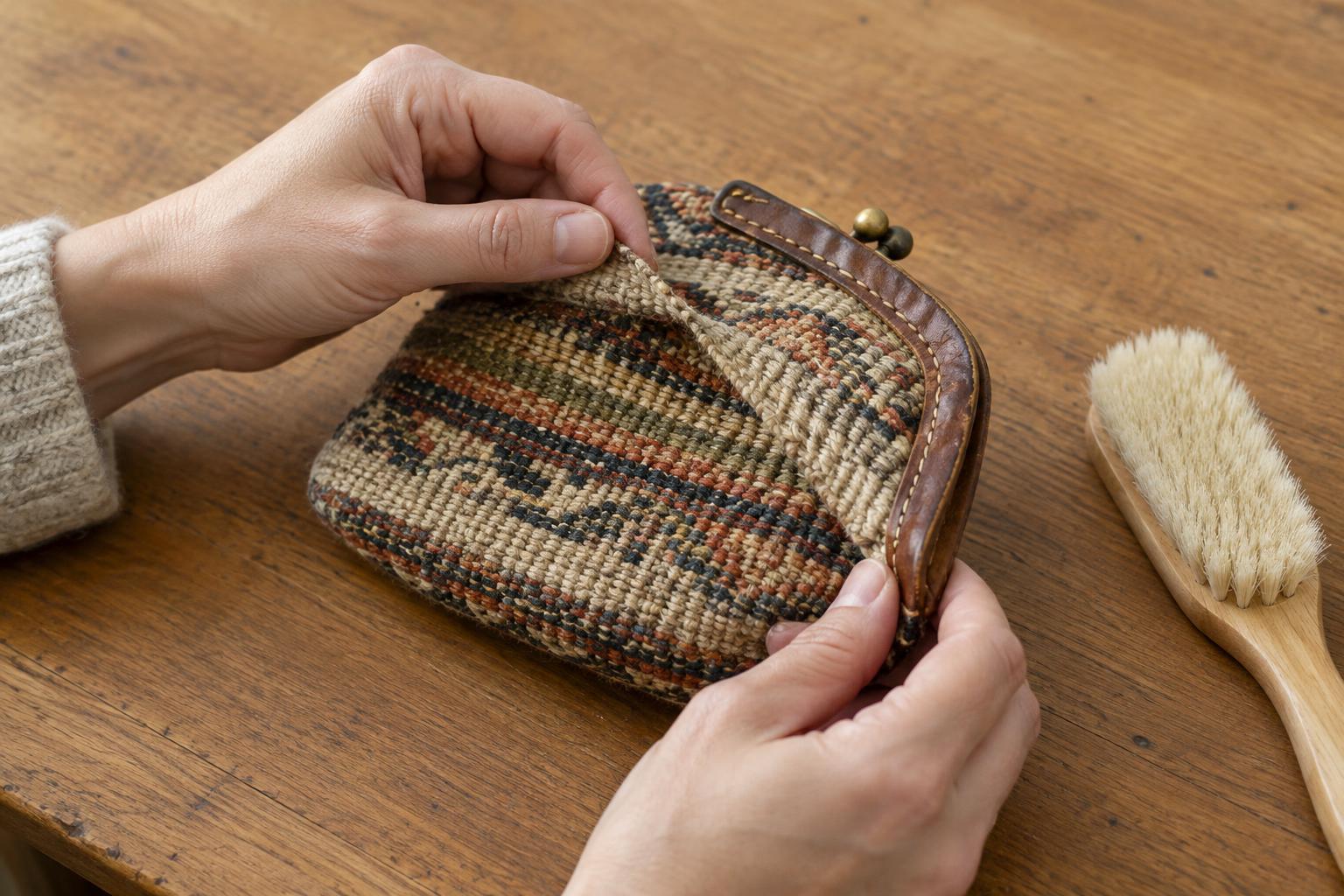
Many handmade objects combine materials. A woven bag might have dyed yarn, leather straps, a lining and metal fasteners. A decorative box might include wood, paint, fabric and glue. Cleaning the main surface could still affect an adjoining part, especially where moisture can travel through stitching, gaps or absorbent fibres. Inspect each component and the points where they meet before choosing any method.
Look closely at colour and texture. Powdery pigment, flaking paint, cracked leather, lifted veneer, brittle thread or a tacky finish are reasons to avoid rubbing and liquids. An unfinished wooden surface may absorb moisture unevenly; a polished one may have a coating that a solvent could disturb. A shiny metal fitting does not tell you how the surrounding material will tolerate cleaning. When the materials or finish are uncertain, treat the most vulnerable component as the limit for the whole object.
Read the joins and weak points
Construction details can show where cleaning poses the greatest risk. Check stitches for breaks, knots for looseness, woven edges for fraying and glued areas for lifting. Beads, inlays and decorative attachments may catch on a cloth even when they seem secure. Fine dust can collect in these places, but working harder to remove it may do more harm than leaving it alone.
Support the object while you inspect it rather than pulling on a strap, fringe or handle to reach an awkward area. Notice whether it flexes as expected or makes a new sound when moved. If a join is unstable, set cleaning aside until it can be assessed or repaired. Cleaning is easier to control when the object is structurally sound.
Choose the least intrusive first step
If the surface is stable and the concern is ordinary loose dust, begin with a gentle, dry approach. A soft brush can lift dust from a firm surface while a clean, dry cloth may suit a smooth, robust one. Use light pressure and work where you can see the result. Avoid dragging a cloth across loose threads, raised decoration or flaking finishes. Stop if colour transfers, fibres shed or a surface begins to change.
Do not use a spot test as permission to wet-clean an entire object. Even a small amount of water can leave a tide mark on absorbent material or move dye into a neighbouring section. If a liquid method seems necessary, first establish what the materials and finishes are and whether the object can dry safely. Household cleaners and solvents may affect dyes, coatings or adhesives in ways that are difficult to reverse.
Know when leaving it alone is good care
Sometimes the most useful outcome of an inspection is a decision not to clean. Widespread staining, mould-like growth, a strong unexplained odour, active flaking or an object with personal or historical significance calls for caution rather than experimentation. Isolate an item with suspected mould from other objects, limit handling and seek appropriate specialist guidance. Do not try to scrub away a problem whose cause you have not identified.
For routine care, note what you saw and store the object in a way that reduces new dust and strain. Support its shape, avoid crowding fragile details and check it periodically for changes. Reading care clues is not about finding a universal cleaning recipe. It is about matching any action to the object in front of you—and recognising when restraint will preserve more than cleaning can improve.