Start with the intended weave
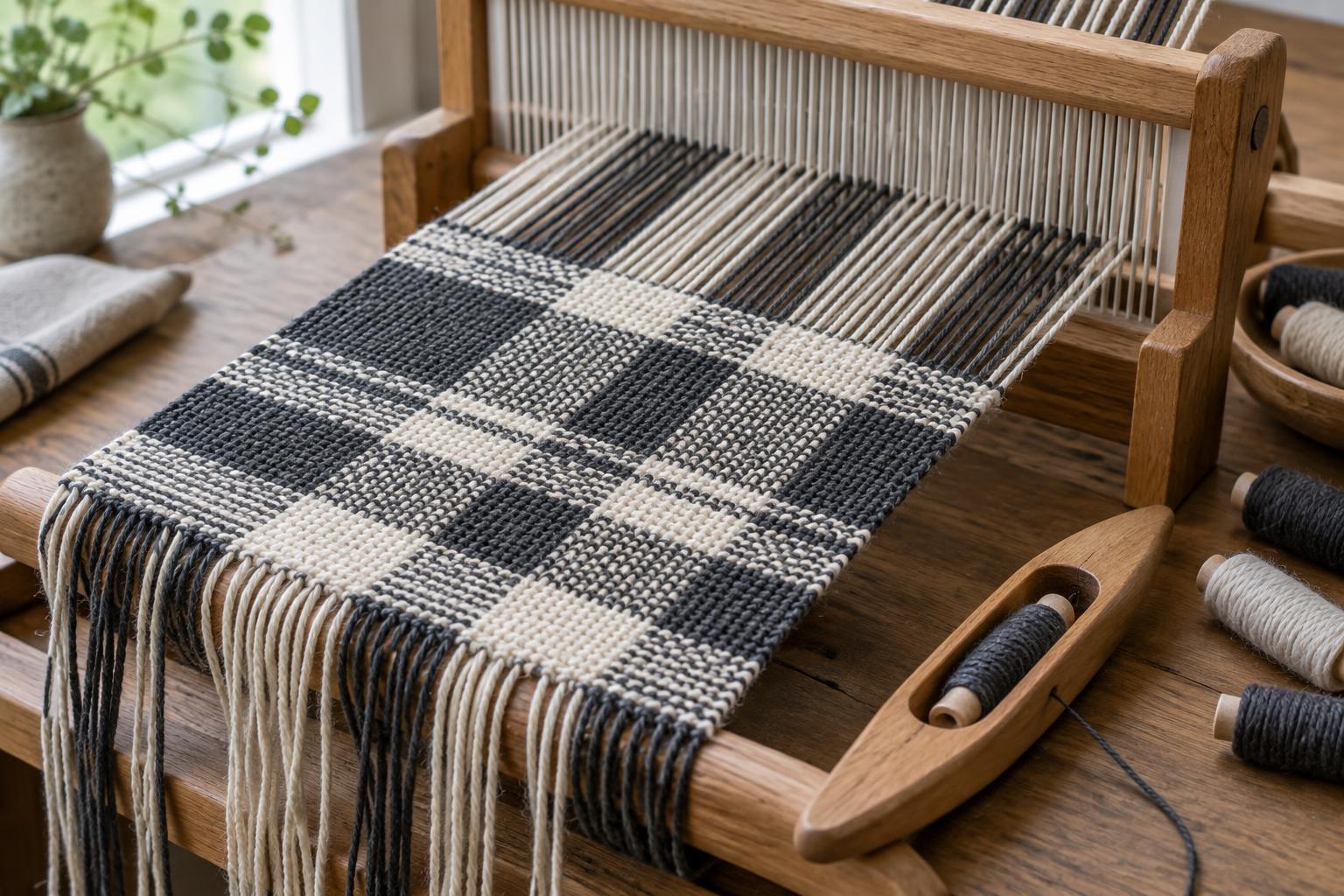
Before calling a mark a fault, look for the cloth’s underlying pattern. In a woven fabric, lengthwise warp yarns and crosswise weft yarns pass over and under one another in a planned sequence. Plain weave alternates frequently; other structures may leave a yarn on the surface for several crossings. Those longer surface passages, called floats, can be an intentional part of the design.
Lay the cloth flat in good, even light and examine both faces. Find an area that looks consistent, then compare it with the area in question. Does the same crossing sequence repeat elsewhere? Does a raised thread belong to a regular motif, or does it interrupt one? Comparing like areas is more useful than judging a single thread in isolation, especially in textured yarns or loosely woven cloth.
If the textile has a selvedge, the finished edge that runs lengthwise, it can help you orient the fabric. Look along the length for warp yarns and across the width for weft yarns. A magnifier can make crossings easier to see, but gentle handling matters more than powerful equipment: avoid pulling at a loose thread to discover where it goes.
Floats: surface threads that travel too far
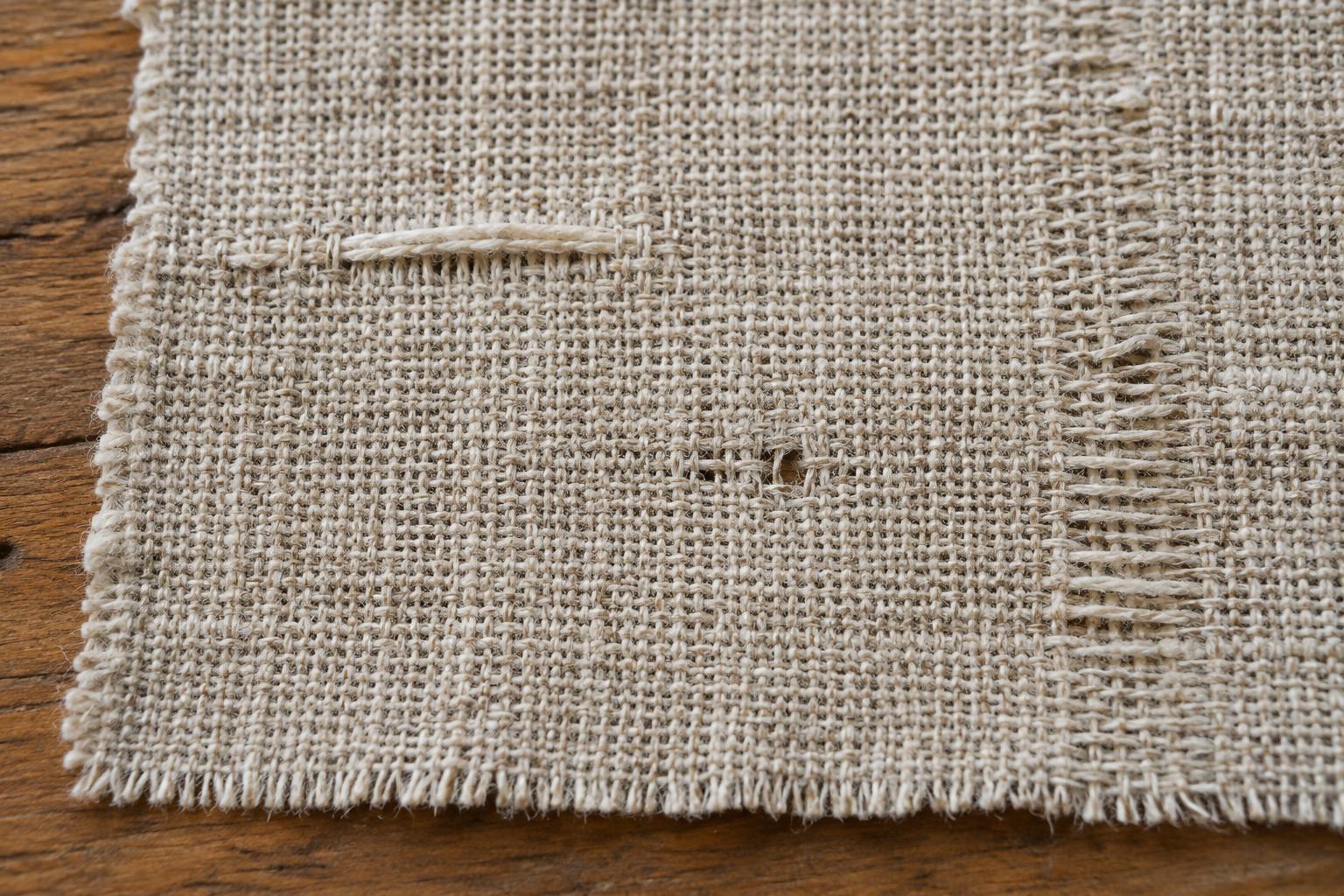
A float is a stretch of yarn that passes over several yarns without interlacing. It is not automatically a flaw. Some weaves use repeated floats to create a smooth surface, a figure or a change in sheen. An unexpected float may be easier to recognise when it appears alone among shorter, regularly spaced passages.
To assess one, trace the yarn visually from one secure crossing to the next. Compare its length and position with similar parts of the pattern, and check the reverse side. An isolated long loop or straight strand may catch on fingers, jewellery or other objects in use. A short, flat float in a decorative textile may be less troublesome, though its effect depends on the yarn and how the object will be handled.
Do not trim a float simply because it stands proud. Cutting it may release part of the weave or leave two loose ends. If a newly acquired textile has a conspicuous float, document its location before using or washing the piece. For a valued or fragile item, ask a textile repair specialist whether it needs stabilising.
Skips: a missed crossing in the pattern
A skip is an unintended missed interlacement: a warp or weft yarn passes over a yarn it should have passed under, or the reverse. The result can resemble a float, which is why the terms sometimes overlap in casual description. The useful distinction is that “skip” points to a break in the intended sequence, while “float” describes what a yarn does on the surface.
Look for a sudden change in the over-under rhythm. A weft yarn may cross one or more warp yarns where neighbouring rows follow a different route. Viewed from the other face, the mismatch may be clearer. In patterned cloth, compare the suspect spot with the same position in another repeat rather than with an unrelated part of the design.
A single skip may be mostly visual, particularly in cloth that will hang undisturbed. Several skips close together, or a skip next to a loose yarn, deserve more attention in fabric subject to rubbing or tension. Resist the urge to push a thread through the cloth with a needle unless you understand the weave: moving one crossing can distort others or damage the yarn.
Uneven beat: changes in weft spacing
The beat is the action that brings each newly placed weft into position against the woven cloth. An uneven beat can show up as a band where weft rows are packed more tightly or spaced farther apart than the surrounding rows. Hold the cloth flat and look across its width. A narrow dense line, an open stripe or a shift in how light passes through the fabric may reveal a change in spacing.
Not every change in density comes from the beat. Variations in yarn thickness, deliberate changes of weave or finishing can also alter the surface. Check whether the band continues across much of the width and whether the yarn itself changes at the same point. On a scarf or wall hanging, a mild variation may simply be visible; on fabric intended for sewing, it may affect how evenly a piece drapes or how reliably a seam can be placed.
Assess faults in the context of the object, not against an expectation of perfect uniformity. Identify the intended pattern, locate any interruption and consider the textile’s use. A detail that invites snagging or weakens a heavily handled area matters more than one that is only noticeable under close inspection. That approach makes it easier to appreciate handmade variation while still recognising construction problems worth addressing.