Understand what you are removing
Pills are small clusters of loose fibres that gather on a fabric’s surface as it rubs during wear. They often appear under the arms, along the sides of a garment, or wherever a bag strap touches it. Their presence does not necessarily mean a handmade piece was poorly made. Different yarns and knitted surfaces respond differently to friction, so the first step is to look closely at the fabric rather than reach immediately for a remover.
A pill usually sits above the knitted surface, held by a few fibres. A loose stitch or snag is different: it may form a loop that belongs to the structure of the fabric. Do not cut or shave a loop simply because it stands out. If you cannot tell whether a raised spot is a pill, leave it in place until you can examine it in good light. Preserving a sound stitch matters more than making the surface perfectly smooth.
Prepare the garment before you begin
Lay the knitwear flat on a clean, firm surface with the area you are working on facing up. Smooth it gently without stretching it. Good lighting makes it easier to see where each pill ends and the underlying yarn begins. Work on a dry garment: damp fibres can be harder to separate cleanly, and tugging at wet knitwear may distort its shape.
Check a small, less visible area before treating the front of the garment. If the piece has long, fluffy fibres, openwork, embroidery or decorative loops, use particular caution. Those features can catch in a tool even when it works well on a smooth knitted surface. Remove only pills that are clearly separate from the fabric; trying to make a naturally fuzzy yarn look completely sleek can take away fibres that belong there.
Choose a tool that gives you control
For a few large pills, small sharp scissors can offer precise control. Hold the pill away from the surface with your fingers and snip only the fibres connecting it to the fabric. Keep the blades clear of the knitted stitches, and never cut into the fabric to reach a stubborn cluster. Avoid pulling pills off by hand: a pill may still be anchored to intact yarn, and a quick tug can raise a loop or weaken a stitch.
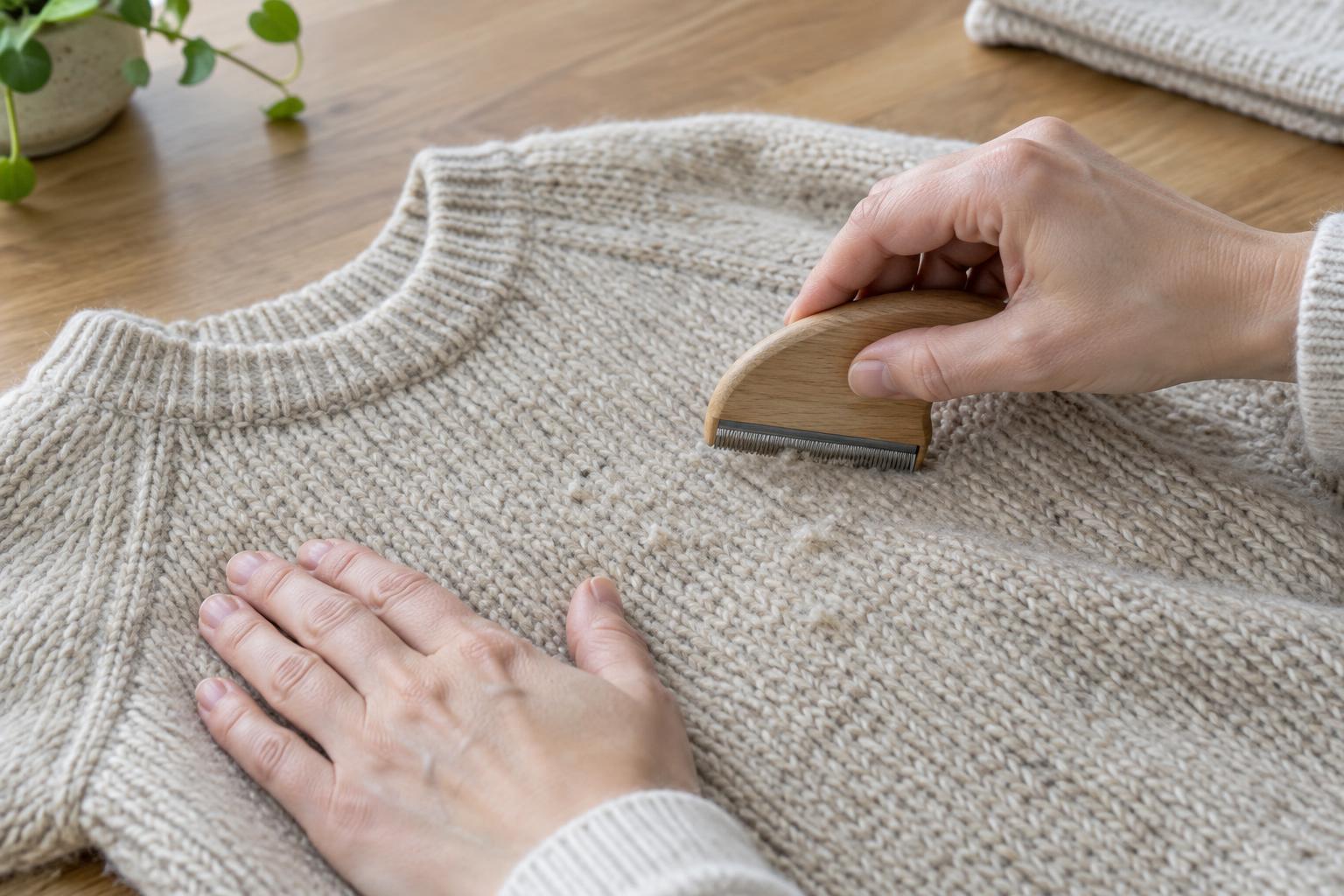
A fabric comb or battery-powered fabric shaver may be useful on a smoother, closely knitted surface with many small pills. Use very light pressure and test first. A comb can catch on textured stitches; a shaver can cut raised loops if pressed too hard or passed over uneven fabric. Follow the tool’s instructions, keep the garment flat, and stop if you notice snagging, thinning or unusual resistance. If the fabric is delicate or its surface is intentionally brushed, scissors used sparingly may be the safer choice.
Work slowly and check your progress
Treat a small area at a time rather than repeatedly passing a tool over the whole garment. With scissors, trim visible pills one by one. With a comb or shaver, move gently across the surface without stretching the knit ahead of the tool. Pause often to lift away detached fibres and inspect the fabric beneath them. Once the obvious pills are gone, stop; continued treatment can remove more surface fibre without noticeably improving the garment.
Pay extra attention near seams, ribbing, cables, buttons and repaired areas, where the surface may be raised or uneven. It may be better to leave a small pill beside a stitch than risk cutting that stitch. Afterward, brush away loose debris with your hand or a soft garment brush if the fabric tolerates it. Hold the garment up to the light and check that no loops have been caught before putting it away.
Reduce friction without expecting a pill-free garment
Removing pills addresses the surface, not the cause. Notice where a favourite knit rubs during wear: a rough bag strap, the edge of a desk or another layer of clothing may encourage fresh pills in the same spot. Changing how you carry a bag or choosing a smoother layer can sometimes reduce that contact. Letting a garment rest between wears also gives you a chance to inspect high-friction areas before pills become dense.
Follow the garment’s care instructions when washing, and support its weight when handling it. Store knitwear folded rather than hanging if hanging would stretch it. Check for pills occasionally and remove them gently, instead of waiting until they form a thick patch that invites harder scraping. Some pilling may continue, especially on soft or loosely spun yarns. The aim is not to erase every sign of use, but to keep the knit comfortable and intact for longer.