Check the tool before cleaning
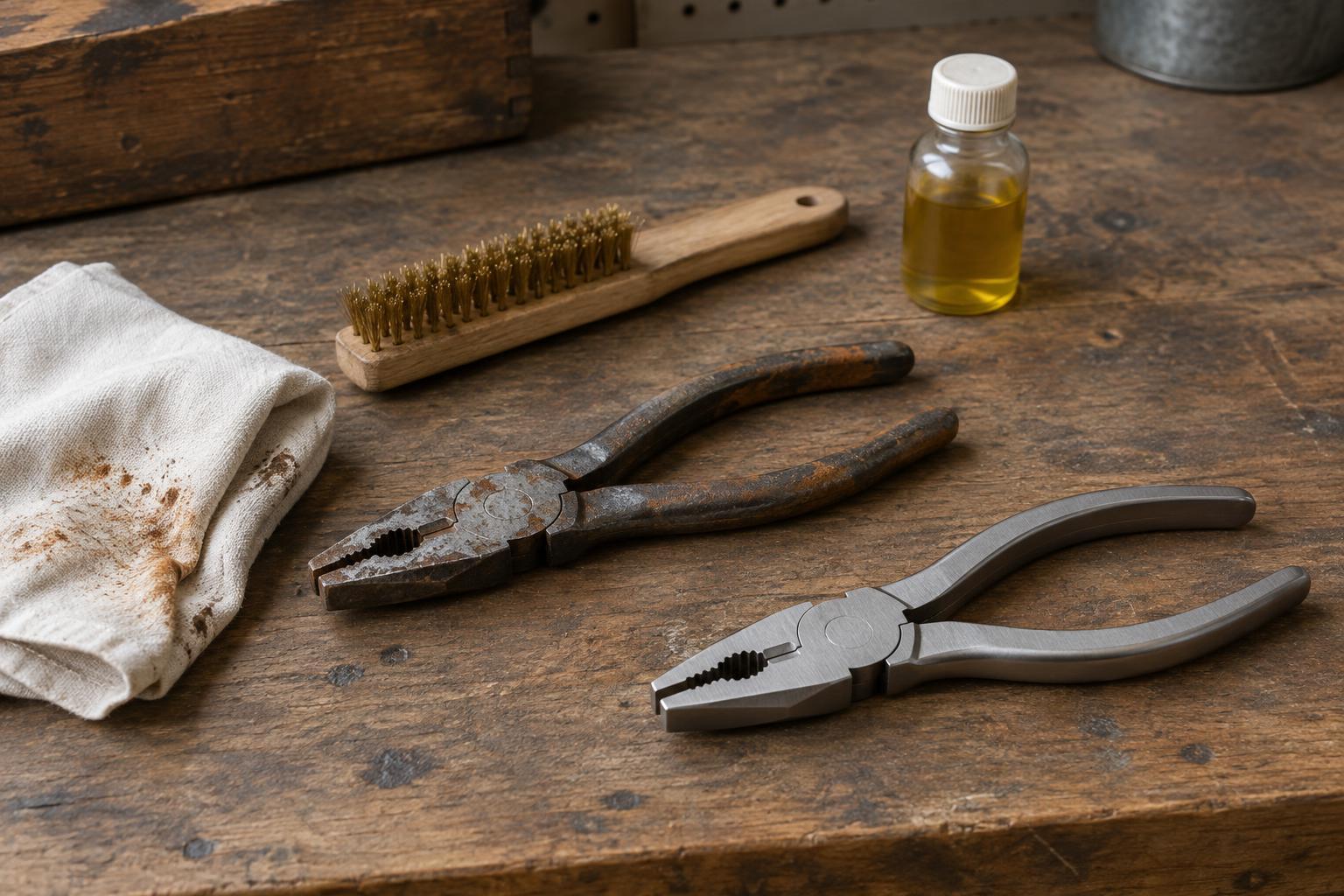
A few orange spots on a steel blade or wrench are often surface rust: corrosion on the exposed metal rather than deep damage. Start by wiping away dust and dirt with a dry cloth so you can see what is underneath. Look closely at cutting edges, joints, screw threads and contact surfaces. If the metal has deep pits, a cracked part, a loose head or a weakened joint, cleaning will not restore its strength. Set the tool aside rather than relying on it for a demanding task.
Consider the finish before choosing a method. An older tool may have darkening or wear marks that are not active rust; removing them can also remove evidence of use and alter its appearance. Plated, painted and finely finished surfaces are easier to scratch than plain steel. Test any cleaning method on a small, inconspicuous area first. For an object whose original finish matters to you, it is reasonable to stop at gentle cleaning rather than trying to make it look new.
Remove loose rust with the least aggressive method
Work on a stable surface with good light. Wear eye protection if you will brush or abrade the metal, and keep loose sleeves away from moving parts. For light rust on plain steel, begin with a dry cloth or a soft brush. If spots remain, put a small amount of light oil on a cloth and rub the affected area. The oil helps lift residue and reduces friction while you work.
For more stubborn patches, use a fine abrasive pad or fine steel wool with a little oil, applying light pressure in short passes. Work around a cutting edge rather than across it, and avoid rounding bevels or crisp corners. Do not scrub plated surfaces, markings or decorative finishes without considering the risk of scratching them. Check your progress frequently: the aim is to remove loose corrosion, not sound metal. Fine wire fragments from steel wool can lodge in joints or scratch nearby surfaces, so clean them away thoroughly.
Clean joints and dry the tool completely
Rust can collect where a cloth cannot reach, such as around a hinge or inside the teeth of a wrench. A small, soft brush can dislodge residue without forcing debris further into the mechanism. Open and close a joint gently as you clean it; if it binds, do not force it. Avoid soaking a tool with a wooden handle, enclosed joint or mixed materials. Moisture that enters these areas may be difficult to remove.
Wipe off oil, rust particles and any remaining abrasive with a clean cloth. Pay attention to seams and the place where metal meets wood. If you have used a damp cloth at any stage, dry the tool promptly and thoroughly before putting it away. Surface cleaning can reveal pitting that was hidden by rust. A pitted area may still need monitoring even when the orange residue is gone.
Protect the exposed metal
Clean, bare steel can rust again when moisture reaches it. A very thin coat of light tool oil or suitable protective wax creates a barrier for tools used and stored in ordinary workshop conditions. Apply it with a cloth, then wipe away excess so the surface feels protected rather than wet. Put a small amount of appropriate lubricant on a stiff joint if needed, working it through the movement and wiping off any surplus.
Choose a coating that suits the tool’s use. Oil can transfer to wood, fabric or other workpieces, so wipe down contact surfaces before a project. If a tool touches food, follow the maker’s care guidance and use only a product appropriate for that contact. Keep protective products off grips where they would make the tool slippery.
Make storage part of the repair
Preventing rust is largely a matter of keeping tools clean and dry. Wipe them after use, especially if they have been handled with damp hands or used in a humid space. Let a tool dry before closing a pouch or putting it in a drawer. Store metal tools away from wet rags, damp leather and condensation-prone surfaces, with enough separation that sharp edges do not damage one another.
A dry drawer, tool roll or case helps only if the tools go into it dry. In a closed container, a moisture-absorbing packet can help manage humidity, but it will not compensate for putting away a wet tool. Inspect stored tools occasionally, particularly those used infrequently. Catching a small new spot early usually calls for less abrasion and helps preserve the tool’s working surfaces over time.