What even tension means
The warp is the set of lengthwise threads held on the loom while the weft passes across them. On a simple frame loom, each warp strand should feel reasonably similar to its neighbours when you touch or gently lift it. The aim is not to make every thread extremely tight. A warp that is too taut can be difficult to work with and may put unnecessary strain on the yarn, knots or frame.
Uneven tension often shows up as one strand that sags while the others stay straight, or one that feels noticeably tighter when you pass the weft through. It can make the weaving awkward and may affect how evenly the rows sit. Some movement is normal, especially with flexible yarns. What matters is that no strand is so loose or tight that it interrupts your work.
Prepare the frame and choose the warp
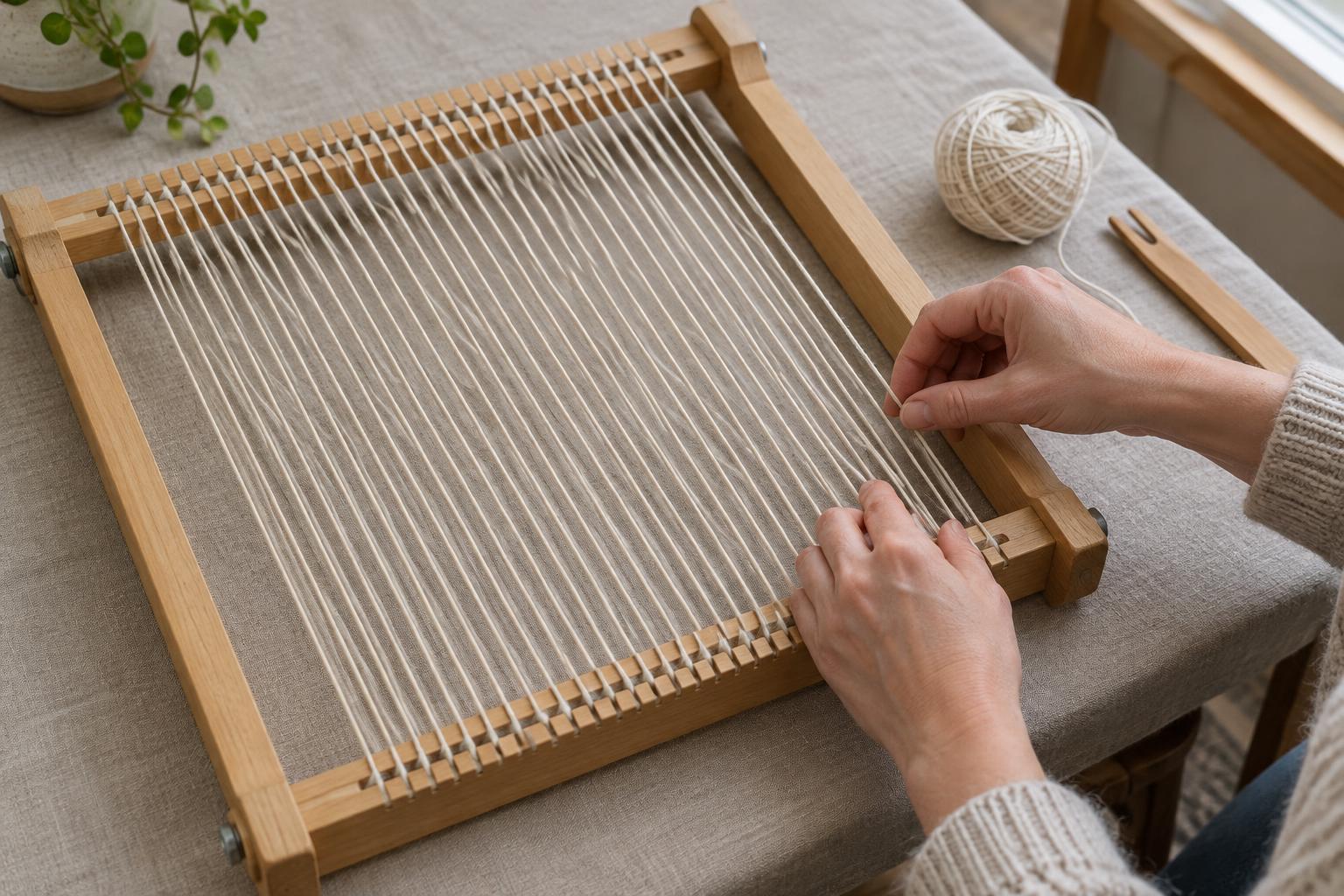
Before winding, check that the frame sits square and that its joints and any pegs or nails are secure. If a peg shifts under pressure, the tension may change after you begin weaving. Mark the intended positions of the warp threads if the frame has no built-in spacing. Consistent spacing helps you see and handle the strands, though spacing and tension are separate things: a thread can be evenly placed and still be slack.
Choose a warp yarn that can tolerate repeated contact with the weft and your hands. A smooth, reasonably strong yarn is often easier to learn with than one that stretches greatly or catches on itself. If you are unsure, pull a short length firmly by hand and rub it a few times between your fingers. This will not predict every problem, but it can reveal a yarn that breaks or frays too readily for the project.
Wind with a steady, repeatable pull
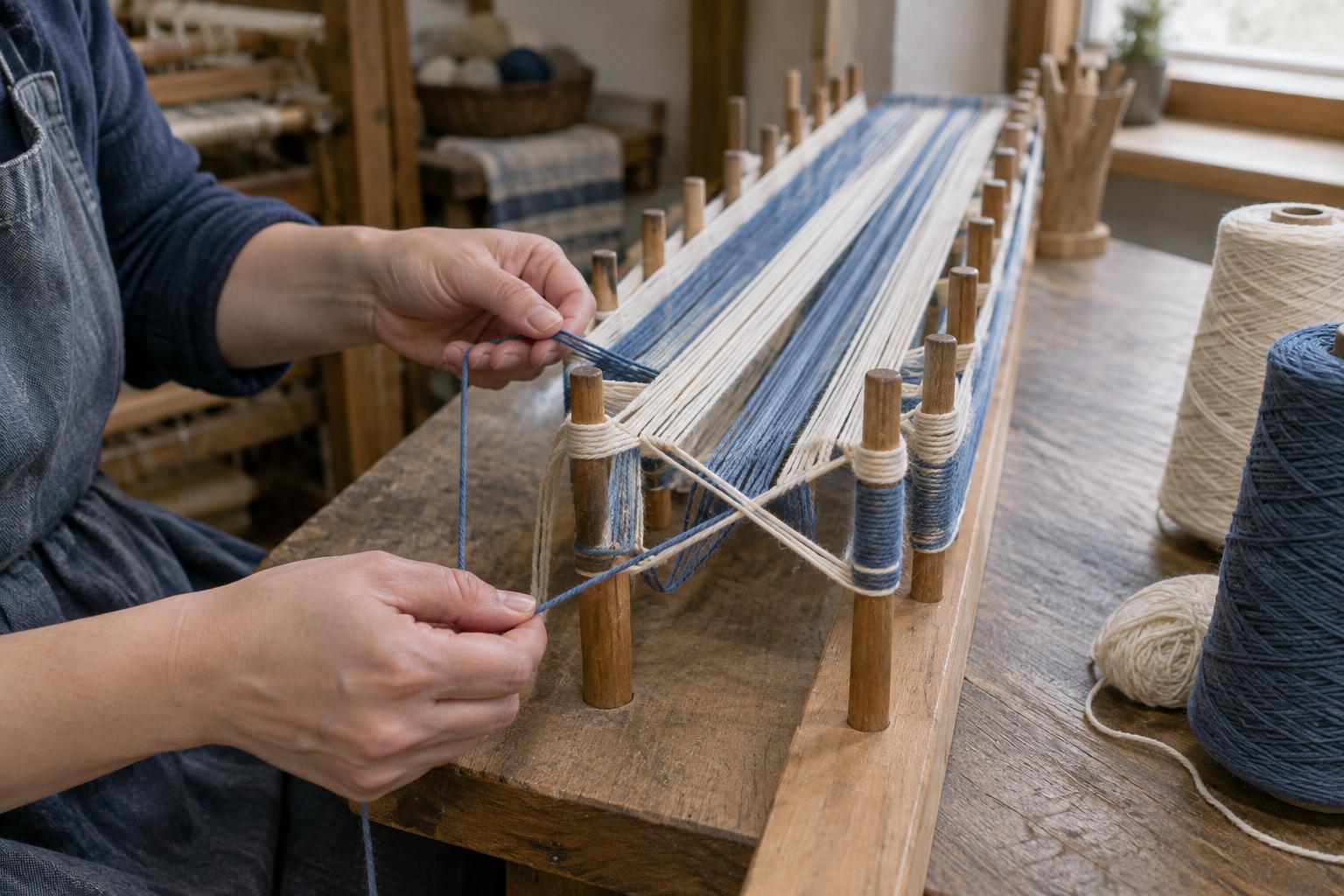
Secure the starting end according to your loom’s design, then guide the yarn back and forth around the appropriate edges, pegs or notches. Keep the yarn travelling along the same kind of path on each turn. Avoid adding an extra wrap around one peg or crossing strands unintentionally, as either can make a thread behave differently from its neighbours.
As you wind, pull firmly enough to remove slack, but not so firmly that you bend the frame or stretch the yarn as far as it will go. It helps to pause after every few strands and compare them by touch. If you gradually pull harder as you work, the later strands may end up tighter than the first ones. A comfortable, repeatable hand movement is more useful than trying to judge tension from a single hard tug.
Secure the finishing end so it cannot slip. A knot or attachment that moves under light pressure can loosen part of the warp even if the winding was careful. Leave enough tail to retie it if needed, and keep loose ends away from the area where you will weave.
Check and correct the warp before weaving
With the frame resting flat, look across the warp for obvious dips or strands that pull the frame out of shape. Then gently lift or press neighbouring strands near the middle of their span, using about the same pressure each time. You are comparing their response, not trying to measure an exact tension. Check several places across the width, including near both edges.
If the warp is one continuous length, small adjustments can sometimes be eased along the yarn from a tighter section towards a looser one. Work gradually and recheck the nearby strands; pulling sharply on one point may simply move the unevenness elsewhere. If strands are attached separately, retie a loose one rather than trying to compensate by tightening every other thread. When a correction requires substantial force, it may be simpler to rewind that part of the warp.
Finally, pass a scrap length of weft through the warp as a trial. If a particular strand gets in the way or feels slack compared with the rest, address it now. This short test is easier to undo than several rows of weaving.
Keep tension manageable as you weave
Check the warp occasionally while working, especially after the first few rows. Weft pulled too tightly at the edges can draw the woven area inward, even when the original warp tension was even. Let the weft take a gentle path across the width before pressing it into place, rather than pulling it straight and tight.
Use a consistent, moderate touch when placing each row. If an edge begins to narrow or a warp strand starts to sag, pause and find the cause before continuing. An even warp gives you a useful starting point; careful handling of the weft helps preserve that balance throughout the piece.