Start with a stable, clear work surface
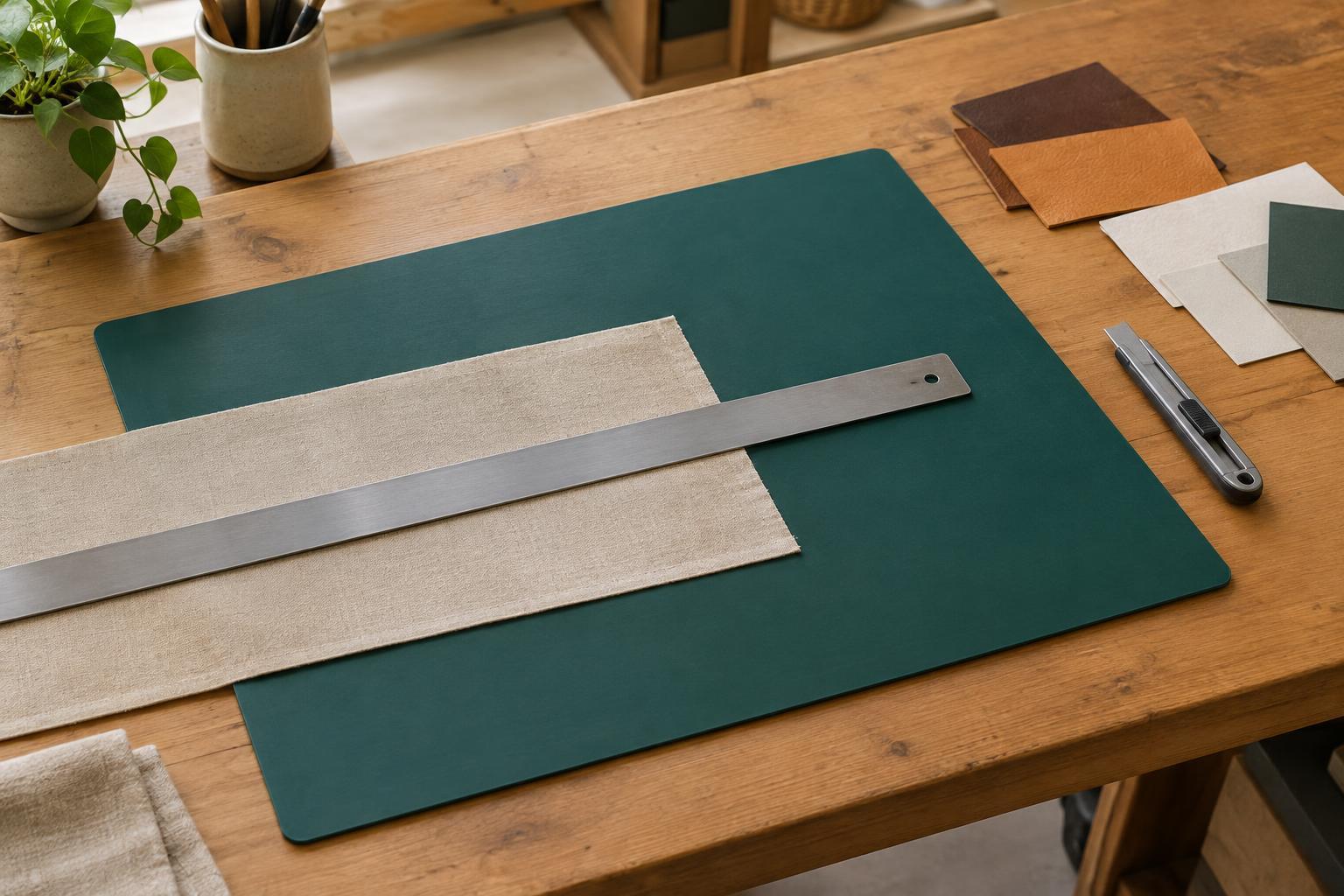
A cutting station does not need to be elaborate. It does need a firm, level surface that will not shift as you work. Clear enough space to support the material on both sides of the intended cut. If a sheet or piece of fabric hangs over the table edge, its weight can pull it out of alignment or tempt you to reach awkwardly across a blade.
Place frequently used tools within easy reach, but keep the immediate cutting area free of loose blades, scraps and cords. Good lighting helps you see the edge of a ruler and the line you intend to follow. Before cutting, check that your feet are planted comfortably and that you can complete the motion without leaning over the table or stretching past your natural reach.
Choose a mat that suits the blade and material
A cutting mat protects the table and provides a predictable surface beneath the work. Self-healing mats are commonly used with rotary cutters and craft knives, but no mat is indestructible. Choose one large enough to support the full length of a typical cut, with room for the straightedge and your supporting hand. A mat that is too small encourages you to stop mid-cut or work near an exposed tabletop.
Match the surface to the task. Rotary cutting of fabric generally benefits from a mat intended for rotary blades. For paper or thin card, a suitable cutting mat can help prevent the knife from catching in the table beneath. Thicker or tougher materials may require a different cutting board or technique; check the guidance for both the tool and the mat rather than assuming one surface suits every blade.
Keep the mat flat and clean. Grit and embedded scraps can spoil a cut, while a warped mat can make a straightedge rock. Many mats are sensitive to heat or prolonged direct sunlight, so follow the maker’s storage advice. Replace a mat when deep grooves or an uneven surface make the blade difficult to guide.
Use a straightedge you can control
A straightedge is a guide, not just a measuring tool. For knife work, a sturdy metal straightedge is often preferable to a thin plastic ruler that a blade may nick. A non-slip backing can help it stay put, but it does not replace firm hand placement. Some straightedges have a raised finger guard; this can add separation between your hand and the cutting edge, though it cannot prevent every slip.
Set the straightedge on the side of the cut you intend to keep, so a wandering blade is less likely to damage the finished piece. Press down securely, with fingers well back from the cutting edge. Check that the straightedge lies flat before each pass, especially over seams, textured leather or folded material. If it rocks, flatten the work or use a method better suited to the uneven surface.
Measurement markings are useful for layout, but they are not a substitute for checking alignment. Mark the start and end of a long cut when accuracy matters, then place the straightedge through both points. For repeated pieces, verify the first cut against your pattern before cutting the rest.
Make the cut deliberately
Use a sharp blade appropriate to the material and tool. A dull blade may require more pressure and be harder to steer. With a craft knife, several light, controlled passes are generally easier to manage than one forceful pass through thick material. Keep the blade against the straightedge without angling it underneath, and move in a direction that keeps your hand out of its path. Rotate the material or reposition yourself if the comfortable cutting direction is wrong.
With a rotary cutter, expose the blade only when you are ready to cut and close its guard as soon as the cut is finished. Maintain steady pressure without forcing the cutter through more layers than you can control. If the material shifts, stop and reset rather than trying to correct its course while the blade is moving. Avoid trying to catch a falling tool; step back and let it land.
Reset and maintain the station
After each cut, move the blade to a safe position before lifting the ruler or clearing offcuts. Put used blades in a suitable sharps container rather than dropping them into a bin where someone may reach for them. Store knives and rotary cutters with their blades covered or retracted, and keep them away from children and anyone unfamiliar with the tools.
A brief reset makes the next cut easier: brush away scraps, check that the mat is flat, and return the straightedge to a convenient place. Inspect the blade, ruler edge and mat occasionally for wear. The most useful cutting station is one that makes careful work feel routine, not one that relies on speed or complicated equipment.