Why a small stain can spread
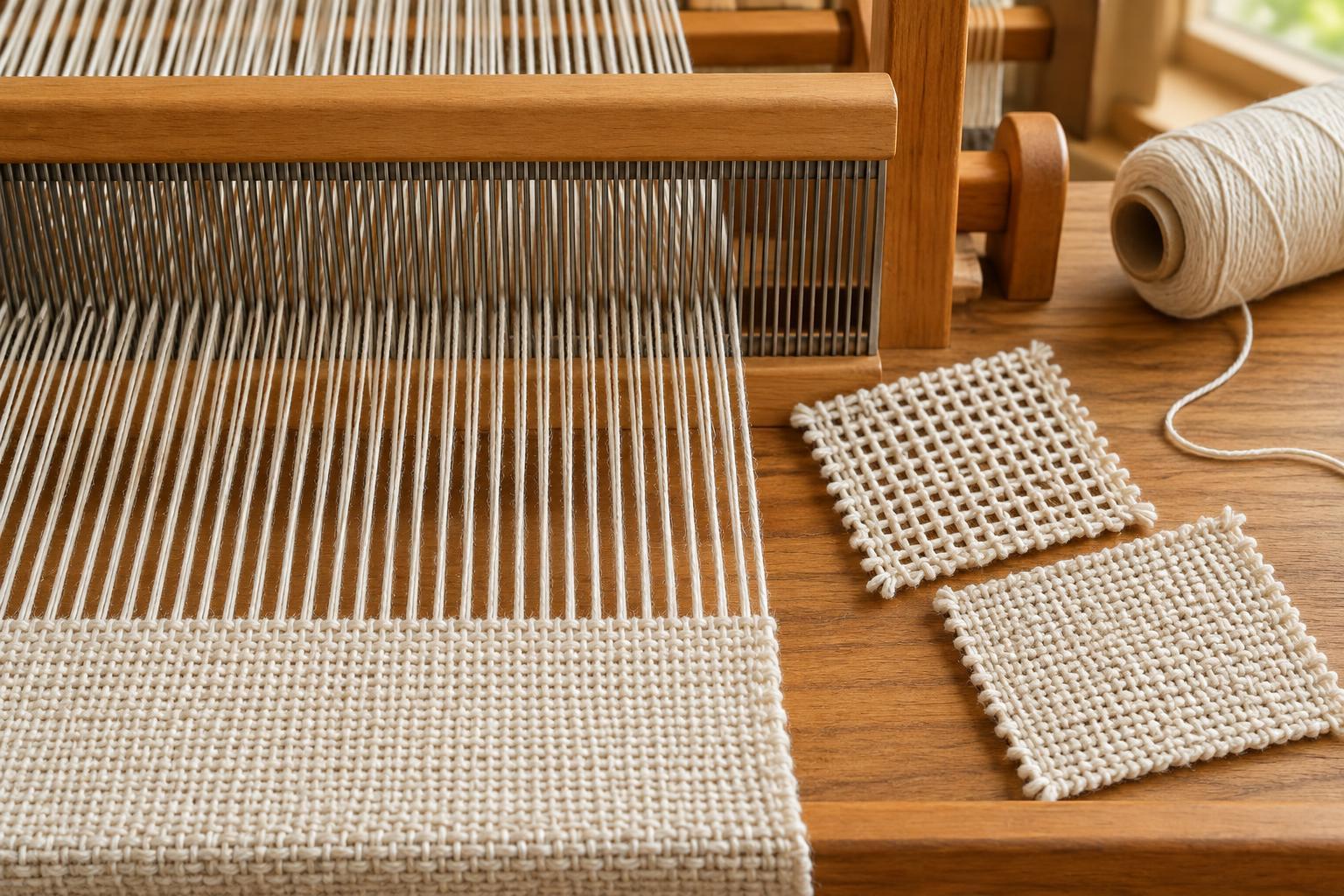
Handwoven fabric is made of intersecting yarns, with spaces between them that vary according to the weave and the yarn. A cleaning liquid can move along those yarns and through the cloth, carrying dissolved dirt or dye beyond the original spot. Too much water may leave a visible ring after it dries, even if the spill itself has lifted. Rubbing adds another risk: it can push residue deeper and disturb the surface of the yarn.
The safest starting point is not a stronger cleaner but a smaller working area. Before treating a mark, check any care label and consider the textile’s condition. If the fabric is fragile, the colours appear unstable, or the piece has a lining, backing, trim or stiff finish, home spot-cleaning may do more harm than good. For a valued or irreplaceable piece, ask a textile-care specialist rather than testing a method on the stain.
Contain the spill before adding moisture
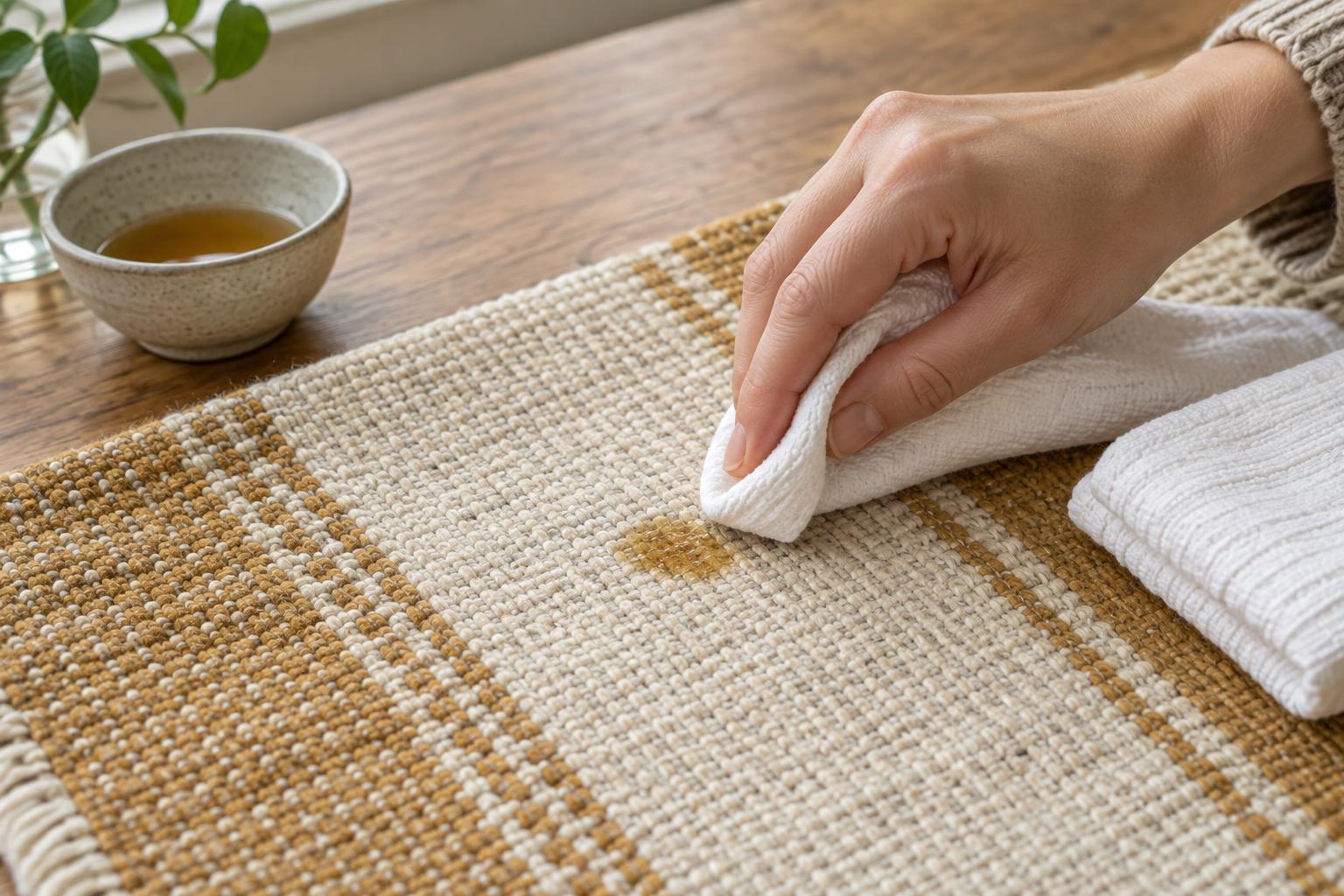
For a fresh liquid spill, place a clean, absorbent white cloth against it and lift straight up. Repeat with dry areas of the cloth; do not scrub. If the textile can be moved safely, put another clean cloth beneath the affected area to catch liquid that passes through. Replace the cloth underneath when it becomes damp so the spill is not pressed back into the weave.
For a spill with solid material, lift off what you can with the edge of a spoon, working gently so it does not spread. Let loose, dry particles remain dry until they can be lifted or carefully brushed away. Avoid pouring water over a stain to flush it out: that makes it difficult to control where the moisture and residue travel.
Test the textile, then use the least liquid possible
Before cleaning, test a small, inconspicuous area with a white cloth barely dampened with cool water. Press briefly and check the cloth for transferred colour. Allow the test area to dry fully and look for a change in texture, colour or finish. If dye transfers, a ring forms, or the yarn changes noticeably, stop. A successful test does not guarantee that every colour in a patterned textile will respond the same way, so remain cautious near colour boundaries.
If the test is satisfactory and the mark persists after dry blotting, try water first. Dampen a clean white cloth rather than wetting the textile directly. Press lightly at the outside edge of the mark and work inward, switching to a clean part of the cloth often. The goal is to lift residue into the cloth, not to saturate the yarn. Check the backing cloth as you work, and pause if the damp area grows beyond the stain.
If water alone is not enough and the textile’s care guidance permits washing, a tiny amount of mild detergent diluted in water may help with some marks. Test that solution separately. Apply it with the same controlled blotting motion; then use a second cloth barely dampened with plain water to lift away detergent. Detergent left in the yarn can attract dirt or make the cleaned patch feel different. Avoid bleach and untested stain removers, which may alter dyes or damage fibres.
Dry without creating a new mark
Once you have lifted as much of the stain as you safely can, press the area between dry, clean towels to absorb moisture. Do not wring or twist it. Lay the textile flat in a well-ventilated place, supporting its shape so damp yarns do not stretch. Keep it away from direct heat while it dries, and wait until it is completely dry before judging the result. A damp patch can look like a remaining stain when it is not.
If a faint edge appears as it dries, resist repeatedly wetting a wider area to chase the ring. That can move residue farther outward. Likewise, stop if colour begins to bleed, the texture changes, or several gentle attempts make no improvement. Some stains cannot be removed safely by spot-cleaning, especially when their contents are unknown or they have been present for a long time. In those cases, preserving the weave and colour is a better outcome than enlarging the mark.