Start with the textile, not the container
A storage box cannot make up for a textile that is put away damp or soiled. Before storing a piece, check its care instructions and examine it for stains, loose threads and areas of wear. Food residue, body oils and dust can attract pests or become harder to remove over time. Clean the textile by a method appropriate to its fibres, dyes and construction, then let it dry completely. If an older or delicate piece cannot be cleaned safely at home, keep it separate from other textiles while you decide what care it needs.
Give the storage area the same attention. Vacuum shelves, corners and the spaces beneath drawers, then look for lint, cast skins, webbing or small holes in stored fabrics. These signs do not always identify the cause, but they are a reason to inspect nearby pieces closely. Avoid putting clean textiles straight into a cupboard that still contains dust or suspect items.
Make moth access less convenient
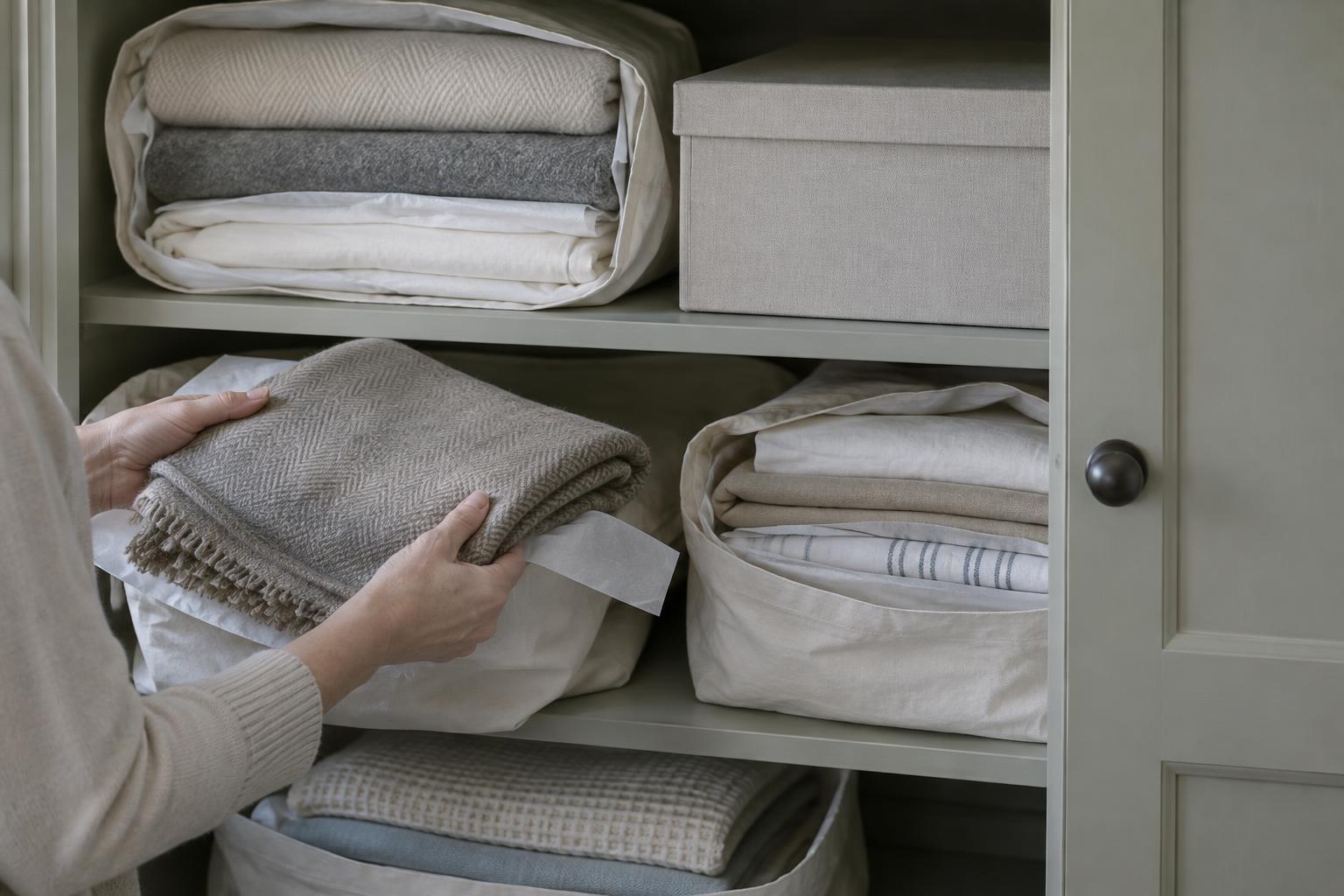
Clothes moths are particularly worth watching around animal fibres such as wool, cashmere and silk. Store clean, fully dry pieces in containers that close well, especially if they will sit undisturbed for months. A clean box with a fitted lid offers more protection than an open shelf or a loose fabric bag. Before closing it, check that the lid and contents are dry; trapped moisture creates a different storage problem. Do not pack the box so tightly that you must compress the textiles to shut it.
Cedar and scented sachets may make a cupboard smell pleasant, but they are not substitutes for cleaning, closed storage and regular checks. Keep any scented product from touching fabric, where oils or colour could transfer. Inspect stored items periodically, including folds, seams and the bottom of the container. If you find signs of an active infestation, isolate the affected items and clean the storage space before returning anything to it. Fragile or valuable pieces may need advice from a textile conservator before treatment.
Keep colour out of prolonged light
Light can change textile colours over time, and the effect may be uneven when part of a piece remains exposed. Choose a dark cupboard, drawer or closed box rather than a sunny shelf. An opaque container can also protect fabric from room light when the storage space is opened often. For a piece on display, storage will not prevent fading while it is out; consider moving or rotating it if one area receives more light than another.
Aim for a clean, dry location away from obvious sources of heat and moisture. A shelf beside a radiator, a damp basement floor or an unprotected attic may expose textiles to conditions that change considerably. Raise boxes off the floor where leaks are possible, and check the storage space as well as the fabric. These simple choices make it easier to notice a problem before it affects an entire collection.
Fold with support, or hang with care
A sharp fold held in the same place for years can leave a persistent crease or strain weakened fibres. For flat pieces, make broad, loose folds and cushion them with clean, uncoloured, acid-free tissue. A washed, undyed cotton cloth can provide a barrier between a textile and a shelf or box. Do not force a large piece into a small container: fewer, gentler folds are preferable. When you inspect the textile, refold it along different lines so the same areas are not always under pressure.
Hanging can avoid folds, but it is not right for every object. Heavy knits, loosely woven pieces and textiles with delicate shoulders may stretch under their own weight. If a sturdy garment can be hung safely, use a broad, smooth hanger that supports its shape rather than a thin wire one. Give it enough room that neighbouring clothes do not press permanent lines into it. Small accessories and fragile textiles are generally easier to support flat.
Build a storage routine you can maintain
Label containers so you can find items without repeatedly unpacking everything. A brief note of each textile’s condition when it goes into storage can help you spot later changes. Leave enough space to lift pieces out gently, and handle fragile fabric with clean hands rather than pulling it by an edge or embellishment.
The most useful routine is simple: put away only clean, dry textiles; choose dark, tidy storage; support their shape; and look at them from time to time. That combination addresses moth access, light exposure and fold stress without assuming that one bag, scent or special product can solve every storage problem.