An awl and a punch make different kinds of opening
The holes in a leather seam do more than let a needle through. Their shape can influence how the thread sits, whether the stitches lean or lie straight, and how much leather remains between neighbouring holes. An awl and a hole punch may follow the same marked line, yet leave noticeably different results.
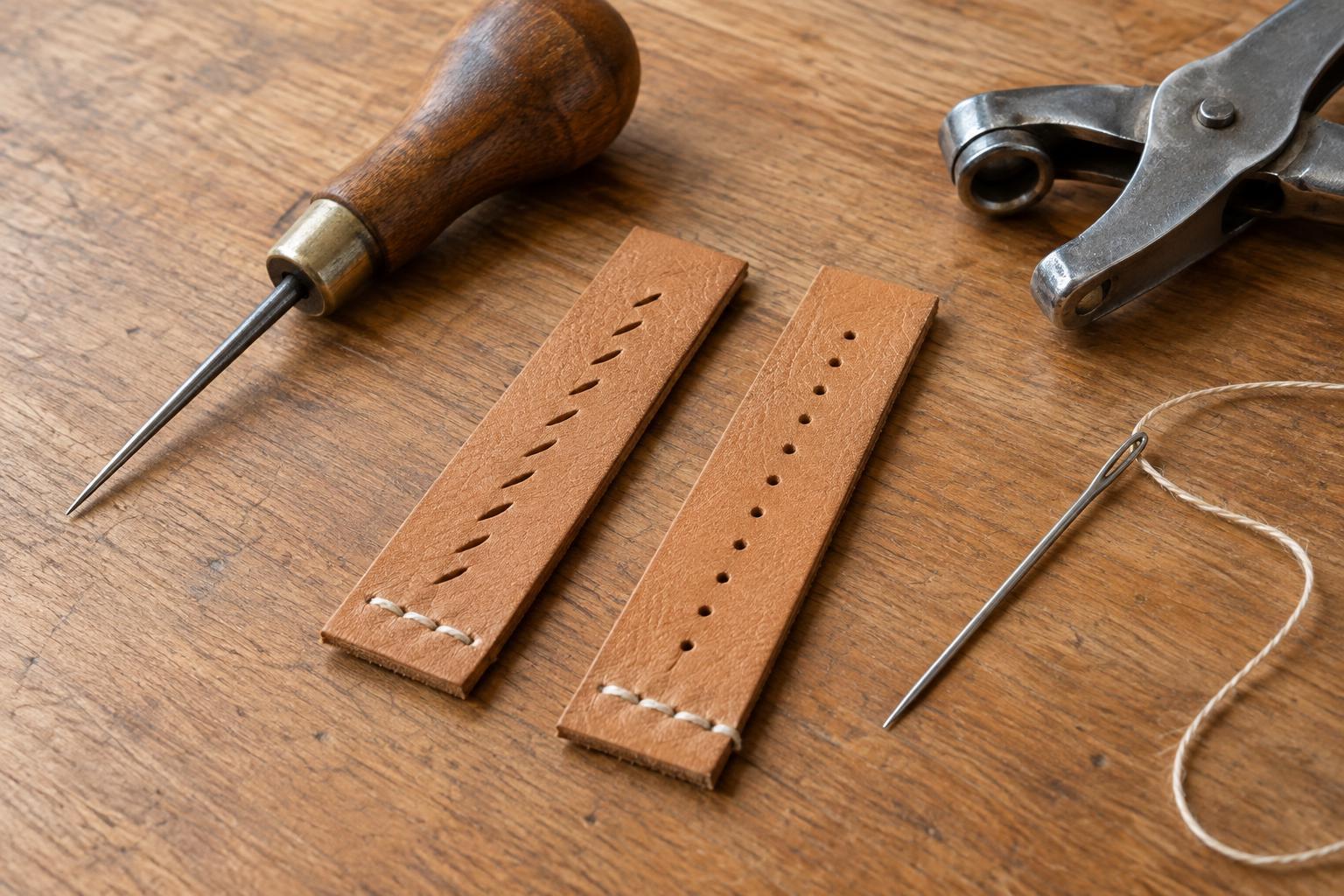
A sharp stitching awl usually makes a slit rather than removing a plug of leather. A diamond-shaped blade creates a slanted opening that can help the stitches take on the familiar angled look of a saddle-stitched seam. A round awl is different: depending on its tip, it may push fibres aside or make a small round opening. A hollow hole punch cuts out material, leaving a more clearly defined hole. Because tools vary, it is worth checking the actual opening they make rather than relying on the tool’s name alone.
How hole shape changes the look of a stitch
A row of slanted awl openings gives thread a direction to follow. When the stitch is formed consistently, the thread can settle at an angle across the face of the leather. That appearance also depends on the stitching method, thread size and tension; a diamond awl does not create it automatically. If awl slits vary in angle or depth, the finished stitches may look uneven even when their spacing is accurate.
Round punched holes tend to let the thread sit in a more neutral position. They can suit a seam where a straight-looking stitch is wanted, or a beginner project where easy needle passage matters more than a sharply angled line. An oversized punched hole, however, may remain visible around the thread. Whichever shape you choose, aim for an opening just large enough to work the needle through without excessive force.
What the leather loses, and what it keeps
A hollow punch removes a small piece of leather at every hole. An awl generally removes little or none, although its blade can still cut fibres. Neither approach guarantees a stronger seam: leather thickness, hole size, spacing, distance from the edge, thread and stitch tension all matter. Large or closely spaced openings leave less material between stitches and can make a seam more vulnerable to tearing, particularly near an edge.
An awl slit may close somewhat around the thread, giving a snug appearance. That does not mean a tight-fitting seam is always better. Forcing a thick needle or thread through a narrow slit can distort the leather or make stitching difficult to control. Conversely, a punch can be useful when the material is firm or a project calls for openings that stay easy to find through several layers. Choose the smallest practical opening for the thread and leather in front of you.
Choosing a tool for the project
For a traditional hand-stitched look on a leather accessory, a sharp diamond awl is a useful choice. Mark the spacing first, then keep the blade angle consistent along the seam. A pricking iron can mark positions or make initial slits, depending on its design and how it is used; an awl can then open the path through the layers. Support the leather on an appropriate work surface and keep your fingers clear of the awl’s path.
A round punch may be more convenient for a seam intended to show straight stitches, or for work where repeatable, open holes make assembly easier. Check that its diameter suits the thread rather than choosing the largest hole that makes stitching effortless. On small pieces, also inspect the distance from each hole to the edge: a tidy row is little help if too little leather remains beside it.
Test the seam before committing
A short sample made from offcuts can settle the choice better than a rule about which tool is best. Use the same leather, number of layers, thread and needle planned for the project. Mark identical spacing on two samples, make one row with the awl and one with the punch, then stitch both using similar tension. Look at the seam from the front, back and edge.
Notice whether the needle passes comfortably, whether holes show beside the thread, and whether the leather puckers or distorts. If the stitching feels difficult, adjust the opening or the needle and thread combination before changing tools entirely. The best hole is not simply the neatest one before stitching: it is the one that helps produce a consistent seam in the finished object.