Start by assessing the seam
A loose thread may be a minor nuisance, or it may be the first sign that a seam is failing. Empty the accessory and look at both sides in good light. Note where the loose stitch sits, how many stitches have opened, and whether the leather on either side still lies flat. Gently flex the area rather than pulling on the thread: if nearby stitches begin to move, the problem extends beyond the one loop you first noticed.
Check the holes as well as the thread. Small, intact holes in sound leather offer a better starting point for a repair than enlarged holes, tears or a crumbling edge. Also consider what the seam does. Stitching along a wallet’s pocket edge has a different job from stitching that holds a shoulder strap or handle. A short, accessible gap on a lightly used edge may be manageable at home; a seam that carries weight deserves more caution.
Know when to stop and seek help
Seek a leather repair specialist if the leather is torn, the stitch holes have stretched into slots, or the seam has come apart around a corner or through several layers. The same applies if a strap attachment is loose, hardware is pulling away, or a lining prevents you from reaching the back of the seam. New thread cannot restore strength to leather that no longer holds a stitch securely.
A specialist is also a sensible choice when the accessory has a finish you do not want to mark, a complex decorative stitch pattern, or construction you cannot inspect without taking it apart. Ask what the repair would involve before authorising work: a sound result might require more than replacing the visible stitches. Until then, avoid loading a failing strap or repeatedly opening a strained seam.
Prepare for a small, accessible repair
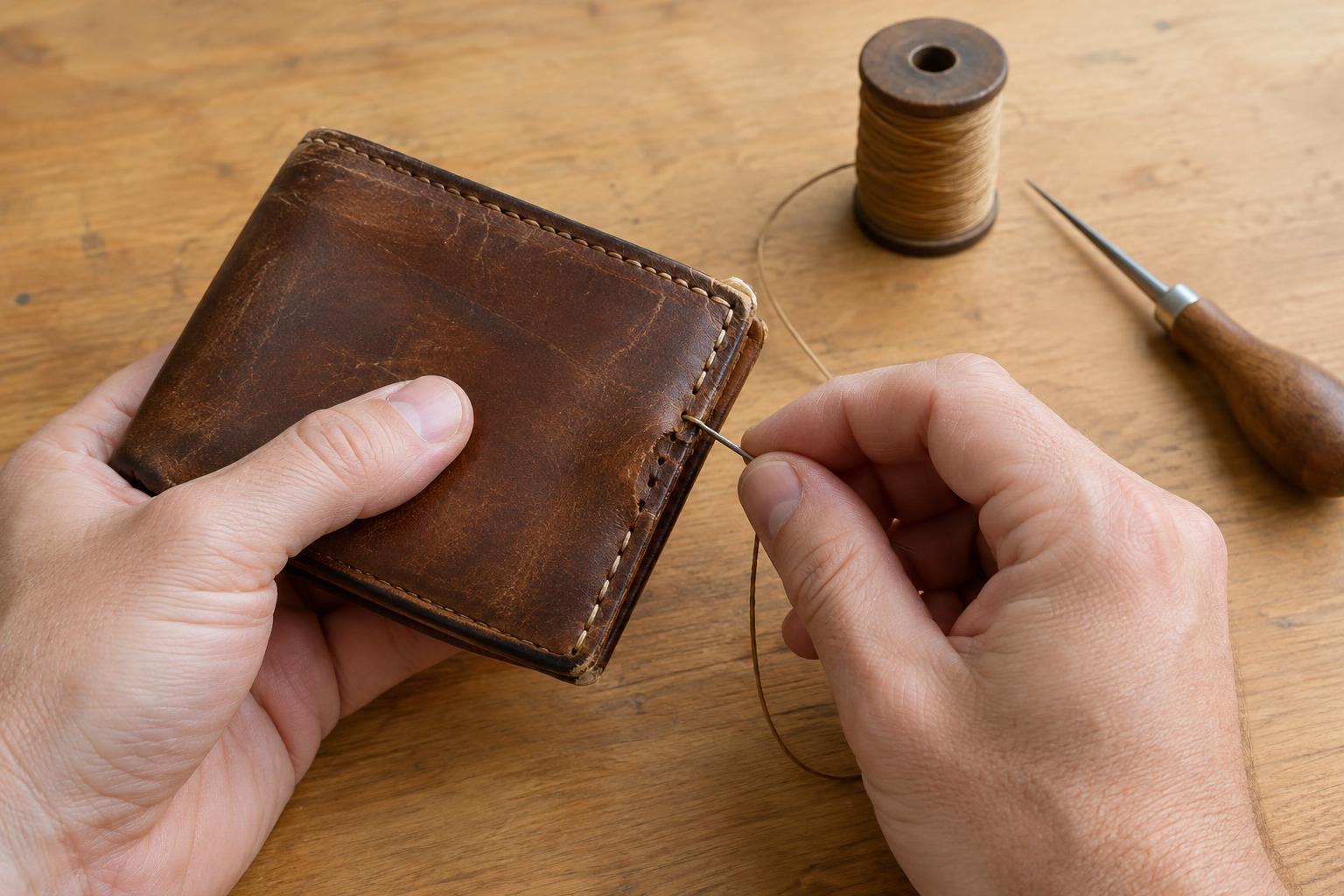
If the leather is sound and only a few stitches have loosened, work on a clean, stable surface. You will need suitable thread for leatherwork, a blunt-tipped leather stitching needle that can pass through the existing holes, small scissors and good lighting. Matching the original thread’s thickness and colour will help the repair sit neatly. If the original thread is sound on either side of the gap, leave it in place rather than cutting out more of the seam than necessary.
Before sewing, look at how the original seam runs. Mark where each thread enters and exits if the path is difficult to follow. Use the existing holes wherever possible: making extra holes close to old ones can weaken an edge. Do not force a needle through a tight hole or push it toward your hand. If the layers will not align without hard pulling, stop and reassess rather than stitching tension into the repair.
Stitch with even tension, then check your work
For a straightforward two-sided seam, a hand-sewn repair can follow the original stitch path through the existing holes. Begin a few holes before the gap and continue a few holes beyond it so the new thread is not secured only in the damaged section. Depending on the original construction and access to both sides, this may mean using two needles to follow a saddle-stitch path. If you cannot tell how the seam was made, do not guess at a visible or structural area.
Draw each stitch snug enough to close the layers without puckering the leather. Keep the spacing and thread tension consistent with the surrounding seam. Secure the ends within the existing stitch path where practical, trim them neatly, and inspect both faces. Flex the accessory gently and check that the seam stays closed and no thread catches. If it starts to open again, repeated restitching is unlikely to solve an underlying problem with the leather or construction.
Protect the seam after repair
Keep the accessory from being overfilled or pulled by one corner, and inspect the repaired area periodically. A small amount of looseness elsewhere may be easier to address before a whole run of stitching unravels. Avoid treating glue as a substitute for stitches on a seam that needs to flex or bear weight; adhesive can also make later repair harder.
The useful rule is to match the repair to the risk. Intact leather, a short gap and clear access to the original holes make a careful home repair more reasonable. Damaged holes, hidden construction or a load-bearing seam call for experienced hands. Knowing when not to sew is part of caring for an accessory well.