Two starting materials, two ways of building a piece
Metal clay is a workable mixture of fine metal particles, binder and water. It can be pressed into a mould, rolled into a slab or shaped by hand. Once dry, it is refined and fired according to the product’s instructions. Firing removes the binder and bonds the metal particles, leaving a metal object. The dried, unfired piece is fragile, so much of its design needs to be settled before it reaches that stage.
Sheet metal begins as a solid piece of metal of a chosen thickness. A maker can cut it, bend it, hammer it, texture it and join it to other components. Unlike clay, it does not need firing to become metal; heat may instead be used for annealing, which makes worked metal easier to shape again, or for joining parts with solder. The difference is not simply one of appearance. It changes the order in which decisions are made.
How shaping and surface detail differ
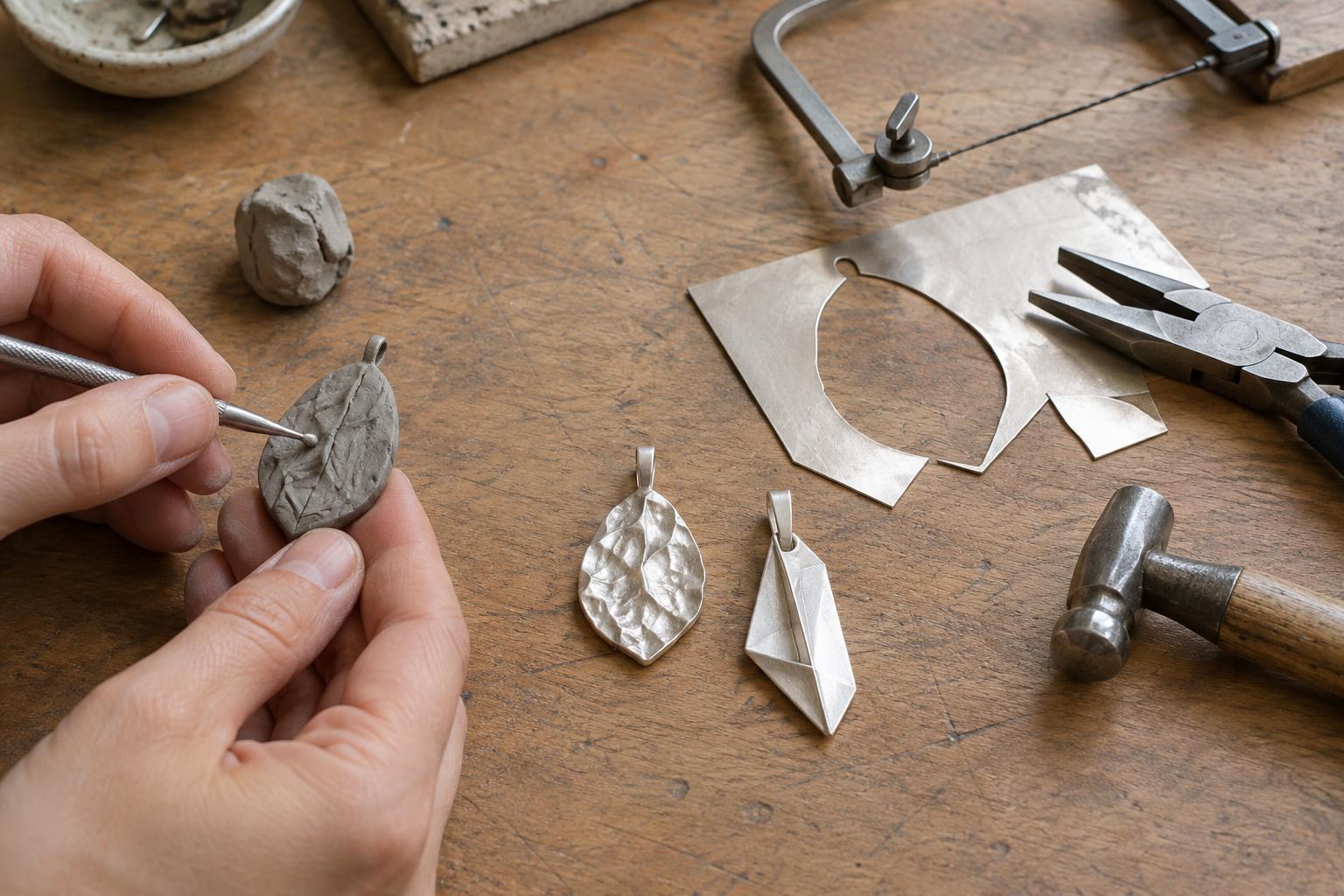
Metal clay lends itself to impressions and small sculptural forms. A leaf, carved stamp or textured plate can leave detail in the soft material, while separate clay elements can be joined before firing. The maker must allow for shrinkage as the piece dries and fires. The amount depends on the particular clay, so a ring size or a part that must fit another component calls for careful planning rather than guesswork.
With sheet metal, the maker can saw a crisp outline, pierce openings or raise a curve through repeated forming. Texture can be added with punches, hammers or rolling tools. Because the metal is already solid, shaping may make it harder and more resistant to further movement. Annealing can restore workability when the metal and process allow it. Sheet work often rewards an eye for clean edges, controlled bends and the relationship between flat surfaces and formed volume.
Firing, joining and construction choices
A metal clay design has to survive drying and firing before it can be finished. Firing requirements vary by formulation: some products are suitable for particular torch-firing methods, while others require a kiln and a specified schedule. Stones, findings and other inclusions cannot be assumed safe to fire in place. A maker needs to check the instructions for the clay and each added material, and account for the way a design may move or shrink.
Sheet metal construction commonly involves cutting separate parts and then joining them mechanically or with solder. A tab, rivet or folded connection can also become a visible design feature. This approach gives the maker considerable control over how pieces fit, but every connection needs room for tools and finishing. Both methods can be combined in one object when the metals and joining methods are compatible; neither starting material dictates every later step.
What the finished object can reveal
A metal clay piece may retain a soft impression, an organic contour or a modelled surface. A sheet-metal piece may show deliberate folds, raised forms, pierced patterns or sharply finished edges. These are useful clues to how something might have been made, not proof of its full history. A cast or stamped component, for example, can also carry texture, so appearance alone does not establish a particular process.
Construction matters more than a simple claim that one method is stronger. Strength depends on the metal, the design, the thickness of vulnerable areas and how thoroughly a fired clay piece has been processed. In either method, a very thin connection or an unsupported projection deserves attention. For a wearable object, check that edges feel comfortable, attachments are secure and details are placed where they are less likely to catch during use.
Choosing a material for the idea
Start with the form the design needs. Metal clay may suit a compact pendant with deep impressions or a small modelled element. Sheet metal may be a better starting point for a broad, thin shape, a folded cuff or a design built from precisely cut parts. These are tendencies, not rules: skilled makers can pursue similar visual effects through different routes.
Then consider what must happen after shaping. Will a ring need a reliable final size? Does a clasp require an accurate fit? Are there stones or components that cannot tolerate heat? Is the piece intended for frequent handling? Such questions help determine the sequence of making and testing. The most useful distinction is not which material is more ‘handmade’, but which process gives the maker suitable control over the object’s form, connections and finish.