Two different ways a surface gets its colour
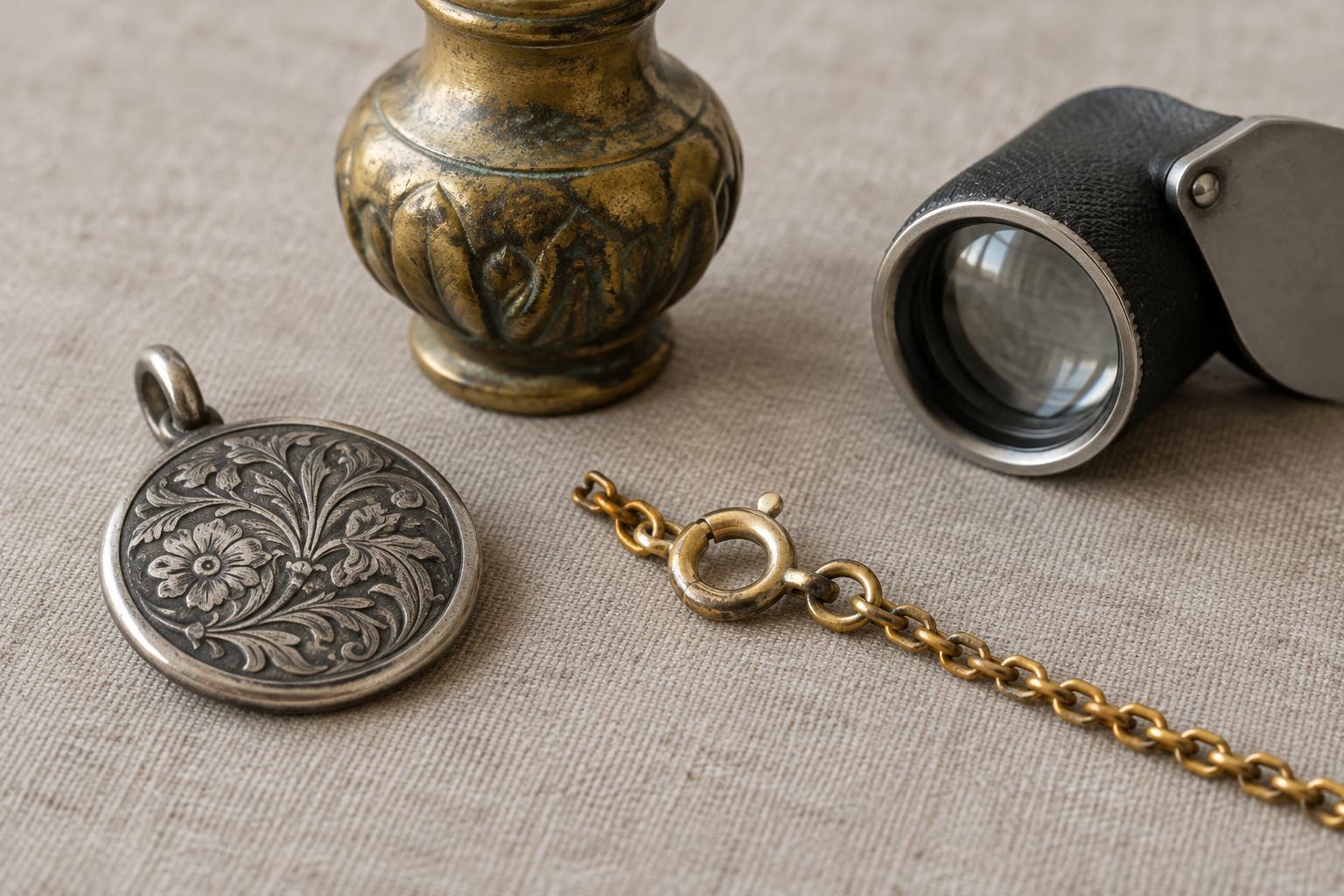
Patina is a change at a material’s surface. On metal, it can develop through contact with air, moisture, skin, handling or substances used by the maker. Silver may darken; copper alloys may turn brown, green or blue. A maker can also apply a treatment to create a darkened or coloured finish deliberately. In both cases, the colour comes from a changed surface rather than a separate layer of metal added on top.
Plating is a thin layer of one metal applied over another. Gold-plated jewellery, for example, has gold at its surface but a different material underneath. Plating can provide a desired colour, finish or resistance to wear, though its durability depends on the materials, application and use. An object can be both plated and patinated: the outer metal layer may darken with time or receive an intentional finish.
Neither term tells you, by itself, whether an object is handmade, old or well constructed. A uniform colour may be deliberate patination, while an uneven colour may be worn plating. Treat appearance as evidence to examine, not a verdict.
Look at where colour changes
Start with a clean, dry object in diffuse light. Turn it slowly and compare exposed high points with protected recesses. Dark colour settled into engraved lines, stamped details or textured areas, alongside brighter raised surfaces, can suggest patina that has been left in the low points or polished back from the high ones. This contrast is also a common intentional decorative effect.
Plating often gives different clues as it wears. Edges, corners, ring shanks, clasps and other frequently touched areas may show a colour beneath the outer layer. A yellow-toned surface with a distinctly different colour appearing at contact points, for instance, may indicate that a coating has worn through. Tiny breaks or patches can be more revealing than the overall tone.
These patterns are not exclusive. Dirt can collect in recesses, polishing can remove patina selectively, and a plated piece can wear unevenly without exposing its underlying material clearly. Lighting and nearby colours can also make metal tones look different. Compare several parts of the same object before drawing a conclusion.
Check construction details without testing the finish
Examine areas that naturally reveal how a piece was made: the back of a pendant, the inside of a clasp, a hinge or the underside of a decorative fitting. Look for a consistent finish across joined parts and for colour changes near seams. An attachment added later, a repaired area or two metals used together can create a change in colour that has nothing to do with plating wearing away.
Marks may offer useful information, but read them cautiously. A stamp can describe metal content or a particular finish, yet it may apply to only part of a multi-part object, and an unmarked object is not automatically plated. If the distinction matters for a purchase, repair or appraisal, ask a qualified jeweller or conservator to examine the piece rather than relying on a single visual clue.
Avoid scraping an inconspicuous spot to ‘see what is underneath’. The mark may remain visible, expose metal to further change or damage a finish worth preserving. Household chemicals and improvised tests can also affect patina, plating, stones, adhesives and neighbouring materials.
Remember that not every coloured finish is plating
Metal objects can carry paint, lacquer, enamel, wax or other finishes as well as, or instead of, plating. A clear coating may slow tarnish or hold an intentional patina in place. If it becomes scratched or patchy, the result can resemble worn metal plating from a distance. Enamel and paint can supply colour independent of the metal beneath them.
This is why the useful question is not simply ‘Is the colour real?’ Colour can be an integral result of a surface treatment, a layer of another metal or a different applied material. What matters is identifying the kind of surface you have, how it meets the underlying object and what care it can tolerate.
Let uncertainty guide care
When a finish is uncertain, begin with the gentlest approach: handle the object with clean hands, dust it with a soft cloth and keep it dry before storing it. Avoid abrasive polishing cloths on suspected plating, because repeated rubbing may thin an already delicate layer. Aggressive polishing can also remove an intentional patina, especially from raised details.
Keep jewellery away from products that may react with its materials, and take extra care around stones, porous components and glued settings. If an object has flaking, green deposits, loose parts or a finish you particularly want to preserve, pause before cleaning it. A specialist can help identify the surface and suggest a suitable approach.
Patina and plating need not be ranked as better or worse. Both can be purposeful parts of a design. Reading the location of colour, the pattern of wear and the construction beneath the finish will help you appreciate the object without asking its surface to prove more than it can.