Start with the two faces
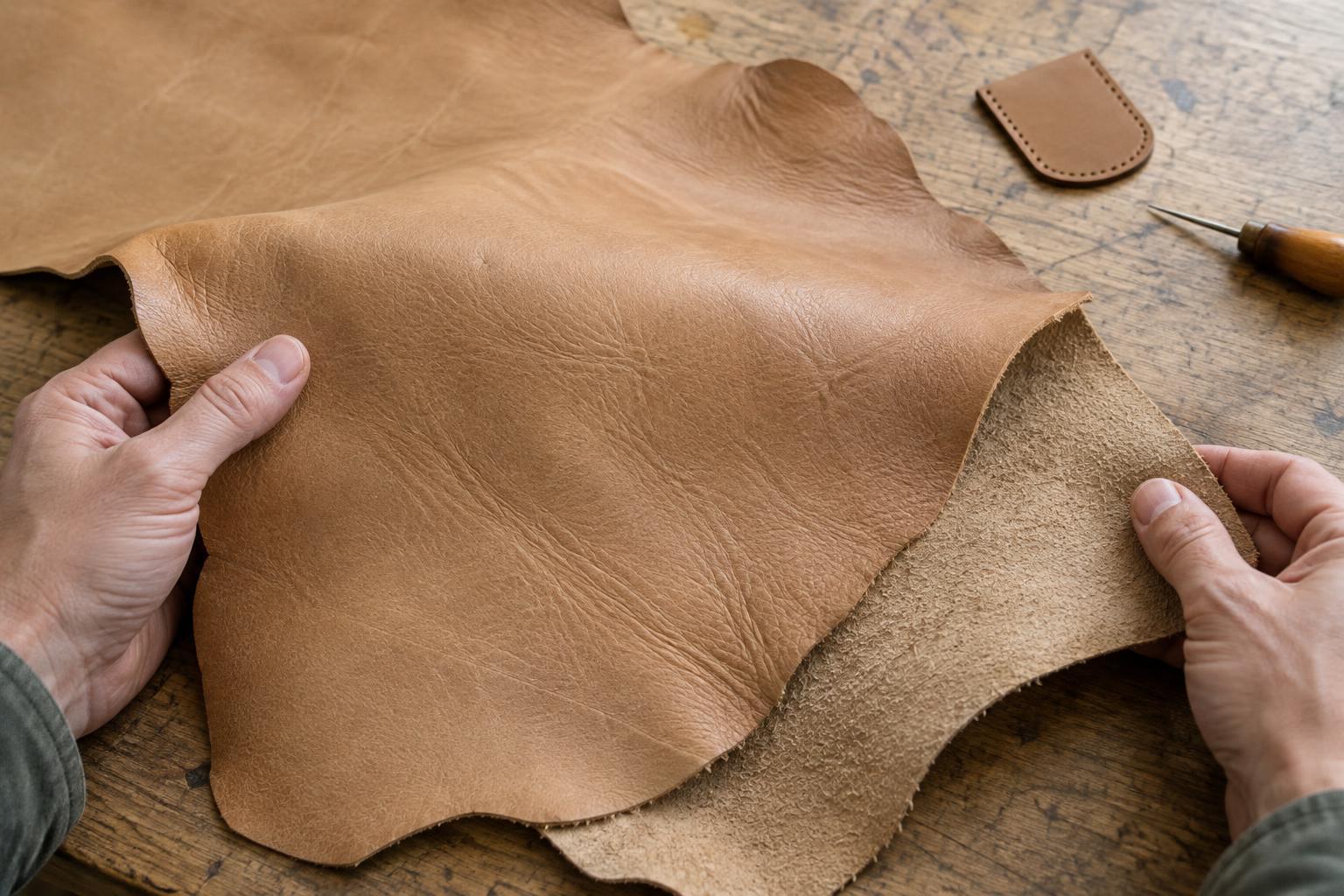
Before leather is cut into a wallet, strap or pouch, it helps to look at both faces of the hide. The grain side is the outer surface that once faced away from the animal. It often has a tighter, smoother appearance, though its texture depends on the animal, the tanning process and any finish applied afterward. The flesh side faced inward. It is usually more fibrous and may feel soft or slightly fuzzy.
These descriptions are starting points, not a quality test. A maker might leave the grain side visible and line the flesh side, or deliberately show the flesh side for its texture. Some leathers are buffed to create a nap. Others are coated or embossed, so the visible surface may not reveal much about the hide beneath it. Looking at an unfinished edge, when one is available, can help you understand how the surfaces relate to the thickness of the piece.
Read the surface without assuming every mark is a defect
The grain can carry wrinkles, pores, small scars and changes in texture. These marks may become more noticeable when a hide is dyed or flexed. An even-looking surface is not necessarily better: it may reflect careful selection, a smooth area of the hide or a surface treatment. Likewise, visible variation does not by itself prove that a piece is durable or well made.
For a small accessory, consider where a mark will sit after cutting. A crease on a flexible wallet body might blend into use, while the same crease could draw attention on a narrow, otherwise plain strap. Examine deep cuts, thin patches or loose-feeling areas more closely, especially if they would fall along a fold, stitch line or stressed corner. Appearance and suitability are related, but they are not the same thing.
Check stretch in more than one direction
Leather rarely stretches equally in every direction or across an entire hide. Areas nearer the back are often firmer than looser areas toward the belly, although the difference varies with the hide and its processing. Direction matters too: a strip cut one way may behave differently from a strip cut at an angle. Thickness and finish can change how readily that movement is felt.
If you are choosing material for a project, gently pull a small area between your hands, then turn it and repeat. The aim is to compare its response, not to force it out of shape. A firm strap benefits from a cut that resists lengthwise stretching; a soft pouch may be able to accommodate more give. Check the particular piece you intend to use rather than treating a label or a single spot on the hide as a guarantee.
Look beneath the finish
A finished surface can make different leathers look similar. Colour, wax, pigment or embossing may make texture more consistent, while an uncoated surface may show more variation. Neither choice automatically tells you how the leather will wear. For clues about construction, inspect accessible edges and the back of the material as well as the face. Note whether an edge shows one continuous piece, a bonded construction or several layers assembled for the object.
The term grain also describes where material came from within the hide. Leather with its original grain surface retains that outer layer; split leather comes from a lower layer and does not retain the original grain surface. A split can still be useful for a suitable design, sometimes with an applied or embossed surface. Rather than relying on one term as a verdict, consider thickness, flexibility, finish and intended use together.
Match the hide to the object
Reading leather becomes easier when you have a specific object in mind. Lay out a proposed pattern before cutting, if possible. Place high-stress parts away from weak-looking areas, check that paired pieces have reasonably compatible feel, and decide whether visible markings will complement the design. For narrow components, pay particular attention to how the leather behaves along their length.
A finished accessory offers fewer opportunities to test the material, but its details still tell a story. Feel whether a strap is firm or easily pulled out of shape, look at how folds sit, and inspect exposed edges without picking at them. The goal is not to find a perfectly uniform hide. It is to recognise which differences are part of leather’s character and which ones matter to the work the object needs to do.