Start with the job the join must do
A rivet fastens leather at a small, defined point. A stitched seam spreads the connection along a line. That difference matters more than whether one method looks stronger. On a pouch, wallet or small bag, a join may need to hold layers flat, resist a pull from a strap, bend with the object or keep the edge of a pocket closed. The best fastening depends on which of those jobs it must perform.
Neither method can compensate for poor placement. A rivet hole removes a small amount of material, and a row of stitching creates a series of holes. If either sits too close to an edge, the leather between the holes and the edge may tear under load. Thickness, firmness and condition also matter: a fastening that works in sturdy strap leather may be unsuitable for a thin, soft pocket panel.
Where rivets earn their place
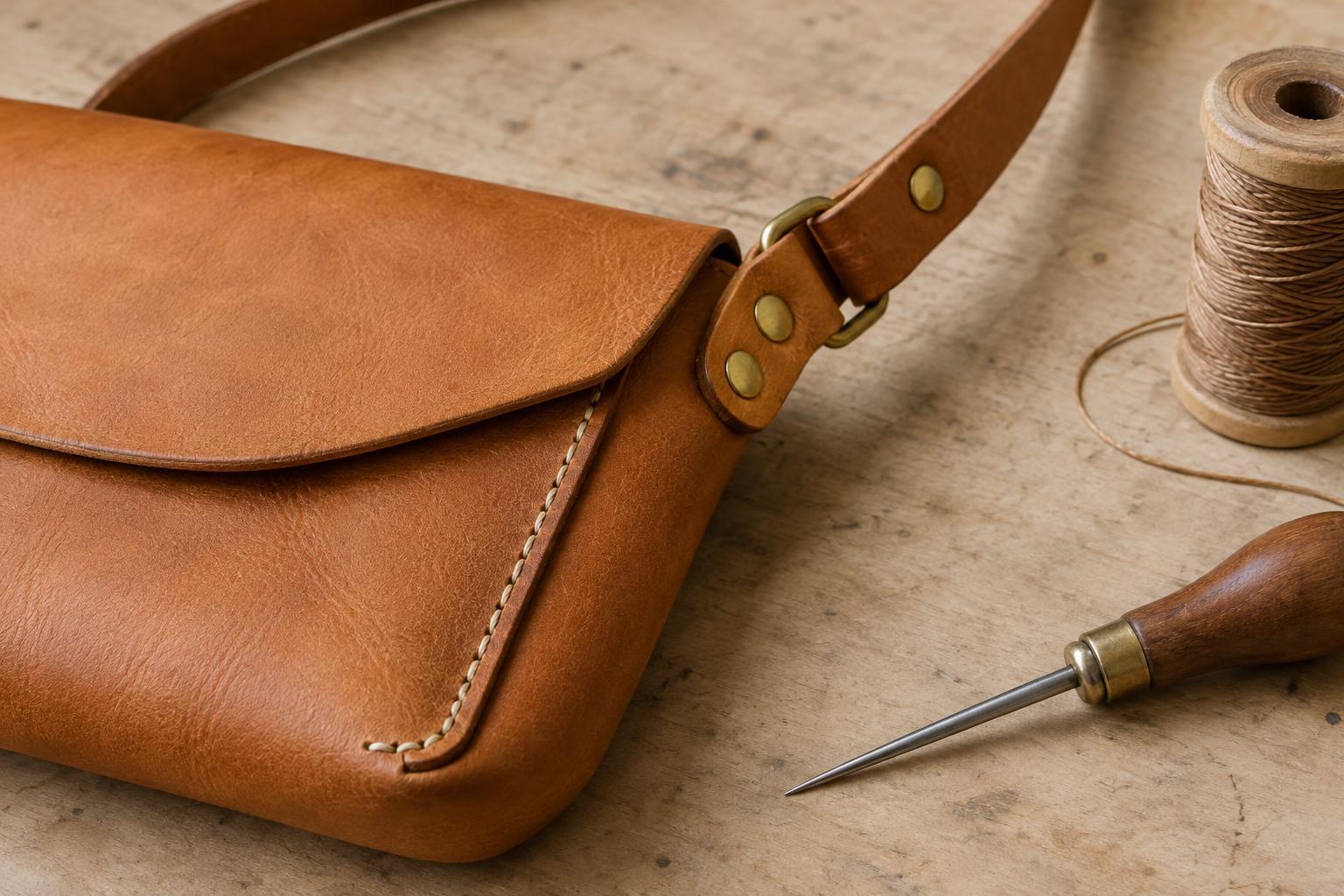
Rivets are useful where a compact fastening must hold two or more layers at a particular point. They often appear at strap ends, tabs, loops and the corners of openings. A rivet at the end of a stitched pocket opening, for example, can help secure an area that is repeatedly pulled apart when someone reaches inside. Hardware can also attach a small component without requiring a long seam around it.
A rivet concentrates force around its hole, however. A single rivet is rarely a good substitute for a seam that must hold an entire edge shut. Its size and post length should suit the combined thickness of the layers: a poorly matched or poorly set rivet may sit loose, crush the leather or leave a raised edge that catches. Look for layers that lie flat and hardware that does not rotate freely when the join is meant to be firm.
Placement matters as much as the metal itself. A rivet near a strap end needs enough leather around the hole to resist tearing. On softer or thinner leather, a maker may add a backing layer to give the fastening more support. That extra layer should be visible as part of a considered construction, not a substitute for a rivet placed in a fragile spot.
Where stitching does the better job
Stitching is suited to continuous joins: the sides of a cardholder, the perimeter of a pocket or the length of a bag panel. It holds an edge together across many points rather than relying on one fastener. A stitched join can also follow a curve and allow an accessory to flex, provided the thread, stitch spacing and leather suit the design.
Inspect the whole seam, not just the neatness of individual stitches. The line should follow the intended edge consistently, with enough leather left outside the holes. At openings and strap attachments, check how the seam begins and ends; loose ends can allow stitches to work free. Thread can abrade with use, especially where it rubs against a hard surface, but a damaged stitched section may be repairable without replacing a metal component.
Why some accessories use both
Stitching and rivets often work well together because they address different demands. On a small bag, stitching can close a side seam while a rivet secures a strap tab at a concentrated pull point. At a pocket opening, stitching can define the pocket and a rivet can reinforce its upper corner. The hardware does not make the whole seam stronger by itself; it supports a particular point that is likely to experience extra strain.
More fasteners are not automatically better. Extra holes may weaken a narrow tab, and decorative rivets can add bulk where an accessory needs to fold. Consider the path of the pull: does it travel through a well-supported area of leather, or does it tug directly on a thin edge? If a handle or loop carries weight, examine the leather beneath and around both the stitches and the hardware.
A practical check before buying or repairing
Handle the accessory gently and notice where it bends and where you naturally pull it. At a riveted join, look for a firm setting, adequate leather around the hole and no spreading tear. At a stitched join, look for an even seam, secure ends and no gaps between layers. These checks cannot predict how long an object will last, but they can reveal whether the fastening appears suited to its task.
If a join begins to fail, avoid pulling on it to test its strength. A loose rivet may need replacement with hardware suited to the existing layers; a worn seam may need restitching beyond the visibly damaged stitches. In either case, the underlying leather must still be sound enough to hold a repair. Understanding what the join is meant to do helps you judge whether a simple repair will restore it or whether the surrounding construction also needs attention.