Start with the metal beneath the surface
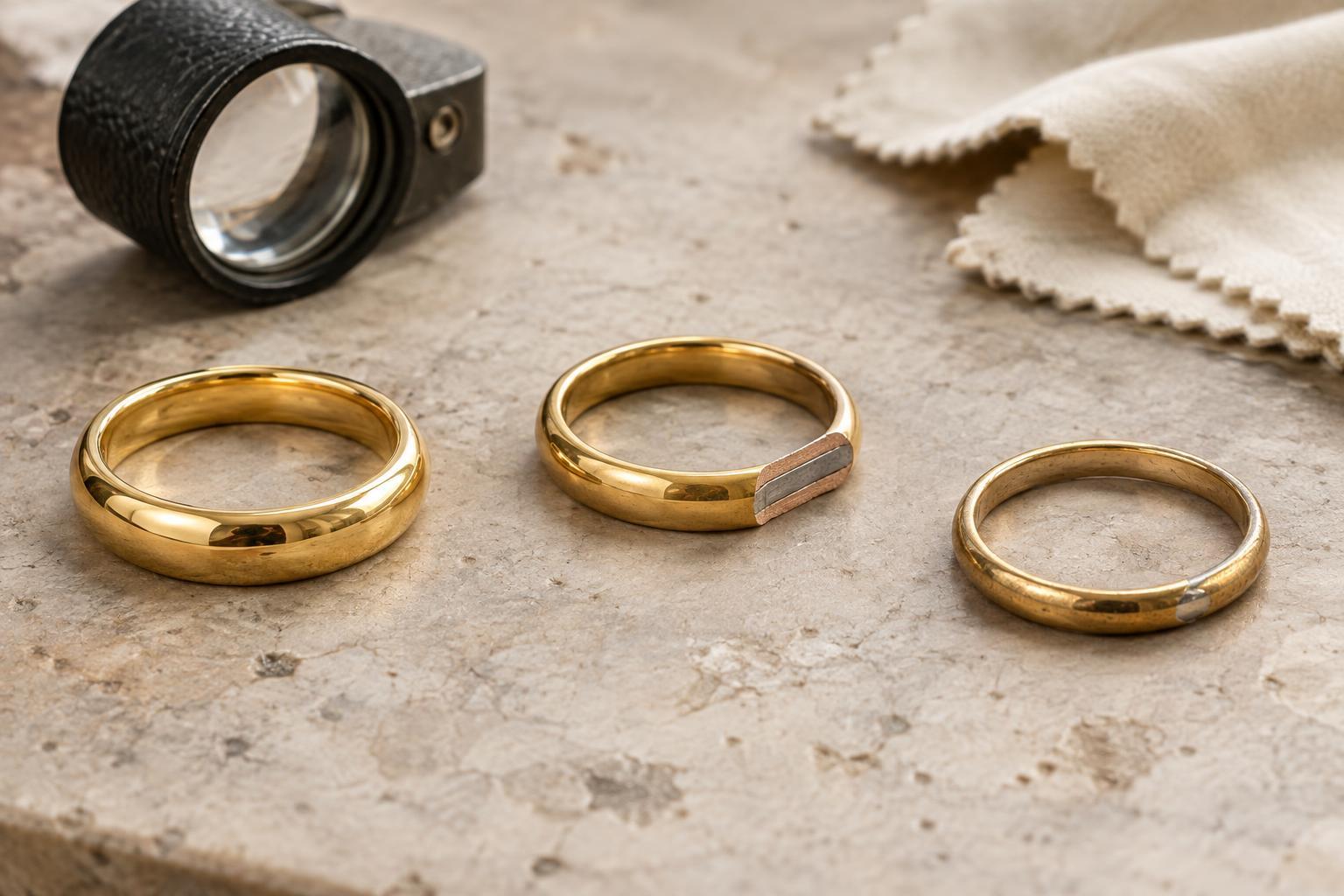
Three pieces of jewellery can look equally golden while having very different construction. A solid gold piece is made from a gold alloy throughout. A gold-filled piece has a substantial outer layer of gold alloy bonded to a base metal. A gold-plated piece has a coating of gold over another material. The distinction matters most when a piece is scratched, polished, repaired or worn over time.
Appearance is not a reliable test. Colour varies with the gold alloy used, the finish applied and the lighting in which you view it. A bright yellow surface does not prove that an object is solid gold, and a muted colour does not mean it is plated. To understand a piece, look for a clear description of both its surface and its underlying construction.
Solid gold: the alloy runs all the way through
In jewellery, “solid gold” usually means a gold alloy throughout the relevant component, not pure gold. Gold is mixed with other metals to produce different colours and working properties. Karat describes the proportion of gold in that alloy: 24 karat is pure gold, while lower karat numbers indicate a smaller proportion. A solid-gold ring therefore does not reveal a different base metal beneath its surface as ordinary wear removes material.
That does not make solid gold immune to damage. It can scratch, bend or lose its polish, and the way it wears depends partly on the alloy and the design. Construction also needs to be considered component by component. A pendant may have a solid-gold body but a chain or clasp made differently. When a description seems broad, ask which parts it covers.
Gold-filled: a bonded layer over a core
Gold-filled jewellery is made by bonding a layer of gold alloy to a base-metal core through heat and pressure, then forming the resulting material into usable stock. It is not filled with gold. The term refers to the gold layer on the outside, which is generally more substantial than an ordinary gold-plated coating. Terminology and minimum requirements can vary between markets, so a precise material description is more useful than the name alone.
Because the outer layer has meaningful thickness, gold-filled jewellery can often retain its gold surface through more everyday wear than a thinly plated piece. It is not identical to solid gold, though: deep scratches, aggressive polishing or wear at high-contact points can expose the core. Edges, cut ends and soldered joins deserve particular attention, since the finish at those points depends on how the object was made.
Gold-plated: a coating whose thickness varies
Gold-plated jewellery has gold deposited over a different underlying material, commonly through an electroplating process. Plating allows a maker to give an object a gold-coloured surface without making the whole piece from gold alloy. The coating can vary considerably in thickness, and the base may be brass, silver or another metal. “Gold-plated” alone therefore tells you less about expected wear than a description that also identifies the base and coating.
As plating wears, a different colour may appear where the piece rubs against skin, clothing or other objects. A dull-looking patch is not always worn-through plating, however; oils and residue can also change the appearance of a surface. Gold vermeil is a related term for gold plating over sterling silver, subject to definitions that vary by market. It should not be confused with either gold-filled or solid-gold construction.
What to check and how to care for each
When comparing pieces, read descriptions literally. Check whether “gold” refers to the whole component, a bonded outer layer or a plated finish. Look for karat information, the stated base metal and any explanation of which components use which materials. Marks can offer clues, but an unclear or absent mark does not settle the question on its own. For a valuable or uncertain piece, an experienced jeweller can examine its construction more closely.
For routine care, put jewellery on after lotions or other products have dried, and remove it before activities likely to cause hard knocks or abrasion. Wipe pieces gently with a soft cloth and store them so they do not scrape against one another. Avoid abrasive polishing on gold-filled and plated surfaces: removing material can shorten the life of the gold layer. If a plated finish has worn through, cleaning will not restore it; ask a jeweller whether refinishing is suitable for that particular piece.