A narrow band built from turning threads
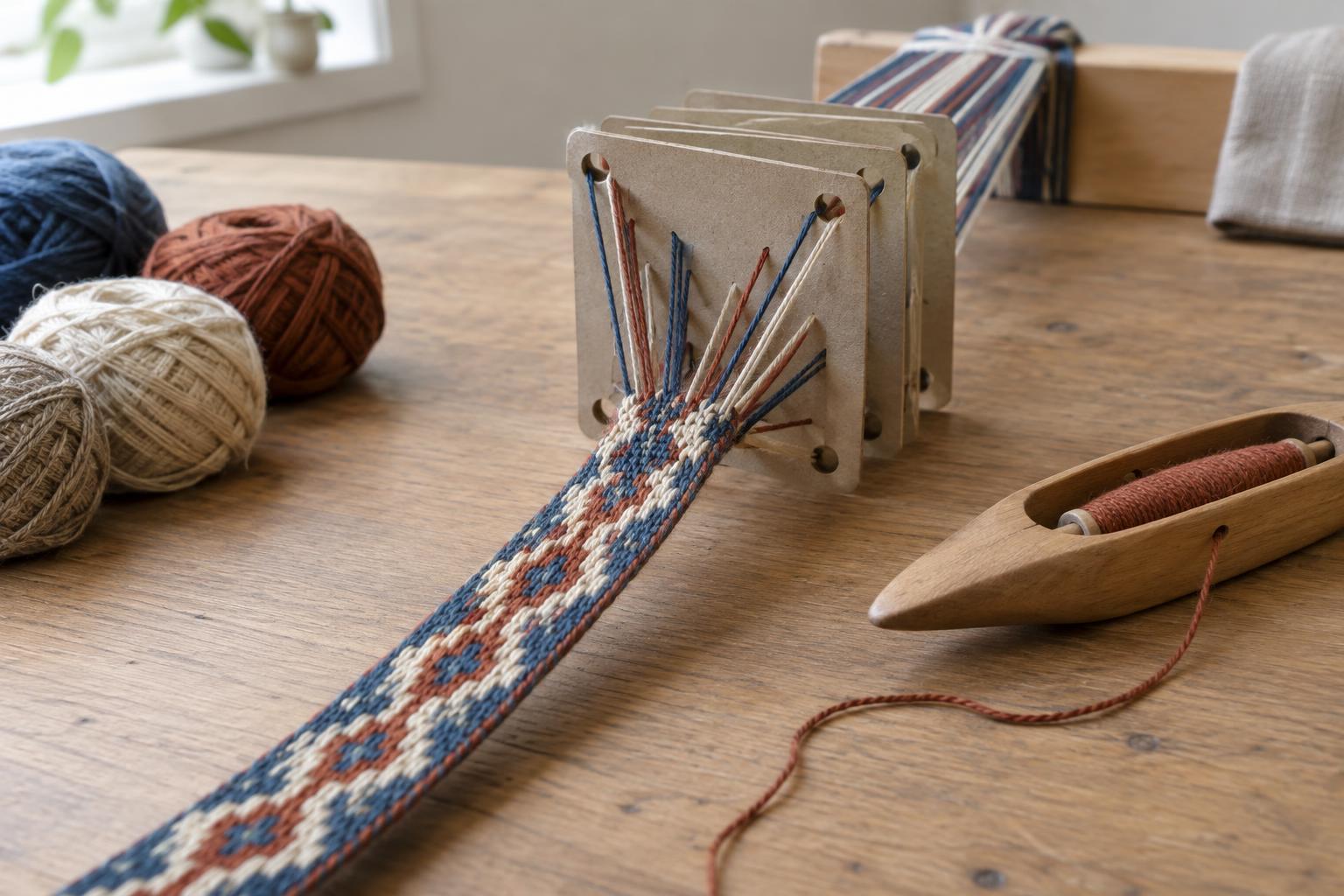
Tablet weaving is a way to make narrow bands using small cards, often called tablets. Each card has holes near its corners, with a warp thread passing through each hole. The warp runs lengthwise through the band; a separate weft thread passes across it. As the weaver turns the cards, they separate the warp into layers. The opening between those layers is the shed, where the weft goes.
The cards do more than lift threads. Turning them twists each card’s group of warp threads together, helping form the band’s firm, cordlike structure. The colours visible on the surface change as different threads move into position. This combination of shedding and twisting is what makes tablet weaving distinctive: a small change in how the cards are threaded or turned can produce a noticeably different band.
What happens in one turn
Imagine a row of four-hole cards, each carrying four threads. With the warp held under tension, the weaver turns the cards a quarter turn, passes the weft through the new shed, and pushes that pick of weft snugly against the woven edge. Repeating this sequence builds the band a little at a time. Keeping the cards aligned and turning them together makes the simplest patterns easier to follow.
A quarter turn changes which threads sit near the top and bottom of each card. If the threads in a card have different colours, that movement can change the colour seen at the surface. Turning the same cards repeatedly in one direction also adds twist. Turning them in the opposite direction changes the structure and can reduce twist that has built up in the unwoven warp. The exact appearance depends on both the threading and the turning sequence, so a written pattern usually specifies both.
Where the pattern comes from
A tablet-woven pattern begins before the first pick of weft. The weaver chooses the colour of the thread in each hole and the order of the cards across the width. Those choices set up the colours available at each position in the band. A simple arrangement might put one contrasting thread in each card, creating a repeating mark as the cards turn. Grouping contrasting threads in neighbouring cards can create broader areas of colour.
The direction in which threads pass through the cards also matters. Weavers often describe two threading orientations as S and Z. Along with the direction of turning, these orientations affect the slant and appearance of the woven structure. For a first project, it is more useful to follow one threading diagram carefully than to memorise a rule about which orientation produces a particular look. Once the band is under way, compare its surface with the diagram and note what each turn actually reveals.
A manageable first setup
Start with a small number of four-hole cards, smooth yarn that will pass easily through the holes, and two colours with a clear contrast. You will also need a way to hold the warp under steady tension, a weft thread and a tool for pushing each pick into place. Thread the cards in the same order shown by your chosen plan, then keep them together as a pack so they do not slip out of sequence. Marking one corner of each card can help you track its position.
For a short practice band, turn the pack a quarter turn in the same direction for several picks. Watch which colour appears after each turn, and aim to place the weft at the same angle and beat it with similar pressure each time. Then try reversing the turns and observe the change. An edge that pulls inward may mean the weft is too tight; an uneven surface may come from changing the beat or missing a card during a turn. Pause and check the cards before a small error travels further along the band.
Reading the band as you weave
The woven section is a record of your choices. A repeated colour sequence suggests that the cards have followed a regular turning cycle; an unexpected mark can point to a card turned differently or threaded out of order. Look at both faces of the band, since they may show colours and structures differently. Keep the unwoven warp in view as well: if twist becomes difficult to manage, stop and consider whether your turning sequence allows you to reverse direction.
A first band need not be elaborate to teach the essentials. Consistent tension, deliberate turns and careful observation reveal how the cards control the threads. Once those movements feel familiar, try changing one thing at a time—perhaps the colour placement or the number of turns before reversing. That makes it easier to see how a patterned band grows from a simple, repeatable sequence.