What sett measures
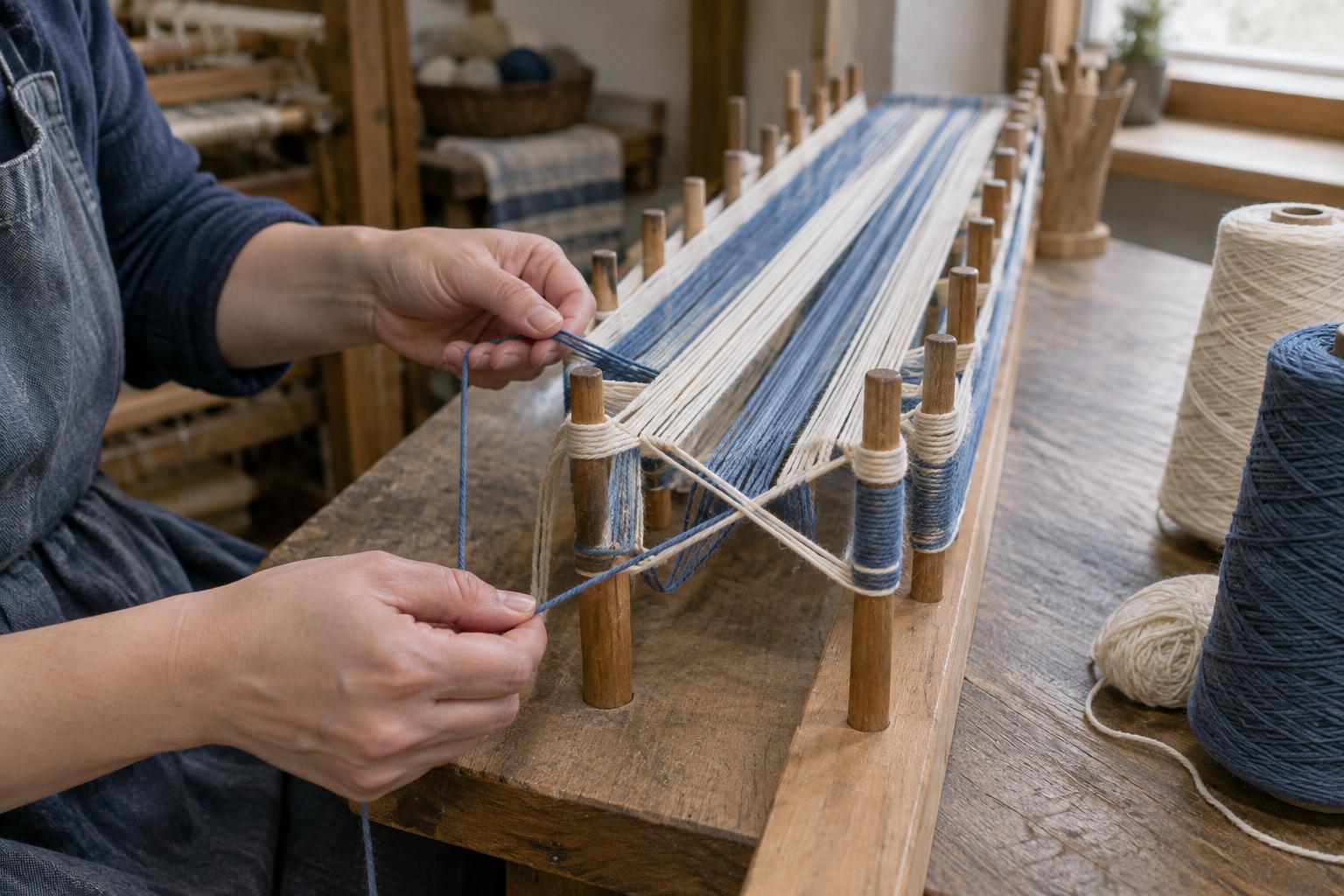
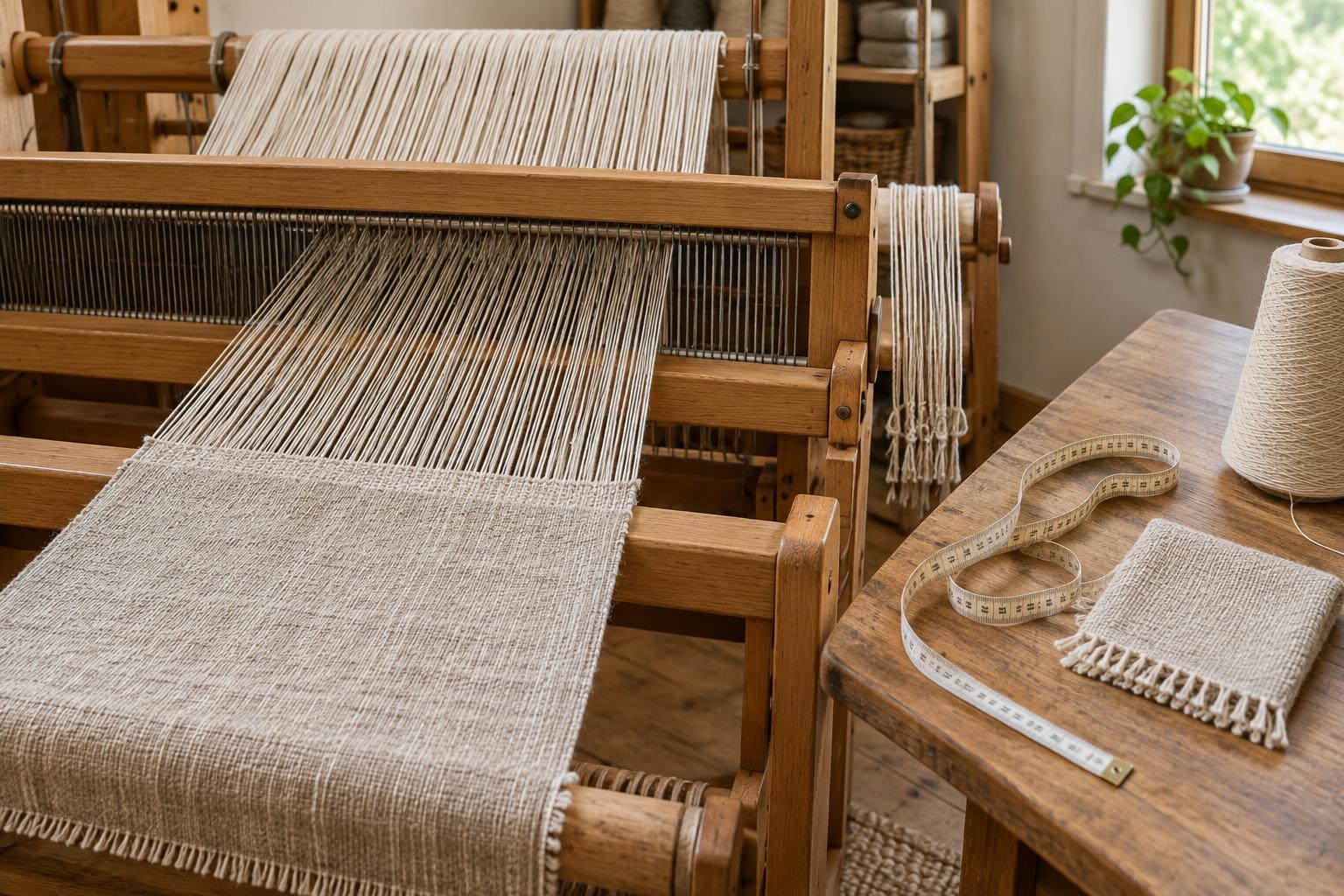
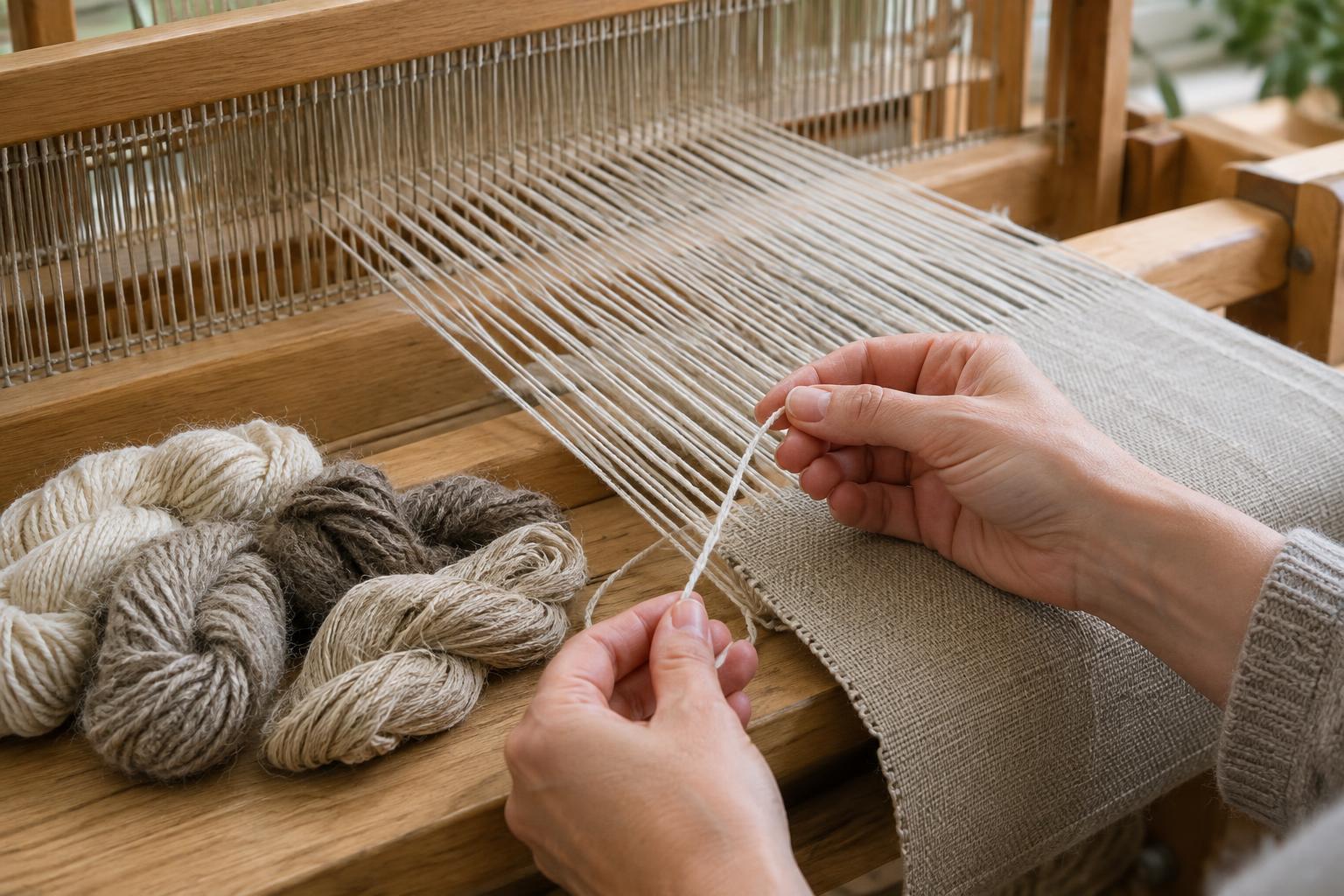
Sett is the number of warp ends arranged across one inch of fabric width, usually expressed as ends per inch, or EPI. The warp is the set of lengthwise threads held under tension on a loom. A sett of 20 EPI means that, before weaving and finishing alter the cloth, 20 warp ends occupy an inch across the width. A higher number places those ends closer together; a lower number leaves more space between them.
Sett describes spacing, not a guarantee of a particular fabric. Two cloths at the same EPI can behave differently if one uses a fine, firm yarn and the other a thick, soft one. The weft—the thread that crosses the warp—also matters. Its spacing is often described in picks per inch, or PPI. Together, warp and weft spacing help determine whether a cloth feels open, balanced, dense or stiff.
How spacing changes the cloth
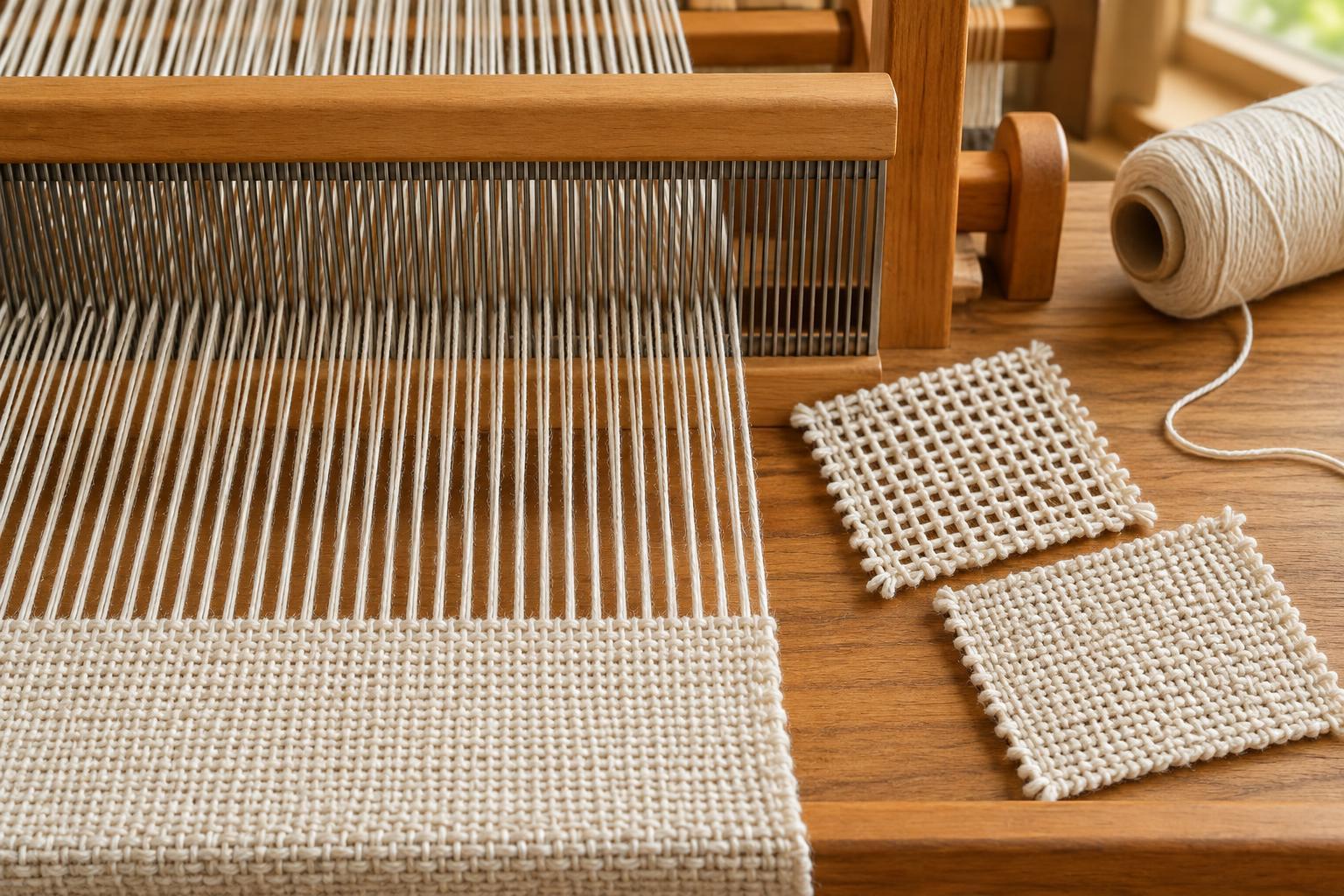
When warp ends are close together, they may cover more of the surface and leave less room for the weft to move around them. Depending on the yarn and weave, the result can be firmer cloth with less drape. A more open sett can make a fabric lighter and more flexible, but it may also allow threads to shift. Neither approach is inherently better: a breezy scarf and a sturdy bag lining ask for different kinds of cloth.
Sett also affects what the eye sees. Closely spaced warps can dominate the colour of a fabric, while wider spacing may give the weft more visual presence. In patterned weaving, changing the sett can sharpen or soften the appearance of a motif. The final effect cannot always be judged on the loom: wet finishing or washing may cause fibres to relax, swell or draw closer together.
Why yarn and weave structure matter
Yarn diameter is a useful starting point, but it is not the whole story. A smooth, tightly spun yarn occupies space differently from a lofty or fuzzy yarn of similar apparent thickness. Elasticity, texture and the intended finish can also affect how closely the ends can sit without making the cloth too rigid. If a yarn is new to you, treating a suggested sett as a starting point rather than a rule leaves room for adjustment.
Weave structure changes how often warp and weft interlace. In plain weave, each weft pick passes alternately over and under individual warp ends, creating frequent interlacements. Some twills have longer floats, allowing yarns to sit differently and often accommodating a closer warp spacing than a comparable plain weave. A decorative weave with still longer floats has other concerns: if the threads are too far apart, the floats may snag or shift. The useful sett is therefore tied to the yarn, structure and purpose of the finished piece.
Sett is not the same as reed size
A loom reed has slots called dents. Its size describes the number of dents per inch, but a dent can hold one warp end, two ends or another planned grouping. For example, placing two ends in each dent of a 10-dent reed gives a nominal sett of 20 EPI. This distinction is helpful when reading a weaving plan: the target sett tells you how closely to arrange the warp, while the reed and denting plan tell you one way to achieve that spacing.
The width of a woven piece may also differ from the width measured in the reed. As weaving progresses, the weft travels over and under warp ends, and the cloth can draw inward at the edges. Finishing may change its width again. If a finished dimension matters, allow for these changes in the project plan rather than assuming that reed width will equal finished width.
Choose a sett by sampling
Start with the fabric you want: should it be airy and soft, firm and stable, or somewhere between? Consider the yarn and weave structure, then choose an initial sett. Weave a sample long enough to show a steady rhythm beyond the first few picks. Pay attention to whether the weft packs in comfortably, whether the warp ends crowd one another, and whether the cloth has the coverage and flexibility you want.
Finish the sample in the way you expect to care for the finished object, using a method appropriate to its fibres. Let it dry, then assess its feel, appearance and dimensions. If possible, try more than one sett with the same yarn and weave. Comparing the samples makes the trade-offs visible: a small change in warp spacing can turn an appealing open cloth into one that shifts too easily, or a firm cloth into one with better drape. Recording the sett, weft spacing and finishing method makes that lesson useful for the next project.