What each tool does
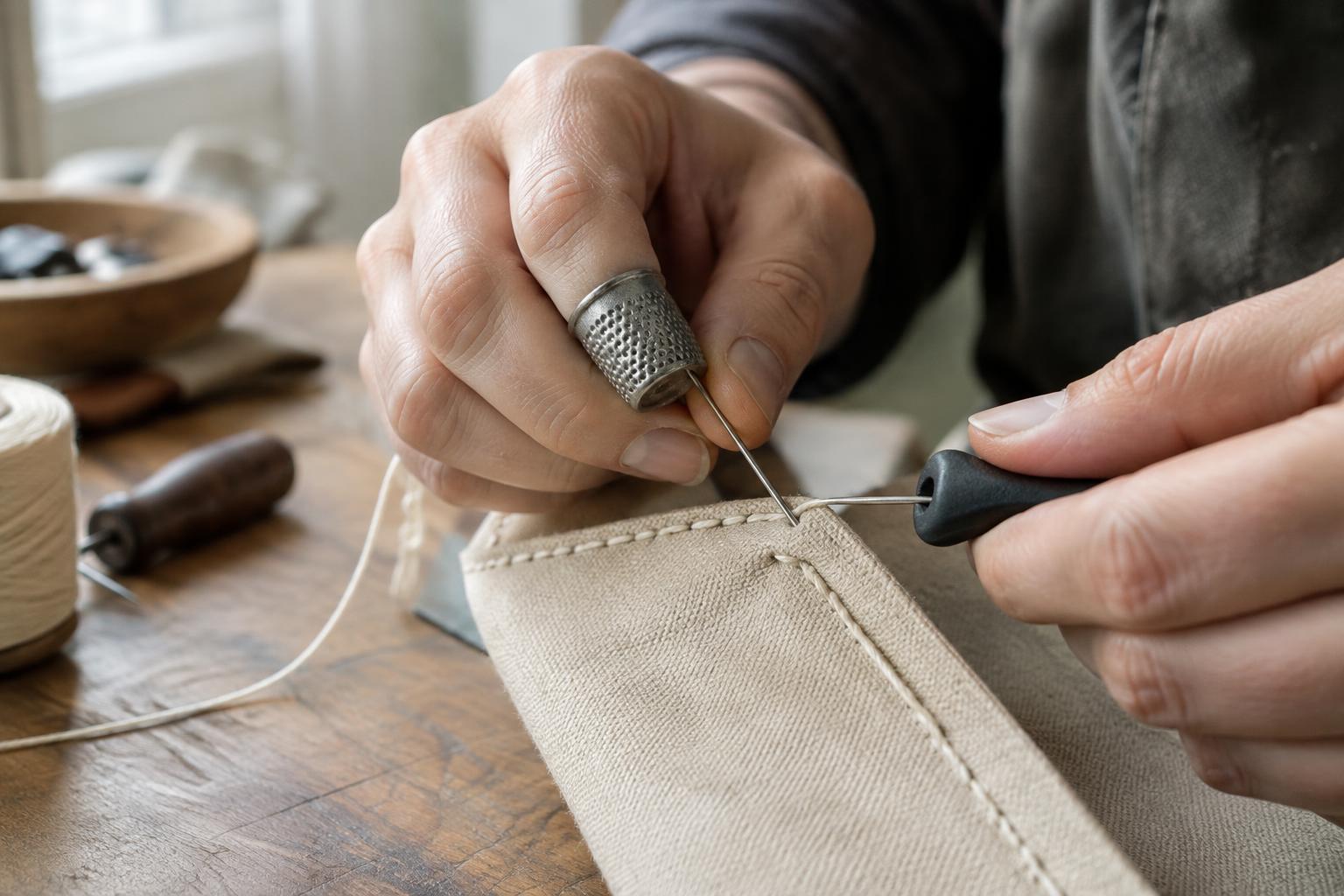
A thimble and a needle puller solve different problems in hand sewing. A thimble provides a firm surface for pushing the blunt end of a needle. A needle puller improves your grip on the needle after its point has emerged from the material. Used together, they can make a demanding stitch easier to control: push until there is enough needle to grasp, then pull it through steadily.
These tools are useful when sewing several layers, working with dense cloth or guiding a needle through a tight seam allowance. They do not make every needle-and-material combination suitable. If a stitch requires a hard shove or a sharp tug, stop and look for the cause rather than adding more force. A more appropriate needle, a different stitch path or a thinner stack of layers may help.
Choose a thimble that stays put
A thimble is commonly worn on the middle finger of the hand holding the needle, leaving the thumb and forefinger free to guide it. Styles include rigid caps and more flexible leather versions. The best choice is one that lets you feel where the needle is going while providing a dependable surface for pushing. It should stay in place when your hand points downward, without pinching or restricting the finger.
Try pushing a needle through a scrap of your project material before settling into a longer task. Bring the needle’s eye or blunt end against the thimble, then move the needle forward with a small, deliberate motion. Use the surface of the thimble rather than the edge of your fingertip. If the needle slips off repeatedly, adjust the thimble’s position or try a style with a different shape or grip.
Use a needle puller without jerking the stitch
Needle pullers may be small rubber grips, textured pads or tools that clamp around the needle. Whatever the form, their purpose is to help you hold a needle that your fingers cannot comfortably grip. Wait until enough of the needle has passed through the material to grasp it securely. Pull in line with the needle’s path, using steady pressure rather than twisting or yanking sideways.
Keep the other hand clear of the needle’s exit point and support the fabric so it does not bunch up as you pull. Once the needle is through, draw the thread along the stitch path until it lies comfortably against the surface. Avoid pulling so tightly that the fabric puckers. On a visible repair or seam, a series of even, moderate pulls usually gives you more control than tightening each stitch abruptly.
Set up the stitch before adding pressure
Tool choice matters, but so does the path you ask the needle to take. Match the needle to the material and thread: it needs an eye that accommodates the thread and a point suited to the work. A needle that is bent, rough or noticeably difficult to pass through a test scrap is worth replacing. For dense or layered pieces, check whether a seam fold, bulky allowance or hidden obstruction is making one spot harder than the surrounding area.
Mark or visualise the next stitch, hold the work securely and aim the needle before pushing. If possible, keep its path consistent with the stitches around it. A thimble is most helpful when it drives a well-aimed needle; a puller is most helpful once that needle has already found a sensible route. Testing on an offcut can reveal whether the material is resisting every stitch or only a particular construction detail.
Recognise when to pause
Persistent resistance is useful feedback. If the needle flexes, the thread frays at the eye or the fabric distorts each time you pull, pause before continuing. Check that the needle is not damaged, that the thread moves through its eye without excessive rubbing and that you are not trying to cross too many layers at once. Where the construction allows it, shifting a stitch slightly away from a bulky junction may provide a cleaner path.
Good control feels measured rather than forceful. The thimble protects your pushing finger and helps deliver pressure in the intended direction; the puller helps you complete the movement without straining your grip. Neither replaces careful needle selection or attention to the material. With a short trial on scrap and a willingness to adjust when a stitch fights back, both tools become practical aids to neater, more comfortable hand sewing.