Start with the object, not the fibre
Wool can often be cleaned with water, but “made of wool” is not enough information to decide how to wash a handmade object. A loosely knitted scarf, a lined jacket and an embroidered wall hanging may all contain wool while responding very differently to moisture. Before cleaning, check for a care label or instructions from the maker. Then look at how the object is built: is it one flexible piece of fabric, or does it include a lining, backing, stiffener, glued detail or another material?
Also consider what cleaning needs to accomplish. A wool item that smells a little stale may only need airing in a dry, shaded, well-ventilated place. Loose surface dirt may lift with a gentle brush suited to the fabric. Washing introduces weight, movement and drying time, so it is worth reserving for an object that can tolerate all three.
When a gentle hand-wash may be suitable
Hand-washing is generally a reasonable option for a sound, unstructured wool item with stable colour and no vulnerable additions. Examples may include a simple knitted hat or scarf, provided its care instructions permit washing. Inspect the fabric first. Loose ends, weak seams, holes and areas worn thin can become more vulnerable when wet. Make small repairs before washing where practical, or seek help if handling the item risks making the damage worse.
Colour deserves a separate check, especially when an item combines light and dark yarns. If you are unsure whether the dyes are stable, test an inconspicuous area with a clean damp white cloth. Colour transfer is a reason to stop. A test that shows no transfer is reassuring, but it cannot guarantee that a whole item will behave the same way during a soak. If colour bleeding would ruin the piece, avoiding a full wash may be the better decision.
When to keep wool out of water
Avoid home washing when you cannot tell how an object is constructed or how its parts will react. A tailored coat may contain interlinings and shaping that are difficult to restore if they shift. Leather trims, wooden buttons, beads, embroidery, adhesives and attached decorations may stain, loosen or be damaged by water. Items with painted surfaces or a rigid backing are likewise poor candidates for immersion, even if their visible fabric is wool.
Be especially cautious with old, fragile or heavily felted pieces. Felting and shrinkage can occur when susceptible wool is agitated, particularly alongside changes in water temperature. Existing felt is not automatically washable: its shape, thickness or added details may still change. If an object has sentimental value, visible weakness, unstable dye or a stain that requires more than gentle cleaning, ask a textile-care professional for an assessment rather than experimenting. Professional cleaning is an option to discuss, not a guarantee that every piece can be cleaned without change.
A low-movement way to hand-wash
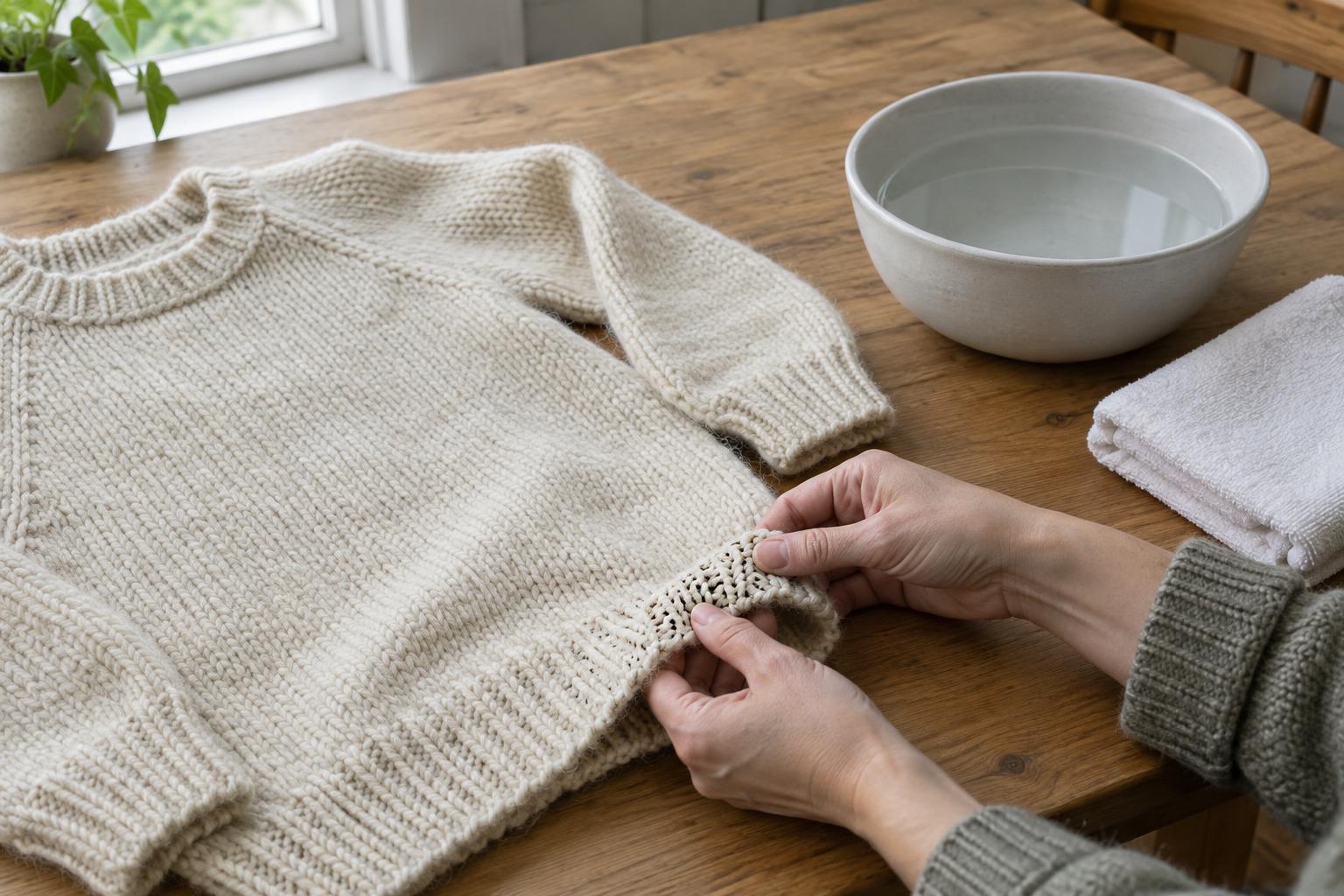
For a suitable item, use a clean basin with cool or lukewarm water and a small amount of detergent intended for wool. Follow the detergent directions and avoid using more than needed: excess soap is harder to rinse out. Lower the item into the water and gently press it to wet the fibres. Keep soaking brief, and do not scrub, twist or knead. Those actions can distort stitches or encourage felting.
Drain the basin while supporting the item. Rinse gently in water at a similar temperature, pressing rather than pulling the fabric. Repeat if needed until the detergent is removed. Lift the item with both hands or from underneath; saturated wool can be heavy and may stretch under its own weight. Never wring it out.
Drying matters as much as washing
Press out moisture by laying the item on a clean towel, rolling the towel and pressing lightly. Unroll it and place the wool flat on a dry towel or a mesh surface that supports its full weight. Ease it back toward its original dimensions without tugging. For a knitted item, an outline or measurements taken before washing can help you check the shape as you lay it out.
Let it dry thoroughly with good air circulation, away from direct heat and prolonged strong sunlight. Avoid hanging a wet knit, which can pull it out of shape. Check underneath and replace a damp towel when needed. Once dry, reassess before repeating any cleaning: a remaining mark may call for targeted help, while another full wash may add wear without solving the problem.