Why cloth changes after it leaves the loom
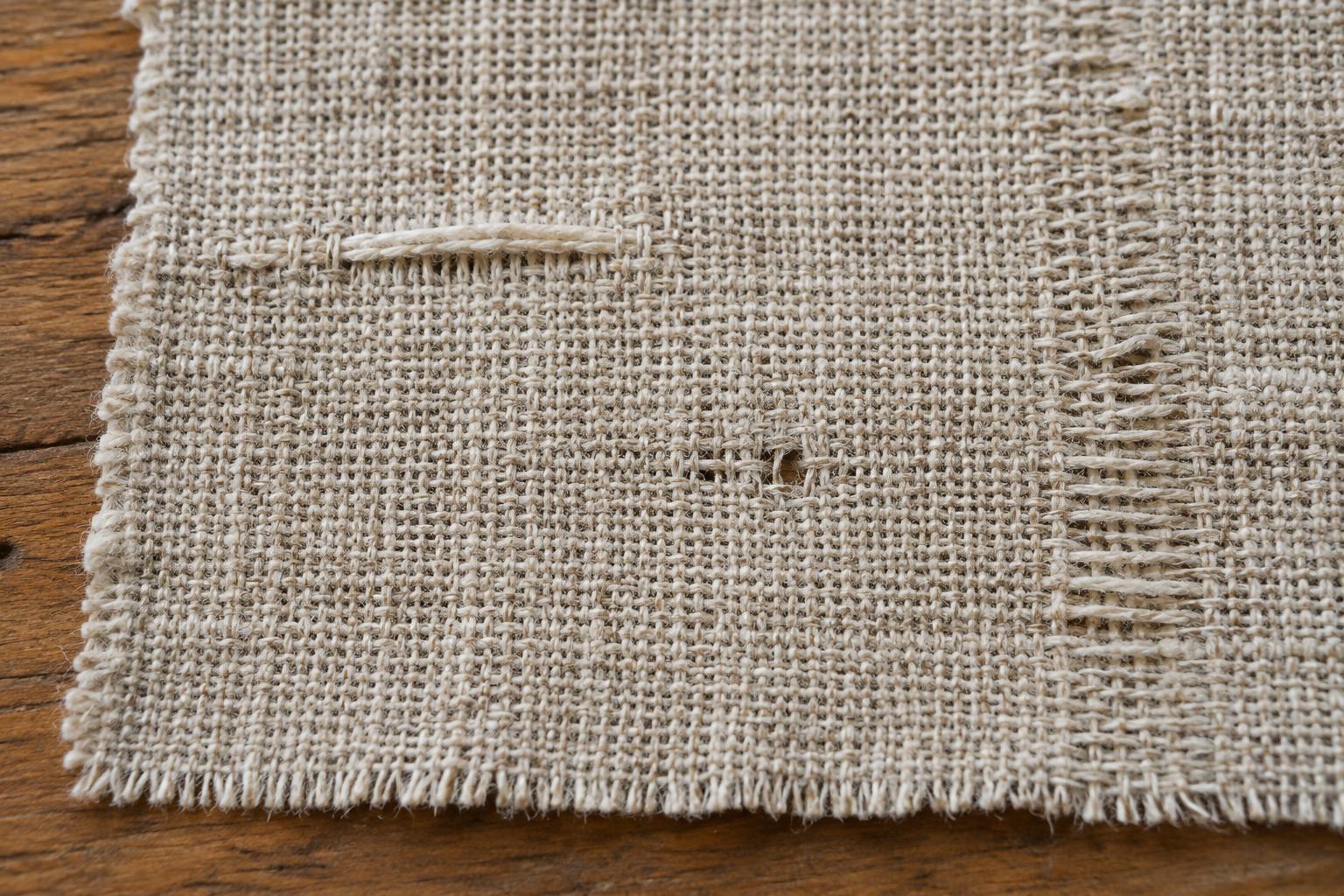
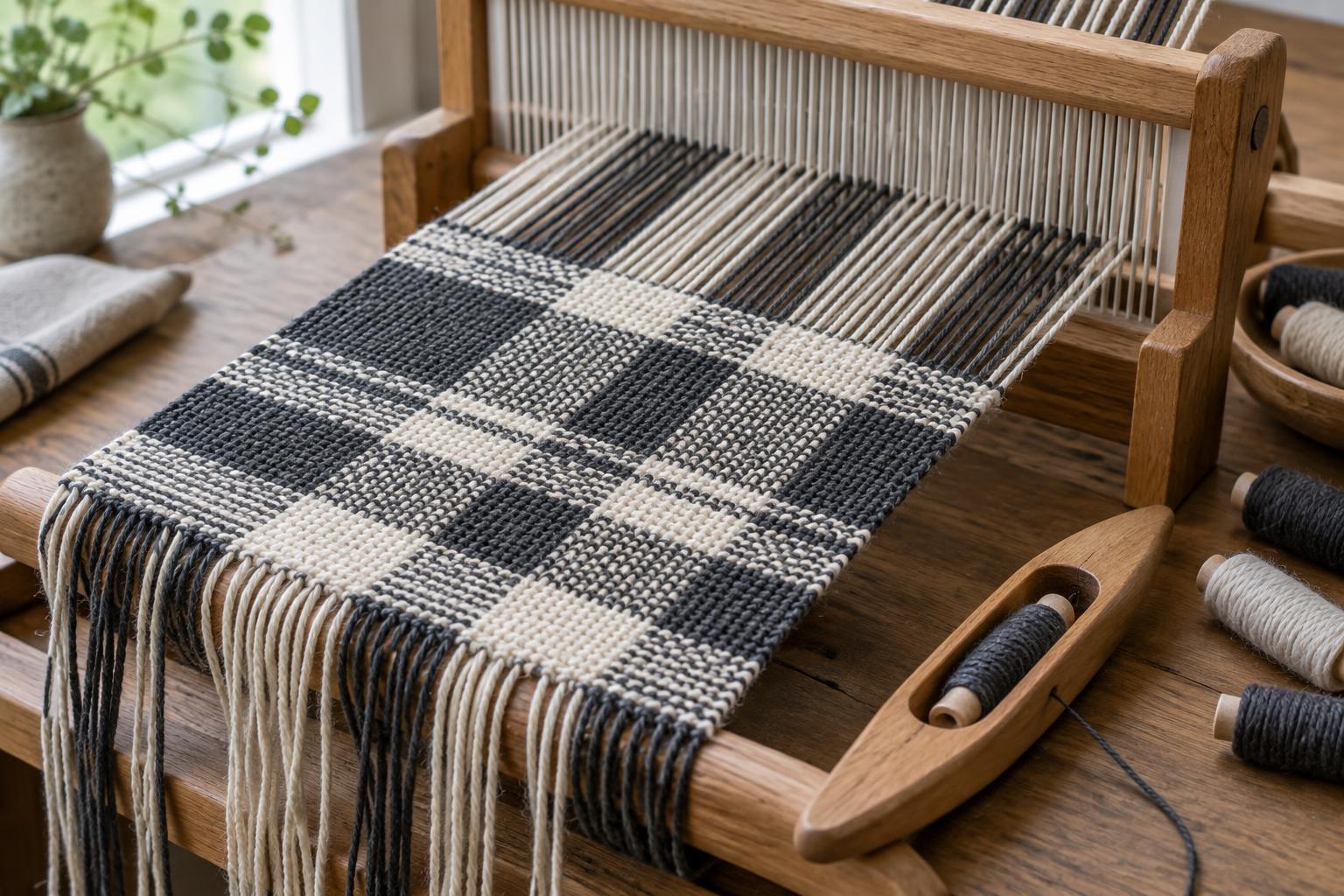
A newly woven piece may feel stiff, show small gaps between yarns or hold the shape imposed by loom tension. Wet finishing means treating the cloth after weaving so the yarns can settle into their new arrangement. Often this involves washing and drying; depending on the fibre and intended use, it may also include gentle agitation or pressing. The result can be softer, denser or more even, but it will not necessarily look like the fabric on the loom.
Finishing cannot reliably repair a missed thread or an uneven edge. It can, however, make minor variations less conspicuous as yarns relax and move closer together. That is why the most useful question is not simply whether to wash a woven piece, but what treatment will suit its materials and purpose. A table runner that should lie flat may need a different finish from a wool scarf meant to feel soft against the neck.
Start with a sample and a few measurements
Before finishing a full piece, weave and remove a sample using the same yarns, structure and approximate density. Measure its width and length, then note how it feels and looks. A photograph or a few written observations can help you compare the cloth before and after treatment. Include any fringe in your notes, but measure the woven area separately so changes in the fabric are easier to see.
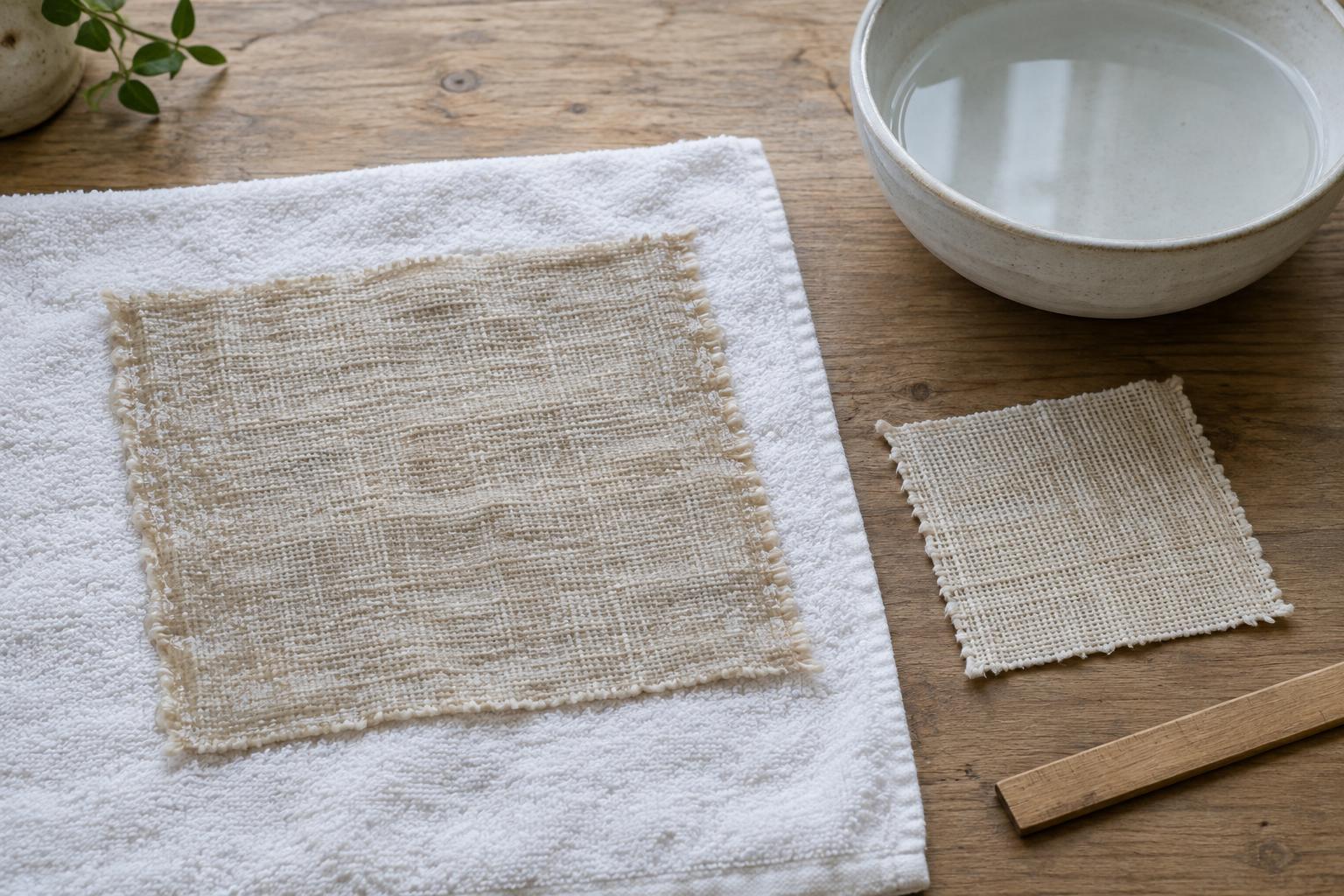
Wash the sample as you intend to wash the finished object. Once it is fully dry, measure it again without stretching it. The difference gives you a practical guide to shrinkage for that particular combination of yarn, weave and treatment, not a promise that every future piece will behave identically. Check the handle, drape, surface and edges too. If the sample becomes too firm, too loose or distorted, you can adjust your finishing method before treating the larger piece.
A sample is especially valuable when yarns have different fibre contents or colours. Water may reveal colour transfer that was not visible on the loom. If you do not know how a yarn was dyed or treated, test cautiously rather than assuming that its appearance tells you how it will wash.
Wash gently, then let the cloth dry in shape
First secure any loose ends and decide how to manage the fringe. Remove obvious weaving debris, then place the cloth in water at a temperature appropriate for the most delicate yarn in the piece. Use a small amount of mild washing product if needed, and avoid leaving residue by rinsing thoroughly. Lift wet cloth with support underneath it: a large piece can stretch or distort under its own weight.
Agitation matters as much as water temperature. Wool fibres in particular may bind together when subjected to moisture, movement and other suitable conditions. This can be desirable when deliberately making a denser fabric, but it can also reduce drape and dimensions faster than expected. If a light finish is the goal, handle wool gently and check it often. Plant-fibre cloth may also change size and feel after washing, even though it does not finish in the same way as wool.
To remove excess water, press the fabric between towels rather than twisting it. Lay it flat or hang it in a way that supports its weight, then smooth it into the shape you want without pulling it beyond its natural dimensions. Let it dry completely before judging the result. Damp fabric can feel and hang differently from dry fabric, so an early assessment may be misleading.
Assess the result before deciding on further finishing
Once dry, compare the cloth with your original notes. Do the yarns sit comfortably together, or are there still open spaces that matter for its intended use? Has the fabric gained the softness you wanted, or has it become too dense? Look along the edges and across the surface for distortion. The aim is not perfect uniformity: it is a cloth whose appearance and handling work for the object you planned.
Pressing can smooth some fabrics and help them lie flat, but it is not a universal final step. Heat, steam and pressure can affect fibres and surface textures differently. Test a corner or sample first, use a protective cloth where appropriate, and avoid flattening a texture you want to keep. If the piece needs another wash or a little more agitation, make one small change at a time and reassess after drying. Keeping a record of those steps turns each finished piece into a more useful guide for the next one.