What draw-in looks like
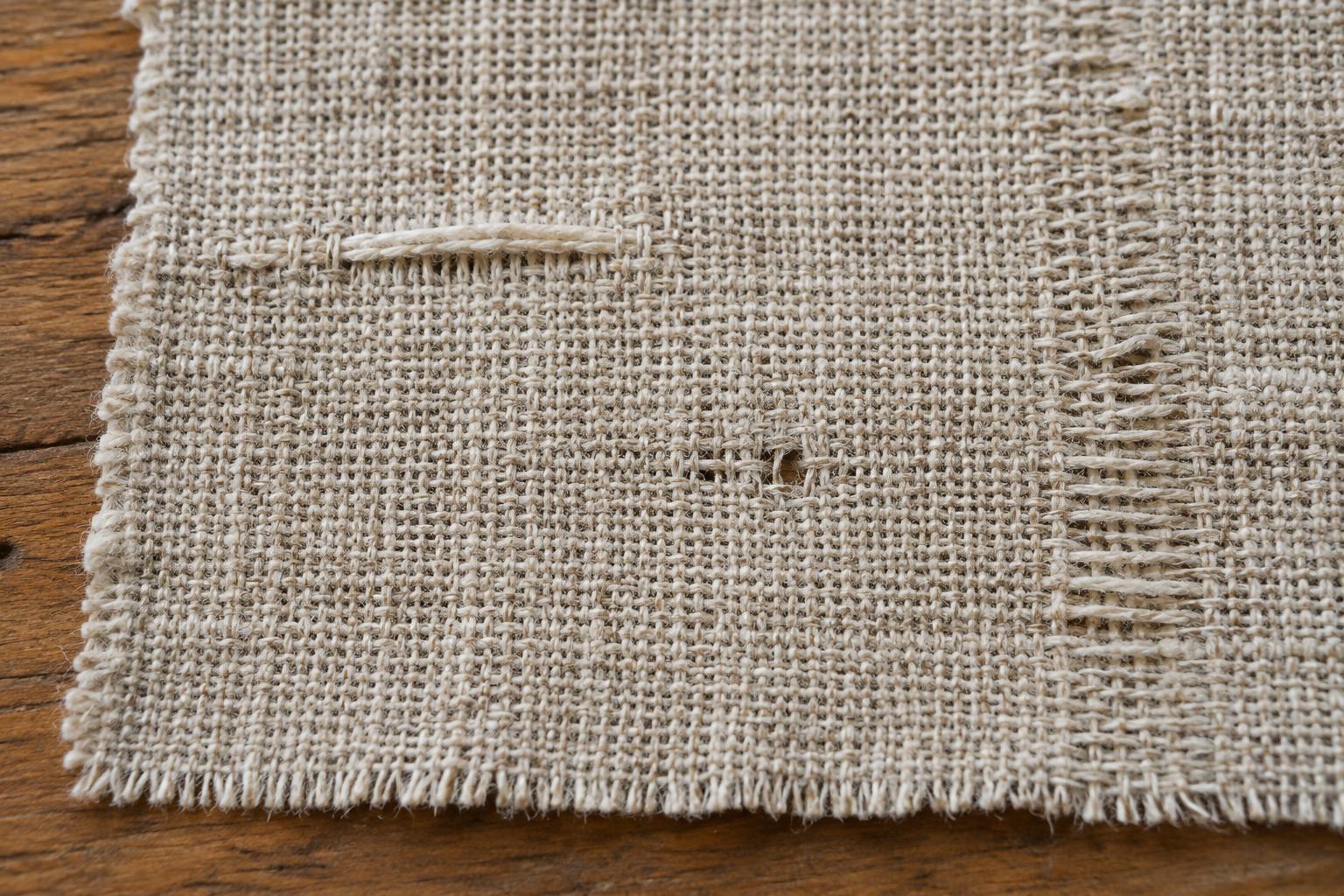
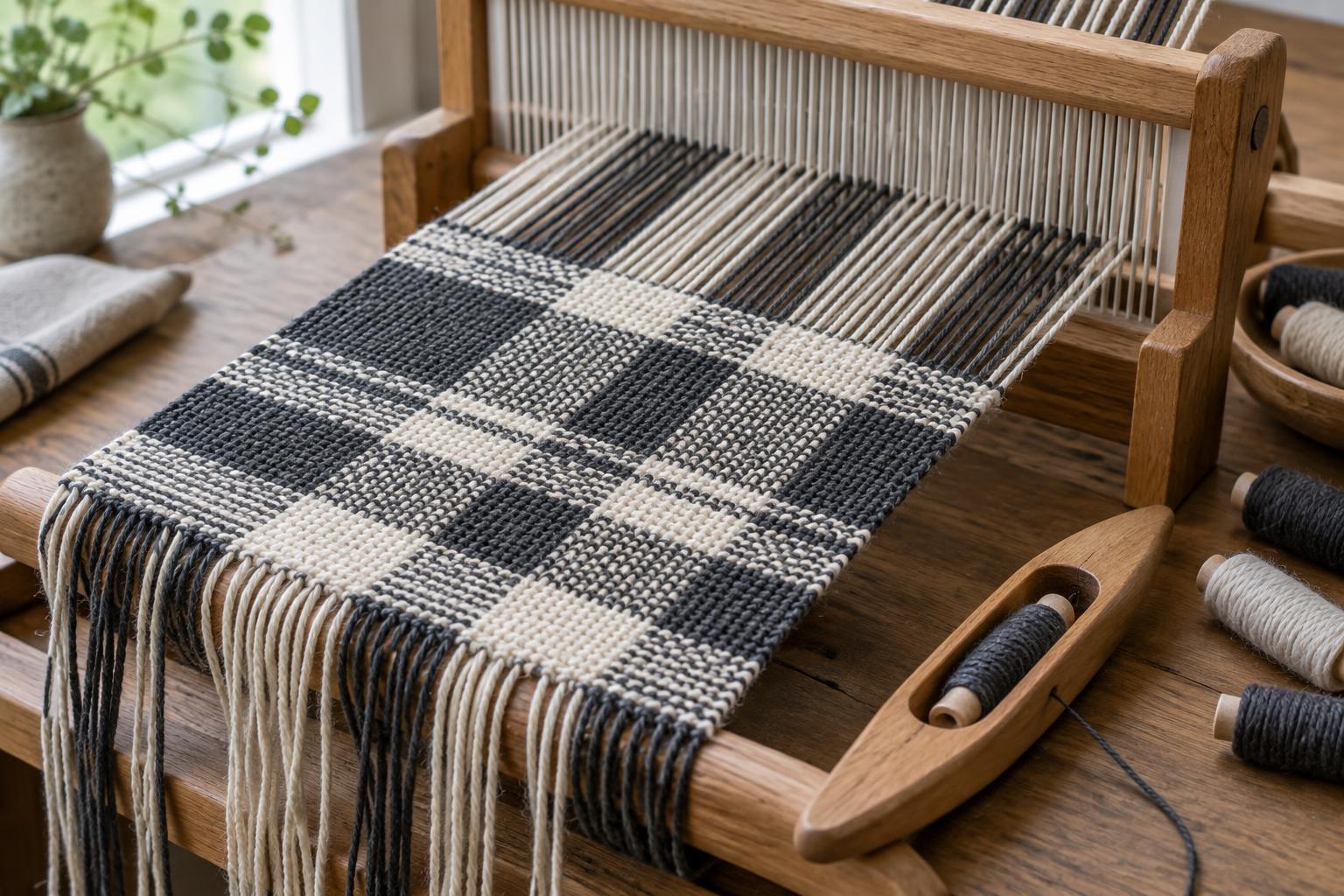
Draw-in happens when a woven fabric becomes narrower than the width of its warp in the reed. A little narrowing is normal: the weft travels over and under warp threads, and those paths use more length than a perfectly straight line would. It becomes a problem when the edges pull sharply inward, the outer warp threads look strained, or the cloth narrows progressively as you weave.
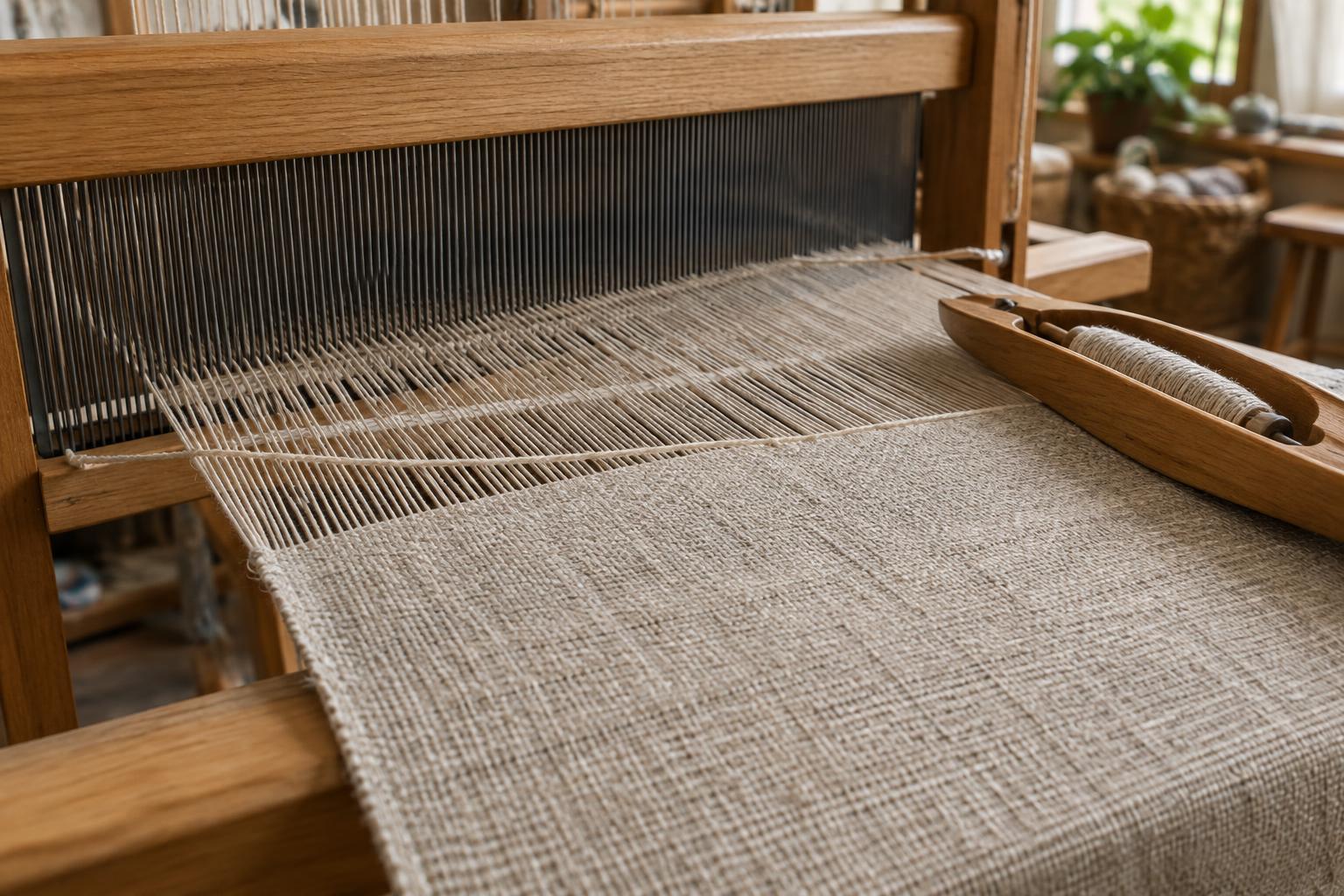
Look at the width while the fabric is still on the loom. If it is much narrower just behind the reed than it is at the reed, the weft may be pulling the warp inward. An uneven edge can offer another clue: one side may draw in more if you place the weft differently in each direction. Width changes after washing or finishing are a separate matter, so compare cloth on the loom with the warp width before treating every later change as a selvedge problem.
Why the weft needs room
The most common cause of strong draw-in is placing the weft too straight across the open shed. When the shed closes and the weft settles around the warp threads, a straight pick has little spare length for that journey. It takes the length it needs by tugging on the outer warp threads. Pulling the shuttle firmly at the edge can have the same effect, even if the rest of the pick has enough slack.
Instead, give each pick a gentle angle or curve before beating it into place. The extra length should be distributed across the width, not left as a large loop at one edge. The amount needed varies with the weave structure, yarn and width of the piece. The goal is a weft that can settle into the cloth without squeezing the warp together or forming loose bulges.
A repeatable way to place each pick
Pass the shuttle through the shed, then position the weft before you beat. You might lay it at a shallow diagonal from one edge to the other, or form a small, smooth arc across the open shed. Change sheds and beat using a consistent motion. Different looms and weaving sequences call for small adjustments, but the useful test is the same: the pick should have room to bend around the warp without leaving a loop at the selvedge.
At the turning edge, let the weft wrap around the outer warp thread without yanking it inward. Keep a light, steady hand on the shuttle as it exits. If you alternate directions, pay attention to both edges rather than assuming they behave alike. Pausing to inspect every few picks is often more effective than weaving a long stretch and trying to correct its width afterward.
Check tension, sett and beat
Weft placement is not the only factor. Uneven warp tension can leave some threads carrying more load than others, making an edge look irregular. A very firm beat can also pack picks tightly and make it harder for the weft to settle without drawing the sides in. Aim for a beat that suits the cloth you intend to make, and try to apply it consistently rather than forcing each pick to a fixed position.
Sett matters too. If the warp threads are crowded for the yarn and weave structure, the weft may need more length to pass around them. If a project repeatedly draws in despite careful placement, make a short sample before changing the whole warp. Compare a few weft angles and beating pressures, and note the resulting width and edge appearance. Those observations will be more useful than assuming one setting works for every yarn.
When to use an aid—and when to leave the cloth alone
A weaving temple can help hold the woven width near the width in the reed. It is useful on some wider or more demanding fabrics, but it does not replace adequate weft length: cloth can still be strained between the pins if each pick is pulled too tight. Follow the tool’s fitting instructions, keep your hands clear of its points, and move it forward as weaving advances.
Perfectly rigid edges are not the aim. A small amount of draw-in and slight variation can be part of an otherwise sound handwoven cloth. Concentrate on avoiding strained outer warp threads and abrupt changes in width. If an edge begins to narrow, stop and adjust your next picks early; consistent, modest corrections usually serve the fabric better than a sudden large loop of extra weft.