The difference begins before spinning
Woollen and worsted are names for two approaches to preparing and spinning fibres. They do not identify a sheep breed, a fabric weight or a level of quality. In a traditional woollen preparation, carding opens and mixes the fibres into a loose web or roll. The fibres point in many directions, leaving space between them. Woollen spinning aims to preserve some of that airy arrangement in the yarn.
In a worsted preparation, fibres are combed to make them more parallel and to remove many shorter fibres. The prepared strand is then spun into a comparatively compact, even yarn. Longer fibres are generally better suited to this method because they can remain held together while being drawn out and twisted. These are useful descriptions of two ends of a spectrum: a maker may combine preparation and spinning methods, so not every yarn fits neatly into one category.
What fibre arrangement does to yarn
Imagine looking across a cut end of each yarn. A woollen-spun yarn tends to have a softer, less orderly structure, with more fibre ends and tiny air spaces. A worsted-spun yarn tends to hold its fibres in a closer, more aligned bundle. Twist helps both kinds of yarn stay together, but the result depends on how much twist is added, the fibres used and the way the spinner handles them.
That structure changes how a strand feels. Woollen yarn often feels lofty and springy; it can spread or bloom as fibres relax. Worsted yarn often feels smoother and denser at a similar thickness and shows the outline of a woven pattern or knitted stitch more clearly. Neither description is a guarantee. A tightly spun woollen yarn may feel firm, while a softly spun worsted yarn can feel supple.
How the difference appears in cloth
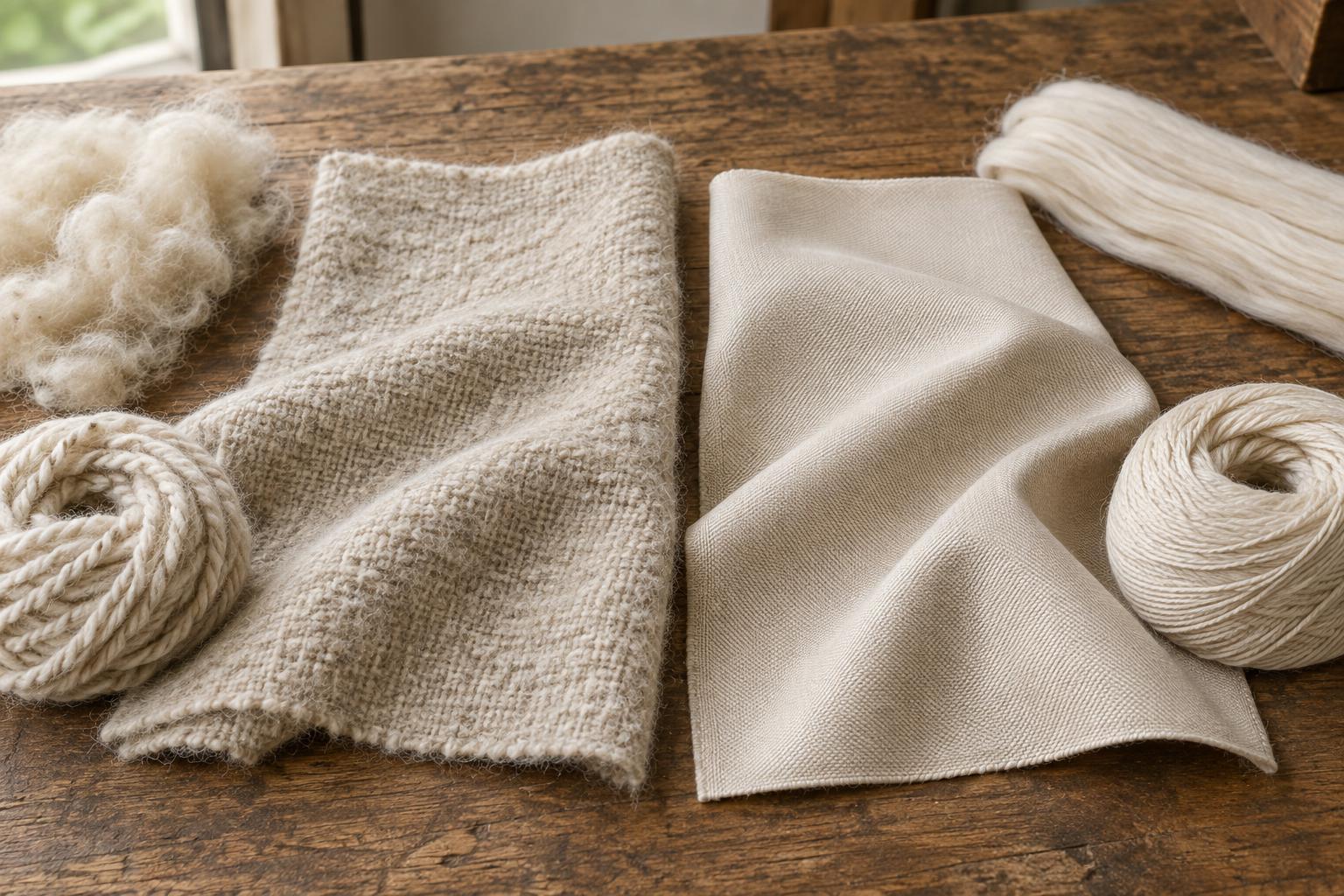
In a woollen cloth, the yarn’s projecting fibres can soften the outlines of the weave and give the surface a gently blurred appearance. The spaces within the yarn may help the cloth feel insulating without making it exceptionally heavy. Finishing matters too: washing, brushing or controlled fulling can encourage wool fibres to settle together, creating a denser surface. A heavily finished cloth may reveal less about the yarn beneath it.
Worsted cloth more often has a crisp, defined surface. Because its yarn is relatively smooth and compact, a twill line, check or other woven detail can remain easy to see. Such cloth may drape in cleaner folds than a loftier woollen fabric of comparable construction. But drape and warmth depend on more than yarn preparation. Weave, yarn thickness, fabric density and finishing can change the outcome substantially. It is safer to compare actual cloth samples than to assume that either label predicts every property.
Reading a textile without relying on a label
Begin by looking at the surface in good light. Are the weave lines sharply defined, or do fine fibres soften their edges? Hold the fabric up and let it hang freely: does it form smooth, distinct folds, or does it seem fuller and more buoyant? Run a hand lightly over it to notice whether the surface feels sleek, fuzzy, firm or spongy. These observations describe the cloth in front of you, even if its production method is unknown.
Next, check details that might complicate your first impression. A brushed worsted cloth can look fuzzy, and a closely woven or firmly finished woollen cloth can look tidy. Surface wear can also produce fuzz that was not present when the textile was made. If a loose end is already available, its structure may offer a clue, but avoid pulling threads from a sound object simply to identify it. When a maker provides information about yarn preparation, treat that as more reliable than appearance alone.
Choosing and caring for the finished cloth
Choose by the job the textile needs to do. A lofty, soft cloth may suit a scarf or blanket where gentle texture is welcome. A smoother, more defined cloth may suit a garment or accessory where precise lines and a clean-looking surface matter. Handle samples if possible: bend them, check both sides and consider how the fabric feels against skin or over other layers. Woollen and worsted are starting points for comparison, not substitutes for judging the complete material.
For care, follow the instructions supplied with the finished item rather than relying on its woollen or worsted description. Both can change with moisture, heat and agitation, and finishing treatments may affect how an object responds to cleaning. Gentle handling, thorough drying after damp use and storage that avoids prolonged crushing can help preserve texture and shape. Understanding the yarn’s preparation gives you a better eye for the cloth, but the finished object should guide the decisions you make about it.