What twist does to a strand
A single yarn begins when fibres are drawn out and twisted together. Twist helps the fibres grip one another, turning a loose supply of material into a strand that can be handled. With too little twist for its fibres and intended use, a strand may pull apart or shed readily. More twist often improves its ability to hold together, but it can also make the yarn firmer and less lofty.
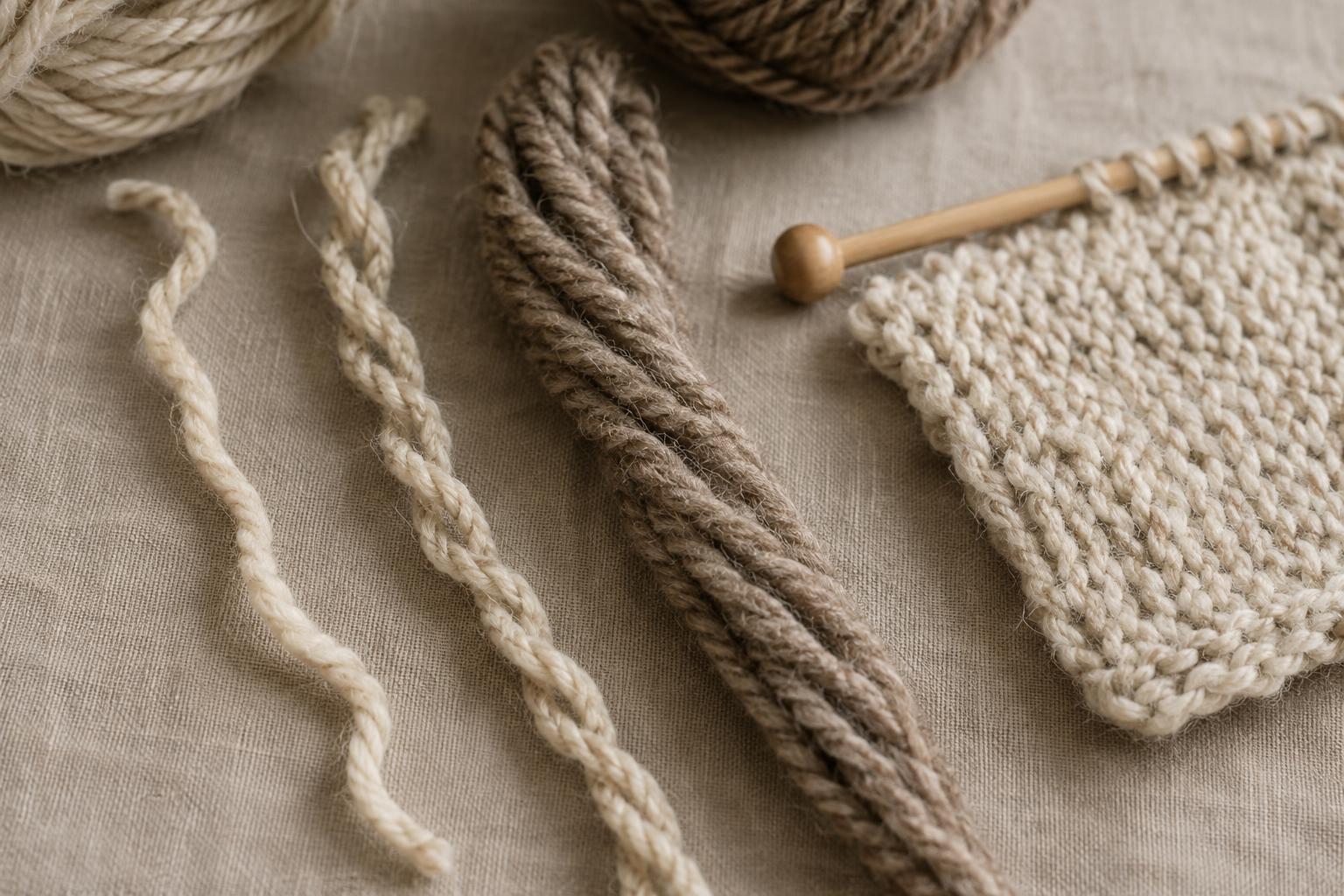
Twist direction is described as S or Z. Hold a length of yarn upright and look at the slant of the visible spiral: if it follows the middle stroke of an S, it is S-twist; if it follows that of a Z, it is Z-twist. The letters describe direction, not quality. Fibres, their length and preparation, and how evenly the yarn is spun also affect the result. Two yarns with the same twist direction can feel quite different.
What changes when strands are plied
Ply is the process of twisting two or more strands together. A two-ply yarn contains two component strands; a three-ply contains three. Spinners commonly ply in the direction opposite to the twist in the singles. The opposing twists can help the finished yarn settle with less tendency to coil back on itself. If the twists do not balance, the yarn may kink or make a knitted fabric lean, although an unbalanced yarn can also be a deliberate choice for a textured effect.
Plying can bring practical benefits. If one component strand has a thin place, another may support it. A plied yarn often stands up to handling better than a similar loosely spun single, but ply count alone does not tell you whether a yarn is strong. Fibre choice, twist level, strand thickness and construction all matter. A firmly spun single may be tougher than a soft, loosely plied yarn.
Construction also shapes the surface. A rounded, tightly plied yarn may make knitted stitches look crisp, while a softer yarn may give them a more blended appearance. Two-ply yarns can have a flatter profile than yarns made with more strands, though the effect varies. Some yarns combine already plied strands into a further construction, creating a cord-like surface. These are possibilities to observe, not rules that replace handling the yarn itself.
Strength and softness are a trade-off
Adding twist draws fibres closer together. This can make a yarn more resistant to pulling apart and may reduce the loose fibres available to catch on neighbouring surfaces. Taken too far for a particular fibre or project, however, twist can produce a wiry feel or a fabric that does not drape as expected. A low-twist yarn may feel soft and airy because its fibres have room to spread, yet that open surface can be more vulnerable to rubbing.
Think about where the yarn will work. A weaving warp must withstand repeated tension and contact with loom parts, so a yarn that breaks or frays easily during handling may be frustrating there. Weft yarn has different demands and can often accommodate a softer construction. In knitting or crochet, a garment panel, a frequently handled cuff and a decorative piece will not experience wear in the same way. The best choice depends on both the textile structure and its intended use.
How to examine yarn before committing to a project
Start by looking closely at a short length. Can you see one strand or several spiralling around one another? Does the yarn hold a round shape, or does it flatten easily? Gently pull a short sample to get a sense of how firmly the fibres hold together, and rub it lightly between your fingers to see whether the surface changes. These checks reveal more than a ply number on its own, although they cannot predict every aspect of wear.
Next, make a small sample in the structure you plan to use. Knit, crochet or weave enough to see the texture, then let the sample relax and wash it according to the yarn’s care guidance. Check whether it becomes softer, loses definition, twists, stretches or develops a noticeably fuzzy surface. Compare the result with what the finished object needs: clear stitches, a supple drape, a soft touch or a surface that tolerates regular handling.
Twist and ply are useful clues rather than guarantees. Learning to see them helps explain why yarns of similar thickness can behave differently. The most reliable choice comes from connecting those construction details with the feel and performance of a sample you have made yourself.